Showing posts with label Goshen College. Show all posts

Thursday, November 08, 2018

PROFESSOR JAMES MILLER MURDER CASE

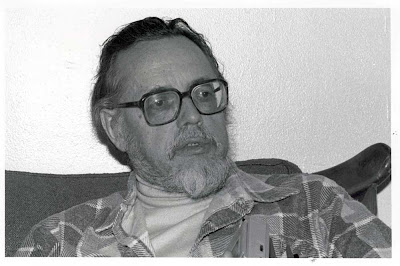
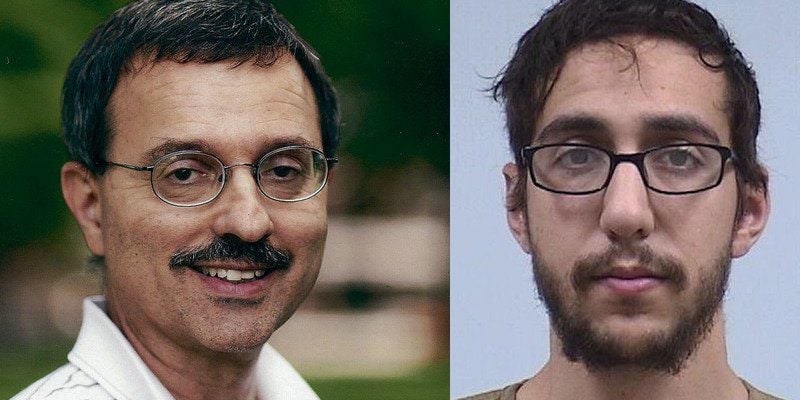
Some of you who have been hanging around this blog for a while will remember the murder of Goshen College Biology Professor James Miller and my post of November 7, 2011, that can be found here.  Now, after 7 years, an arrest has been made and a criminal case is being prepared against Winston Corbett, 23, who was 16 at the time of the murder.  A very interesting series of reports culminating with the story of the arrest can be found here.  The press conference of the Elkhart County Prosecutor's Office regarding the arrest can be found here.

Image result for james miller murder elkhart county prosecutor

Tuesday, January 12, 2016

THE GREATEST GAME IN THE WORLD - PART 3

This post is a continuation of the Greatest Game Series, so you may want to go back and read Part 1, Part 2, and The First Runner-Up posts.  Or you may not.....

Part 2 concluded with the Glory Days of New Paris High School basketball, 1962 - 1964.  The stars of our team went on to play ball at small colleges such as Manchester [IN] and McPherson [KS].  I 'chose' [that's another story] to attend Goshen College [IN] as did teammate Dennis Caprarotta.  As the fall semester got underway, we looked forward to the Junior Varsity tryouts, thinking that we would have a pretty good shot at making the team.  It didn't turn out that way -  primarily because it was not truly a basketball tryout but rather a supposed basketball skills tryout.  Apparently the JV coaches thought that they could determine the best basketball players by assessing who could quickly dribble around chairs, jump the highest, and dance rapidly through a hop-scotch-like drill.

http://upl.stack.com/wp-content/uploads/2013/05/Chair-Dribble-Drill.jpg


http://grants.hhp.coe.uh.edu/doconnor/PEP6305/Vertical.jpg


http://i.ytimg.com/vi/ltIXnc53WOU/maxresdefault.jpg

Hardly any attention was given to actual basketball skills such as shooting, passing, playing good defense, working as a unit, or what a lot of us would call "basketball IQ."  Since I am quick but not fast and not a great leaper, I was cut.  Denny also did not make the team, although he was seriously hampered by his bum knees.

Thus, my basketball at Goshen College was as part of the intramural leagues and an occasional dorm-versus-dorm tournament.  For the intramural competition, the incoming class received a colored jersey that matched that of the last graduating class - clever.  We had green jerseys that we the used throughout our four years at GC.  I believe the other classes were yellow, red and blue.  Also, since there were many students interested in playing, each class had an A team, B team, C team and sometimes a D team, all playing in their own division, e.g. senior A's versus freshman A's, etc. A few times there would be two class teams in one league - we had two A teams one year.  Not quite sure how the teams were divvied up - might have been the intercollegiate coaches and players that grouped the intramural players.  It was also possible to move up or down if needed.  I think that I ended up playing at the A level for all four years at Goshen - trying to remember if I had to buy a new green shirt or if the original survived!

http://www.jerseyfactory.com/images/products/BR1302_210.gif

Kelly Green Was Our Color!

Most of our games were on week nights, which of course gave us a good excuse not to study.  Our referees generally were fellows who had made the JV and Varsity teams - some were good at it, some not so much.  I recollect Art Mullet, Keith Springer and Larry Mann reffed a lot of games and were relatively good.  We pretty much held our own during our freshman year, and by the time we were seniors, we were regular winners.  The best wins were against the faculty team - we tried to make the coaches who were playing on the faculty team sorry that they had not chosen us for the intercollegiate team!  I believe that I regularly volunteered to guard Coach Ingold.  Another highlight of our games is that a few attractive co-eds would come to watch us play - Rhonda Lou Willems was the foxiest of the group :-)  We had some pretty decent players including roommates John Riegsecker and Marlin Nofziger and other classmates Ken Willems, Mike Hostetler, Dorrance Mosier, Dallas Rychener, Don Steiner, Don Graber, Ron Gingerich, and ______ Stuckey. 

Another good time of playing ball was during the spring semester, after the intercollegiate season was over, when dorm floors and houses would face off against each other in a tournament.  The teams that had varsity or junior varsity players were often the winners, but our group of nobodies from Howell House in our senior year had a great tournament, even if I didn't help out too much during our biggest win.  Among our nobodies were John Riegsecker, Marlin Nofziger, Ken Willems, and Henry Bowman. We were playing a team that had several intercollegiate players and we were holding our own during the first half. The bad news was that it seemed that at least one of the two referees had it out for our team, and me in particular - the two - future brother-in-law Arnie Willems and the infamous Robert "Bob" Frey, who should have been named Richard "Dick".  "Dick" was all over me, and even warned me after one foul when I must have muttered something, that I "should not take the name of his Lord in vain."  I got five fouls and headed for the showers before half time.  I remember banging the metal doors at the end of the gym so hard that Rhonda followed me out.  Arnie give his brother Ken a technical foul for placing the ball of the floor after a foul rather than handing it to him.  Despite Frey's efforts to shut us down, our gang held on through the second half, and the game came down to some crucial free throws awarded to Jack Erb, who was probably our least proficient player.  Jack sank them both and we went on to the win!!!  Our 50th year class anniversary will be coming up in 2018 and I am pretty sure that I will still be pissed about the refs!  We played a team with 3 or 4 varsity players including big fellows Keith Springer, Mo Miller and George Liechty for the Championship and we barely lost out.


https://s-media-cache-ak0.pinimg.com/236x/5b/a8/5a/5ba85a26c69d8fcde2fa9cbf4217311c.jpg

Another basketball venue during our college years was summer time night games at Rogers Park.  Often we would work all day and then head to the park after supper, and sometimes play until one or two in the morning.  A favorite break was to the local A&W Root Beer stand where you could get a quart of root beer in a cardboard container shaped like a small megaphone [oxymoron!!]

http://thumbs.ebaystatic.com/images/g/eVQAAOSw5ZBWJrXE/s-l225.jpg

I should mention that during my high school and college playing days, I turned my ankles so many times, often quite dramatically, that my ankles are permanently over-sized, filled with scar tissue.  The good news is that the scar tissue is so strong that I rarely turn my ankles any more!  Thus with graduation in the spring of 1968, my official b-ball days at GC ended, but as will be noted in a later entry in this series, I returned numerous times to play on campus.

Tuesday, December 01, 2015

MENNO PAUSE - THE UNDERGROUND PAPER

I have been meaning to write about Menno Pause, an "underground" newspaper that came out with two issues during my senior year at Goshen College.  I was one of the secondary group of folks who helped the primary five with some of the grunt work.  The five were the intellectual voice of the paper and the rest of us helped with printing, graphics, ideas for articles, etc.  Four of the five signed both issues of the paper, and not long after the second issue, they were all kicked out of school - Sam Steiner, Jim Wenger, Lowell Miller and Tom Harley.

https://ontariomennonitehistory.files.wordpress.com/2015/11/menno_pause-editors-1967.jpg 

Jim Wenger, Tom Harley,  Sam Steiner & Lowell Miller

I write now because Sam Steiner recently wrote an article reflecting on his role in the publication of Menno Pause, an underground newspaper at Goshen College.  Read the whole article here.

A couple of clips from Sam's article:

 Jim Wenger was the intellectual leader of our little band.  He had studied the growing phenomenon of underground newspapers in spring 1967 for the Communication and Society course. He was a convinced adherent of the free speech movement, and wished for a living example at Goshen College. He also wanted to shake his “egghead” reputation because he had a near 4.0 grade average.

Jim drafted our purpose statement thusly: “The Menno-Pause is a gadfly (poking and prodding the GC sacred cows), a watchdog (checking and analysing disciplinary action), a critic (positive or negative analysis of GC education), an extended student opinion board–and general all-around crap.” We characterized ourselves as the “campus underground newspaper team.”

In early September the five of us began to plan, mostly in Yoder 201, often against the backdrop of “Sgt. Pepper’s Lonely Hearts Club Band.” By September 10 we were serious about producing an underground paper. Tom gave us the name of the paper. We co-opted others to help. They included Carol Beechy (women’s perspective), Doug Swartzendruber (design), Eric Yoder, and Bill Horrisberger.  We delegated Jim and Lowell to give Sue Clemmer a “head’s up” that our alternative publication was coming.

 I would encourage any of you with an interest to read Sam's entire article and the comments, as well as the linked article by Dan Hess who was a Professor of Communication at the time.  I added this comment to Sam's article:


Sam – thanks for sharing this reflection, and bring back many memories of our years at Goshen College. I indeed helped with the graphic of Menno Pause, and some of us secondary MP-ers helped with various aspects of the publication. My recollection was that one of the issues was printed after-hours at the Menno Travel Service offices downtown, with the help of Will Poyser and an MTS employee.

Jim Wenger was my assigned roommate for our freshman year; sort of the odd couple. Jim was very bright, a talented piano player and no particular interest in sports – me, average intellect, OK guitar player and always ready to play basketball, or whatever. We got along fine, but lined up new roommates for our second year. In retrospect, it is clear that Jim was dealing with his sexual identity in 1964. He would occasionally peruse a Playboy and had numerous dates with college girls, but did not seem particularly comfortable living that role. While it saddens me deeply that he as well as others such as Eric Alderfer, could not express their innate identities at Goshen, I was pleased that Jim was able to find a loving long term partner in Peter.

I have dug out my two issues of Menno Pause and also a manuscript by Stacy Vlasits who wrote a book entitled “The Menno-Pause Incident At Goshen College. And thanks for the reference to the Dan Hess article – both interesting and illuminating.

A few more thoughts:

Another recollection of Jim was that he was very fond of his mother, but not so much of his father who was a minister in Pennsylvania who no doubt had a very unaccepting view of homosexuality.  Goshen College's expulsion of the four ended what I believe would have been a stellar academic career for Jim.

A nickname for President Mininger was Pious Paul, and one late evening we spent a fair amount of time writing on the wooden fence surrounding the construction site of the Good Library outlining all of the things that Pious Paul Prevented [all starting with P].

A nickname for Sam was Pig-Pen, not disparaging but rather for his resemblance to the lovable Pig-Pen in the Peanuts cartoons.

 https://s-media-cache-ak0.pinimg.com/736x/e8/cf/70/e8cf7008c5d76e046b026d1f7b751ff8.jpg

Lastly, I, perhaps incorrectly, put part of the blame on Goshen College for the premature deaths of Jim and Eric Alderfer and perhaps others whose struggles with sexual identity could not be acknowledged and openly discussed.  By GC, I mean all of us because even though some of us were supportive of the expelled gang of four, there likely was more that we could have done on their behalf. 


Monday, May 18, 2015

ABIDE WITH ME

One of the special music pieces at Father Ed's Memorial Service was Abide With Me, sung by a group from the Goshen College Men's Choir.  Sister Kay recorded the group as they practiced before the service [try to ignore the background whispering :-]


 [Not all of these lyrics were sung in the video]
  1. Abide with me; fast falls the eventide;
    The darkness deepens; Lord, with me abide;
    When other helpers fail and comforts flee,
    Help of the helpless, oh, abide with me.
  2. Swift to its close ebbs out life’s little day;
    Earth’s joys grow dim, its glories pass away;
    Change and decay in all around I see—
    O Thou who changest not, abide with me.
  3. I need Thy presence every passing hour;
    What but Thy grace can foil the tempter’s pow’r?
    Who, like Thyself, my guide and stay can be?
    Through cloud and sunshine, Lord, abide with me.
  4. I fear no foe, with Thee at hand to bless;
    Ills have no weight, and tears no bitterness;
    Where is death’s sting? Where, grave, thy victory?
    I triumph still, if Thou abide with me.
  5. Hold Thou Thy cross before my closing eyes;
    Shine through the gloom and point me to the skies;
    Heav’n’s morning breaks, and earth’s vain shadows flee;
    In life, in death, O Lord, abide with me.
H/T to Cousin Steve for sending along the video which is also available on YouTube

Friday, May 08, 2015

GARRISON KEILLOR AT GOSHEN COLLEGE

A Prairie Home Companion radio show recently did a live broadcast from Sauder Music Hall at Goshen College.  Go to the link here to listen to the entire broadcast or listen to or view select segments of the show.  We were driving down the highway and received a text from our niece that the show was in progress.  We listened to the remainder, but we are glad that the whole thing is available - lots of good music!!

Garrison Keillor leads the audience on “How Great Thou Art.”

Keillor Leading Congregational Singing

Thursday, October 09, 2014

THREE YEARS AND COUNTING

Three years ago today, Goshen College biology professor Dr. James Miller was brutally murdered at his home just a couple of blocks from the college campus.  You can read about it in a previous post here.

http://photo-dir.goshen.edu/showPic.php?uid=jamessm&size=large

Some of you know that I traveled to Goshen to complete the semester in two of Dr. Miller's biology courses, and while there, I tried to glean as much information as I could about the tragedy. Sadly, three years have passed and there is virtually nothing known about the killer, motive, etc.

Here is the three-year update from the Goshen News:

 By JOHN KLINE
 
GOSHEN — Three years after a mysterious attacker killed a Goshen College professor at his home and injured his wife, there is still hope the crime will be solved.

Thursday will mark the anniversary of the unsolved murder of James S. Miller. Miller, 58, was killed at around 1 a.m. Oct. 9, 2011, during a home invasion in the 1700 block of Wildwood Court, a neighborhood practically within shouting distance of the GC campus. Miller’s wife, Linda, was also home during the invasion and was seriously injured before managing to call 911.


Goshen police were dispatched to the Miller home at 1:06 a.m., and arrived at the normally quiet neighborhood east of the college campus just a few minutes later. During the 911 call, Linda Miller told police there was a robbery in progress and that she had been attacked by a white male.

Since that frantic call, hundreds of tips have poured into the Goshen Police Department related to the murder. But Millers’ attacker remains at large and has yet to be identified.

According to Tina Kingsbury, administrative assistant with the Goshen Police Department, the homicide of Miller continues to be an active and ongoing investigation to which detectives have been assigned and continue to work on diligently.

“From that day, the Goshen Police Department has been investigating and following every piece of evidence, every lead, and every tip which poured into the department,” Kingsbury said in a statement Thursday afternoon. “In 2013, the administration of the Goshen Police Department enlisted the assistance of the Indiana State Police Cold Case Unit to review all the case details and information pertaining to the James Miller homicide. The resources available to the Indiana State Police and their Cold Case Unit’s vast experience in investigating offenses of this magnitude continue to be a great asset to our ongoing investigation.”

Along those lines, Kingsbury noted that the Indiana State Police and the Goshen Police Department are urging anyone with knowledge of the Miller murder to contact the Goshen Police Department at 574-533-8661.

Life goes on
 
The fact that the case remains under investigation is good news for many of the neighbors and families who live in the Millers’ neighborhood, many of whom now go about their days with a little more caution than they did before the attack.
 
For most, gone are the days of leaving their doors, windows and garages unlocked. Numerous homes in the neighborhood have also had new security systems installed, and it’s not unusual to see chains on many a front door.


Even so, strength and hope have remained steadfast in the community, with many residents vowing they will not let the incident define them and how they go about their daily lives.
Laverne Nafziger, who resides just a few houses down from the Miller residence, is just such a resident.

“I am not afraid,” Nafziger said during an interview at her home Thursday afternoon. “I’ve decided that I can’t live with fear, because there’s nothing I can do. I can try to be more careful about locking the doors and things like that. I lock more than I did. And I think everybody in the neighborhood is a little more cautious.”

Nafziger noted that other than some of the new security upgrades in the neighborhood, the Miller murder has had very little effect on the dynamics of her typically quite, uneventful neighborhood.

“The neighborhood has really stayed the same,” Nafziger said. “One couple went to Greencroft, and so there was a change there. Another woman died, so there was a change there, and another family left just this year, but it was because of a job change. So nobody left because of it. The community has stayed strong.”

Through it all, Nafziger said she has never given up hope that Miller’s killer will eventually be brought to justice, a hope she shares with many others in the neighborhood, including nearby neighbor Gay Lehman.

“We would all love to see the case solved,” Lehman said from her home. “I think all the neighbors do. I think it would just bring closure to the whole event if we could get it solved.”

Like Nafziger, Lehman said she typically goes about her days now with a little more caution and awareness than she did before the attack, though she is adamant that she has not let the event define her.

“I think there are more security systems, and we keep things a little more locked up than we did before,” Lehman said. “So we’re just being a little more cautious, a little more careful. But I’m not living in fear. I’m not going to let the guy have that much power over me. We’re just going to go on with life and be a little more careful. I just wish they could get it solved, and I think everybody in Goshen feels that way. So we’re just hanging in there.”

Thursday, May 22, 2014

VINCENT HARDING

http://record.goshen.edu/wp-content/uploads/2012/01/vincent_harding_MLKDayfromPR-816x1024.jpg 

Vincent Harding at Goshen College

 
In March of 1967, taking note of anti-war protests at his alma mater, Dr. Martin Luther King Jr. sent a telegram care of Vincent Harding to the "men of conscience" at Morehouse commending their courage and calling them his inspiration.

Days later in New York, King delivered one of his most stinging criticisms of American involvement in Vietnam. Harding, at the time an adviser to Morehouse students as well as to King, is credited with writing that speech. Harding, 82, died Monday at the Hospital of the University of Pennsylvania, according to Denver's Iliff School of Theology, where Harding taught for many years.

In Denver, Harding's home since coming to Iliff in 1981, he was remembered for his commitment to justice and peace, and for his modesty. Former Denver City Council president Elbra Wedgeworth said he never spoke much of his ties to King or other prominent civil rights leaders.

"He was just a real old school gentleman who experienced a lot, but never let it make him bitter," Wedgeworth said. "He just used those experiences to help other people."

Harding and his first wife, Rosemarie Freeney Harding, who died in 2004, met King when they traveled from Chicago to Atlanta to continue the civil rights work they had begun in the Mennonite church. Harding became an adviser and friend to both King and Coretta Scott King. He later served as the first director of what is now known as the King Center in Atlanta.

"He was a great voice for human and social progress, very much in keeping with Dr. King's and Mrs. King's advocacy for social and civil rights," Steve Klein, spokesman for the center, said in a telephone interview Wednesday. He said Harding should be remembered as a "cutting edge" historian of the civil rights movement.

In a New York Times review of Harding's 1981 book, "There is a River: The Black Struggle for Freedom in America," historian Eric Foner wrote that it was "more than a history of black protest: It is also a personal testament of hope and a brief for a view of the black experience as a saga of resistance." Harding wrote several books.

Howard Zehr, who heads the Zehr Institute for Restorative Justice at Virginia's Eastern Mennonite University, remembers Harding as a visitor to his home. Zehr's father was, like Harding, a Mennonite pastor. Hearing the two — one black, one white — in conversation helped shape the younger Zehr's thinking. In 1966, Zehr became the first white student to graduate from Morehouse.

For many years, Zehr said in a telephone interview Wednesday, "I could sort of see Vincent on my shoulder, keeping me committed. He had a quiet way of doing that."

Harding had been visiting the East Coast, including speaking at Eastern Mennonite University, when he died.

In 2012, Vicki Crawford, director of the Office of the Morehouse College Martin Luther King Jr. Collection, brought Harding back to Atlanta as a visiting professor. In the 1960s, Harding had taught at Spelman, the women's college near Morehouse. Crawford said she was struck by the rapport Harding had with students.

"He was an incredible listener," Crawford said. "His classes would be very quiet, punctuated by long periods of silence, reflective silence."

The New York-born Harding taught at Denver's Iliff until his retirement in 2004, and his legacy there includes a research center on social change that he and Rosemarie Freeney Harding founded in 1997.

Iliff president Thomas Wolfe said he had asked Harding to deliver the commencement address scheduled for June 4. Instead of a traditional speech, Harding suggested the kind of Socratic discussion he favored in class. Three Iliff students had been recruited to take part.

"Vincent was saying, 'This is how we pass the mantle from teacher to student, so the student becomes the teacher,'" Wolfe said.

Instead of finding a replacement speaker, Wolfe said the three students would share their memories of Harding.

Harding is survived by his second wife, Aljosie Aldrich Harding; daughter, Rachel Harding; and son, Jonathan Harding. Funeral plans were not yet set.

DES -  For more information on Vincent including audio and video, please visit here.

Read more here: http://www.miamiherald.com/2014/05/21/4129635/vincent-harding-activist-king.html#storylink=cpy

Wednesday, December 18, 2013

CONSPIRARE

Conspirare - a Choral Ensemble - you can visit their homepage here.  And, if you click over there, you might note that some of the background photos [they change with each visit to the site] were taken at Sauder Concert Hall on the campus of Goshen College.  The group chose Sauder for a recording session because of the great acoustics of the hall - in the videos, Director Craig Hella describes the project, and the group performs.  {at the time I published this, YouTube was non-responsive - hopefully it will show up soon!}


Tuesday, December 17, 2013

KEILLOR AT GOSHEN COLLEGE


http://blogs.etruth.com/truthiness/files/2013/10/KeillorCropped2.jpg


I once saw Garrison Keillor in concert at Pepperdine - it was very good, but I thought then that given his affinity for singing, he would enjoy an evening at Goshen College.  Well it happened this fall, and here is what he had to say:

“I think I maybe did the best show of my life Tuesday night and all thanks to the audience, a thousand Mennonites and their neighbors in a small town in Indiana. It was mostly impromptu, fast-paced, jumpy, with a big complicated pontoon-boat story in the middle, and at the beginning and end we sang. They sang beautiful four- and six-part harmony in a fine acoustic hall and I sang a modest bass, no arm waving, no coaxing, and the sound of this impromptu choir made everyone intensely happy. I steered them directly from one verse of a song to a chorus of another, no pausing, and when I did pause once, trying to figure out where to go next, they did not applaud. Marvellous. Because it was not a show. It was for real. Mennonites are quiet, peace-loving, kind-hearted people, salt of the earth, If I knew a church where people sang like that, I’d be there every Sunday, sitting right smack in the middle. Thank you, Goshen College.”
A couple of more lines from the evening:

 “Women look down on men. Women have always looked down on men because men fart so much. So much more than women because women don’t keep their mouths closed long enough to keep the pressure built up.”

But possibly the funniest impromptu moment occurred when a cell phone could be heard ringing from the seats. How did Keillor react?
“Tell them I’m almost done.” 


Tuesday, November 12, 2013

JOHN HOWARD YODER

I recently noted this article about JHY in the New York Times.  When I was in school, Yoder was on campus at Goshen College because the seminary was still in Goshen.  I remember him as usually looking disheveled and seemingly in another world.  As the article notes, his scholarship is both embraced and criticized, and continues to be analyzed long after his death, but his behavioral misdeeds make understanding his work and the church's response even more complex.  The article link is here.

https://blogger.googleusercontent.com/img/b/R29vZ2xl/AVvXsEgUdDmWGbPOjzwf9o947yLuJKukbIfkwG_W9B0AziIJFD0g2RnStf2BOmA3i01eny94bZqYRgohEs2C4H6SSiPJF1s147aw73CpwigkHwLU6-snPkSMpMmOAgRG5eiYnyJWfc1G6Q/s1600/John-H.-Yoder-Photo-%25232-by-Carolyn-Prieb.jpg

A Theologian’s Influence, and Stained Past, Live On

Can a bad person be a good theologian? 

All of us fall short of our ideals, of course. But there is a common-sense expectation that religious professionals should try to behave as they counsel others to behave. They may not be perfect, but they should not be louts or jerks.

By that standard, few have failed as egregiously as John Howard Yoder, America’s most influential pacifist theologian. In his teaching at Notre Dame and elsewhere, and in books like “The Politics of Jesus,” published in 1972, Mr. Yoder, a Mennonite Christian, helped thousands formulate their opposition to violence. Yet, as he admitted before his death in 1997, he groped many women or pressured them to have physical contact, although never sexual intercourse.

Mr. Yoder’s scholarly pre-eminence keeps growing, and with it the ambivalence that Mennonites and other Christians feel toward him. In August, Ervin Stutzman, executive director of Mennonite Church USA, which has about 100,000 members, announced the formation of a “discernment group” to guide a process to “contribute to healing for victims” of Mr. Yoder’s abuse. 

In 1992, after eight women pressured the church to take action, Mr. Yoder’s ministerial credentials were suspended and he was ordered into church-supervised rehabilitation. It soon emerged that Mr. Yoder’s 1984 departure from what is now called Anabaptist Mennonite Biblical Seminary, in Elkhart, Ind., had also been precipitated by allegations against him. He left for Notre Dame, where administrators were not told what had happened at his last job. 

But Mr. Yoder emerged as a hero of repentance. His accusers never spoke publicly, and their anonymity made it easier for some to wish away their allegations. And in December 1997, after about 30 meetings for supervision and counseling, Mr. Yoder and his wife were welcomed back to worship at Prairie Street Mennonite Church in Elkhart. To cap a perfect narrative of redemption, he died at 70 at the end of that month
.
Without denying the wrongness of his acts, his supporters continued to celebrate Mr. Yoder and the Mennonite leaders who had rehabilitated him.

“How John’s community responded to his inappropriate relations with women” was “a testimony to a community that has learned over time that the work of peace is slow, painful, and hard,” wrote Stanley Hauerwas, a retired Duke University professor and Yoder’s heir as the leading pacifist theologian, in his 2010 memoir

Mr. Yoder’s obituary in The New York Times did not mention his sexual misdeeds. None of his victims received monetary settlements. Mr. Yoder apologized, sort of, with a statement that “he was sorry that we had misunderstood his intentions, as he never meant to hurt us,” according to Carolyn Holderread Heggen, one of the eight complainants. 

Ted Koontz, a professor at Mr. Yoder’s old seminary and a member of the church’s discernment group, said the church needed to take stock of what was — or was not — done for Mr. Yoder’s victims.

“There are a lot of different opinions about what was done and wasn’t done to hold him accountable,” Professor Koontz said. 

The committee will probably conclude its work, he added, in time for the Mennonite Church USA’s 2015 convention in Kansas City, Mo., where there may be a ceremony “of confession, repentance, reconciliation.” 

Of course, reconciliation was what the four-year process in the 1990s was supposed to achieve. It obviously failed. And Mr. Yoder remains inescapable for Mennonites, his work read and referenced often and everywhere. 

“Physically he died, but his work and his theological writings live on,” said Linda Gehman Peachey, a freelance writer in Lancaster, Pa., who is also part of the six-member group. “For those who have known this other side — his behavior, particularly toward women — that is really painful.” 

Mr. Yoder’s memory also presents a theological quandary. Mennonites tend to consider behavior more important than belief. For them, to study a man’s writings while ignoring his life is especially un-Mennonite. 

Professor Koontz regularly tells his students reading Mr. Yoder that “his behavior is one thing we ought to take into account when we read his work.” Ms. Peachey noted that Mr. Yoder wrote a good deal about suffering as a Christian virtue, but “if you know this part of the story” — how he made women suffer — “you tend to read it with a different eye.” 

Mr. Yoder seemed very attentive to the notion that theology should align with behavior. It turns out that in unpublished papers, he formulated a bizarre justification of extramarital sexual contact. 

In his memoir, Professor Hauerwas alludes to what Tom Price, a reporter for the newspaper The Elkhart Truth, described in a five-part 1992 series as Mr. Yoder’s defense of “nongenital affective relationships.” Mr. Yoder said that touching a woman could be an act of “familial” love, in which a man helped to heal a traumatized “sister.” 

Mr. Price quoted from “What Is Adultery of the Heart?” a 1975 essay in which Mr. Yoder wrote that a “bodily” embrace “can celebrate and reinforce familial security,” rather than “provoking guilt-producing erotic reactions.”

Ms. Heggen, called Tina in the newspaper articles, told Mr. Price that Mr. Yoder had a grandiose explanation for his advances, which he tried out on multiple women. 

“We are on the cutting edge,” Mr. Yoder would say, according to Ms. Heggen. “We are developing new models for the church. We are part of this grand, noble experiment. The Christian church will be indebted to us for years to come.” 

On Wednesday, Ms. Heggen, agreeing to be identified as a victim for the first time, recalled driving Mr. Yoder to the Albuquerque airport in 1982. He asked her to get out for “a proper goodbye,” Ms. Heggen said. “Then he pulled me into his belly and held me tight for a painfully long time. I realized I couldn’t escape his clutch.”

In 1992, Ms. Heggen, who now lives in Oregon, published a book about sexual abuse. Traveling the world, lecturing about her book, she said she met “significantly” more than 50 women who said that Mr. Yoder had touched them or made advances. 

“Women inevitably come up after these events and tell you their story,” Ms. Heggen said. “The scenario was so familiar to me, and I would interrupt them and say, ‘Are you talking about John Howard Yoder?’ They would say, ‘How did you know?’ ” 

After his advance toward her, Mr. Yoder mailed Ms. Heggen an essay in which he advocated physical contact, including nudity, between unmarried people, so long as “there wasn’t lust.” 

Ms. Heggen had a theory of what Mr. Yoder might have been thinking. “ ‘I have created this great peace theology,’ ” she began, trying to put his thoughts into words. “ ‘And you and I are developing a new Christian theology of sexuality.’ ”
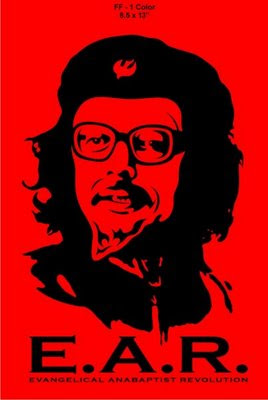
 https://blogger.googleusercontent.com/img/b/R29vZ2xl/AVvXsEiX-QY0I-1jSdZg-vcvAj_vcSVwd6sBDF4v0R1t1zEJ1NCV_Zw4GYpo5-ShxHrOHqkEFVC4n9epLRnvE-salgPgi68pbDTfF9EwoMBVxaonqQTWCmt6UZeCMBThrWy_Mx4MdJM6XA/s400/JHYoderShirt.jpg

Sunday, April 01, 2012

EARTHTONES

EARTHTONES:  Songs from Many Cultures
A Program by the Goshen College Choirs
Saturday, March 31 - Sauder Concert Hall

I am always impressed by the talent and quality of performances by the college students at both Pepperdine University and Goshen College.  Th Earthtones Concert was no exception - an excellent performance of a variety of songs from J.S. Bach to Eric Whitacre to Traditional Iroquois.

The Program

Goshen College Chorale
Naiman Sharag (The Eight Chestnut Horses) - Se Enkhbayar
Bach (Again), Come Sweet Death - J.S. Bach
With a Lily in Your Hand - Eric Whitacre

Goshen College Chamber Choir
Yanaway Heyona - Traditional Iroquois
Sonaba from Poemas de Amor - Stephen Paulus
Deep River - Traditional African-American Spiritual
Dance of Zalongo - Greek Folksong

Goshen College Men's Chorus
Rubber Duckie -  Jeff Moss

Goshen College Women's World Music Choir
Wana Baraka - Kenyan Folk Song
Ave Maria - David MacIntyre
Motsikuli kristesagan - Eastern Orthodox Liturgy - Republic of Georgia
Stand in the River - Moira Smiley
Baba mi Mungu

Goshen College Men's Chorus
Walk in Jerusalem - Traditional Spiritual
The Finlandia Hymn:  This is My Song - Jean Sibelius
El Yivneh Hagalil - Hebrew Folk Song
Ya Mariam - Palestinian Folk Song

Goshen College Combined Choirs
Woyaya - Sol Amorfio [Ysaye M. Barnwell]
Audio Clip from KaiaSing 
Great Version at iTunes by Spirit of Gospel-O Happy Day

Here are a few of my favorites - put in your earbuds or hook up your speakers!

{this has a soundless duplicate after the piece}
This song honors the eight chestnut horses of Chinggis Khan, which have become a symbol of national identity for the Mongolian people.  Indigenous Mongolian music often uses rhythms patterned after the sounds of running horses.

These chestnut horses are a treasure to us, a valuable gift of nature.
Like a peaceful song, that surrounds everywhere, so is the true image
of the Mongolian horse worshiped by my nation.


Thursday, March 08, 2012

SCIENCE & RELIGION AT GOSHEN COLLEGE

GOSHEN, Ind. -- Goshen College's twelfth annual Conference on Science and Religion will be held March 23-25, and will feature Notre Dame theologian and scientist Celia Deane-Drummond. The theme for this year's conference is "Re-Imaging the Divine Image: Humans and Other Animals." Deane-Drummond will offer a public lecture on Friday, March 23 at 7:30 p.m., titled "Re-Imaging the Divine Image: Freedom," and another on Saturday, March 24 at 10:30 a.m., titled "Re-Imagining the Divine Image: Virtue." Both lectures will take place in Goshen College's Church-Chapel.

Deane-Drummond has been professor of theology at the University of Notre Dame since August 2011. Her unique appointment is concurrent between the Department of Theology in the College of Arts and Letters and the College of Science. She was elected fellow of the Eck Institute for Global Health at the University of Notre Dame in September 2011.

Deane-Drummond graduated with a degree in natural sciences from Cambridge University and obtained a doctorate in plant physiology at Reading University prior to two postdoctoral fellowships at the University of British Columbia and Cambridge University. She subsequently took up a lectureship in plant physiology at Durham University before turning her attention more fully to theological study, obtaining an honors degree in theology and then a doctorate in systematic theology from Manchester University.

During her scientific career Deane-Drummond lectured both nationally and internationally, and published over 30 scientific articles. Since then, she has published numerous articles, books, edited collections and contributions to books, focusing particularly on the engagement of systematic theology and the biological sciences, alongside practical, ethical discussion in bioethics and environmental ethics. She has lectured widely both nationally and internationally on all areas relating theology and theological ethics with different aspects of the biosciences, especially ecology and genetics.

From 2000 to 2011 Deane-Drummond was professor of theology and the biological sciences at the University of Chester, and was director of the Center for Religion and the Biosciences that was launched in 2002.  In May 2011, she was elected chair of the European Forum for the Study of Religion and Environment. She was editor of the international journal "Ecotheology" for six years.

Since 1992 Deane-Drummond has published as a single author or as an editor 22 books, as well as 33 contributions to books and 43 articles in areas relating to theology or ethics. Her more recent books
include: "Ecotheology" (DLT/Novalis/St Mary's Press, 2008); "Christ and Evolution: Wonder and Wisdom" (Minneapolis: Fortress/London: SCM Press, 2009); "Creaturely Theology: On God, Humans and Other Animals," edited with David Clough (London: SCM Press, 2009); "Seeds of Hope:
Facing the Challenge of Climate Justice" (London: CAFOD, 2010) and "Religion and Ecology in the Public Sphere," edited with Heinrich Bedford-Strohm (London, Continuum, 2011).

Goshen College's Religion and Science Conference is designed to provide maximum interaction with one of the principal thinkers in the dialogue between religion and science. A single invited speaker presents three lectures, two of which are open to the public. Small, moderated discussion sessions provide conference participants an opportunity to address topics from the lectures, and others, in conversation with the speaker.

Conference attendants and participants include pastors and interested laypersons, as well as academic scientists, mathematicians, theologians and students. For more information about the conference, visit www.goshen.edu/religionscience

Sunday, December 18, 2011

GC MEN'S BASKETBALL ON A ROLL

During my time in Goshen, I was able to attend several home games of the Goshen College Men's Basketball team. The first game that I saw was a truly amazing demonstration of team ball - I am not sure that I have seen a college team play any better. They played defense, they ran the ball, they unselfishly passed the ball, and they shot the lights out.


They have beaten several NAIA DII nationally ranked teams, and they are ranked themselves, number 12 and probably moving up. They closed the year with a couple of impressive wins in a holiday tournament, the results of which are summarized below.


LIVONIA, Mich. (FRIDAY) – A slow first half did not prevent the Goshen College men’s basketball team from getting its 12th-straight win and a trip to tomorrow’s championship game at the Madonna University Crusader Classic.

The Maple Leafs (12-1) shot just 34.5% in the opening 20 minutes and after trailing by three early in the second half, shot 51% to cruise to a 76-49 victory over Marygrove College Friday night.

In the third-consecutive contest in which the Maple Leafs have scored exactly 76 points, junior Matthew Martin (Doncaster, England) finished one short of his career high with 18 points. Martin hit 8-of-10 from the field, while senior Geoffry Gilot (North Port, Fla.) added 14 points and freshman Kody Chandler (Schoolcraft, Mich.) chipped in 10.

Marcus Hopkins scored 16 points to lead Marygrove who will play Roosevelt in tomorrow’s consolation. Goshen will face off against the hosts (ranked #21 in the NAIA DII poll), who defeated Roosevelt 81-62. The championship game is slated for 3 p.m. in Livonia (Mich.).

Leafs Comeback For 13th Straight, 64-51 Over #21 Madonna


LIVONIA, Mich. (SATURDAY) – The Goshen College men’s basketball team came from 10 down in the first half and again from seven in the second half to knock off NAIA DII #21 Madonna University Saturday night in Michigan.

The Maple Leafs – ranked #12 in the national poll – extended their winning streak to 13 games and will head into the Christmas Break at 13-1 with their last defeat coming in the season opener back on November 1. With the victory, they also earned the championship at Madonna’s Crusader Classic.

After opening the contest with a Geoffry Gilot (North Port, Fla.) 3-pointer, Goshen struggled. They missed their next seven field goal attempts and turned the ball over twice as Madonna went on a 13-0 run for an early double-digit lead. They slowly chipped away at the gap and briefly took the lead late in the period before the teams headed to the locker rooms tied at 27-27.

Just three minutes into the final half, Goshen again fell behind, this time by as many as seven. The game was back-and-forth for the next ten minutes and was tied 46-46 with seven minutes to play before the Leafs made their run. Over a little over a four-minute span, Goshen went on a 15-0 spurt, hitting five-straight 3-pointers including two each by juniors Matthew Martin (Doncaster, England) and Garner Small (Schoolcraft, Mich.).

Martin finished 7-of-10 from 3-point territory to score a career high 26 points. He also grabbed eight rebounds and was named the tournament’s Most Valuable Player. Gilot added 14 points and was also named to the all tournament team, while Small chipped in 13 points. Madonna’s Travis Schuba hit six 3-pointers and scored a team-high 21 points.

Goshen (13-1) is off for the Christmas holiday and will next be in action on December 29 at the University of Findlay (Ohio).

Saturday, November 26, 2011

PETRUSHKA - STRAVINSKY - WANG

Back in 1965 whilst taking Fine Arts at Goshen College with Professor Mary Oyer, I became fascinated by Petrushka by Igor Stravinsky.  I had a vinyl recording of the orchestral version, and for the class, I undertook an analysis of the score.  Later I heard a piano version and learned about the adaptation to piano.    It is considered by many to be one of the most difficult pieces to play, and here is a clip of a portion of the piano version played by Yuja Wang:


Here is the complete multipart youtube compilation of the orchestra/ballet version.  For me, one of the most intriguing parts of the score occurs precisely at 1:11 in Part IV - listen for the brass counter run - it repeats three more times and then the ensemble enlarges for the next four runs.


Monday, November 07, 2011

JAMES MILLER - GOSHEN COLLEGE BIOLOGY PROFESSOR


REMEMBERING
DR. JAMES MILLER


Dr. James Miller
Dear alumni,
We in the Biological Sciences Department are grieving as we come to terms with the death of long-time Professor of Biology Dr. Jim Miller who was tragically killed on Sunday morning, October 9th.
It has been a dark week, filled with uncertainty and confusion. But there is light. We have received strength through emails, phone calls, and offers of help. Students and faculty are caring for one another in genuine and tender ways. This tragedy has shown us the deep impact one life can have.
Vigil
In order to offer encouragement to current students and Dr. Miller's family, we extend a special invitation to email your memories and stories of having Dr. Miller as a professor. We will post your memories on Dr. Miller's bulletin board across from his office. Later they will be given to Jim's wife Linda.
This week the halls of biology have felt like hallowed space - yet we realize anew that Jim had been working tirelessly to bring hope, wholeness, even holiness to his daily interactions with his many students - a hallowed space 30 years in the making.
Prayerfully,
Ryan Sensenig, Jody Saylor, & Andy Ammons
Department of Biological Sciences

Dealing with Jim Miller’s death

Author: Sara Alvarez • Oct 26th, 2011 

Time and community will heal the wounds inflicted on the Goshen College community after Jim Miller’s death on Oct. 9. But the sadness and new awareness of safety will not disappear quickly.

When Miller, a biology professor, was murdered in his home close to the campus, not only did students and faculty lose a member of their community, they were also made aware of their own vulnerability.

“On the same day that we heard about Jim’s death, we decided we needed to get a dog,” said Niles Graber-Miller, a sophomore whose father, Keith Graber-Miller, is a professor. “It seemed so random, and it was directed to someone who was too familiar, too close … A dog is an effective way of keeping people away and is a non-lethal alternative.”

Lizzy Diaz, a senior in one of Miller’s classes this semester, said that she tries not to be scared for her safety but can’t help worrying sometimes.  “I have had moments when I am at the computer lab really late, and then I have to walk back to my apartment by myself and I feel fear,” said Diaz. “I keep telling myself, I will not let this scare me, [but] it is hard to imagine that this happened so close to campus … in what I thought was a “safe” neighborhood.”

Bob Yoder, the campus pastor, noted that the effects of Miller’s murder extend beyond the campus and into the Goshen community.  “I’ve noticed a lot more lights on in the street, and we’re paying much more attention that our doors are locked,” said Yoder.

However, some students say that they don’t feel like the murder has made them less safe. Ted Maust, a senior, said that even though he lives off-campus, he doesn’t feel like his safety has been compromised.
“[The murder] doesn’t seem systematic, it seems more random,” said Maust.

While many students have fallen back into the routine of school, Miller’s name and the murder are topics of discussion that arise between friends and with people outside of the campus.  “I think the broader community is still conscious of it all, so it keeps the campus conscious as well and puts it on the table for discussion,” said Maust.

To make sure that Goshen takes time to remember Miller, Yoder has tried to be attentive to the spiritual needs of the grieving campus. A formal memorial service is being planned for November 7 and a group of faculty and students will put together the memorial which will celebrate Miller’s life on campus.  The strongest emotions felt by the Goshen College community are from those who knew Miller best. Miller was a professor at the college for 31 years and taught higher-level biology classes. He taught two classes and mentored 10 students in research this semester.

Ryan Sensenig, the biology department chair, said that faculty and students are aware of each other’s grief and try to help one another along in the mourning process.  “The differences between professors and students dissolved as we tried to navigate something that wasn’t on the syllabus,” said Sensenig.  When Miller’s students gathered for class for the first time after his absence, Sensenig said they spent most of the class telling jokes–something that Miller integrated into every lesson.  At another point in a class, students were given photocopies of Miller’s notes to study with.  “There were jokes in the margins, whiteout marks and hand-written additions to the notes,” said Sensenig. “I think the students enjoyed the tangible representation of his repertoire of teaching.”

A key to the healing process has been to let each person decide how they want to mourn. For example, the students researching with Miller were given the option of having a new faculty mentor who would help them continue with their research or leaving it on hold until a later date.  “We’re trying to be as transparent and open and honest with the each other as possible,” said Sensenig. “We’re working with the students to give feedback.”

For Sensenig, the support offered from outside Goshen College campus has been helpful. Alumni and colleagues have emailed their sympathy and offered to help the college in different ways.  “I’ve received emails from all over and offers by professionals to Skype-in lessons for his classes,” said Sensenig.  To cover Miller’s two classes, the college has hired Rich Manalis, a close colleague of Miller’s and a former professor, and Douglas Swartzendruber, a biology alumnus from Colo. who is also a former professor. Manalis will cover the physiology research lab and Swartzendruber will teach Human Pathophysiology. “The two candidates are closely connected to the college and voluntarily offered assistance,” said Sensenig.

“The community at the college, which includes alumni, is connected to each other and those things help us to heal and realize the connection that we have with others,” said Sensenig.  This network of connections embraces those most affected by the loss and helps them to pick up the pieces. For one student who was working with Miller to prepare for an upcoming medical school interview, Sensenig said that a retired medical doctor volunteered to work with her and prepare her for the experience.

All the help offered by the community has helped the science department deal logistically with the loss, and allowed the department to focus more energy on grieving Miller’s death.

“I think that the thing that has most helped me in coping is talking with others who share my pain,” said Diaz. “So many emotions have taken over me and I still have trouble dealing with it. But talking about it, it makes it real. Only by accepting what happened can I begin to cope. It’s a process and it’s going to take time.”

Thursday, September 08, 2011

BEATING UP ON PACIFISTS

Here is a post from Scott Lawson's blog For What It's Worth.  Scott is a non-Menno, non-GCer, non-Goshenite who lives and writes about things in Northern Indiana.  Scott contacted me a while back about Goshen College's decision to drop the National Anthem for other 'appropriate' tunes like America the Beautiful. I have previously written about my opinion here and here

Ah, pacifists. Sometimes, you make it so easy.

Goshen College, located somewhere in or near Goshen, Ind., has people aching for a fight.

The school was founded on Mennonite principles and had never played the national anthem before any athletic contest. Eventually, that led to a minor uproar a few years ago, so under a little pressure (OK, that's my conjecture), they began toying with the idea of starting games with songs of America -- including a non-lyrical version of "The Star-Spangled Banner."

Their problem with Francis Scott Key's poem to war and America? As Mennonites, they don't believe in war or, on some levels, countries. Mennonites and related religions have the distinction of being Christians who were, centuries ago, beaten up by both Protestants and Catholics via the state churches. So they tend to be very pro-separation between church and state.

After two years of tinkering with songs, the college decided to do something stupid. They adhered to their principles. And that provoked a myriad of profound responses throughout the Internet   (and I imagine to the inboxes of Goshen College administrators).

"I think this fine institution of higher learning needs to move to Mexico or Rwanda, so they experience the diversity there and get away from hateful whitey. Not 60 years ago, our ancestors knew how to handle this b.s., the problem is, we've become a nation of sheeple. "

"Want alternatives to the national anthem? Here's one: The Star Spangled Banner. Here's another: You don't like it, get out of rotten old America and go to Europe. They don't like us, either."

"You don't like the National Anthem? Then I suggest you pull up stakes and move to another country. This country has not survived and thrived because of a bunch of pacifists, but because of people who fought and died for this America to be founded as a free country, and to remain free in subsequent wars. You want the benefits of living in a free land then put yourself out for it. It isn't about you it is about America."

Now, I don't have all that much in common with anyone at Goshen College. For instance, they are either college educated or getting a college education; they attend church dozens of times a year; they know where Goshen College is and they have a principle of avoiding confrontation.

Of those aspects, I can kind of tell you about where Goshen College is; somewhere in or near Goshen. Kinda close to South Bend. Probably closer to Elkhart.

But that's about it. My college education is lacking. My church attendance more-so. And my moments of being non-confrontational are limited.

So it's easy for us to beat up on Goshen College. I mean, what have they done for us? During wars, Mennonites have routinely been conscientious objectors -- working in health and agricultural fields in nations overseas but avoiding fights. Well, that's kinda Christ-like and all, but Christ doesn't protect our oil fields or homes. 

Alas, in an era of I'll-out-patriot-you-with-a-bigger-flag-pennant-on-my-lapel, Goshen College students and officials have decided they'll avoid patriotism. I guess they don't think Jesus Christ would put his hand on his heart for America. I hope that doesn't mean they don't believe he roots for my favorite football team to win as well when I have $50 on the game...

I tried contacting several Goshen College students from Northwest Indiana, to no avail. Maybe they just don't want to be questioned about it anymore. 

However, I did hear from one of their alums.

"I was very much chagrined by the decision to play the National Anthem at GC and am pleased that the 'trial period' has ended," Douglas Swartzendruber wrote me in an email.

I can barely spell his name. I can't imagine he's very smart or important to America. Oh, wait... upon further review........

What has he done for America? I guess he's fighting cancer while he works at Pepperdine University or doing research in Colorado.. Well, la-de-da. What's that ever done for us? It certainly hasn't helped lessen traffic on our interstates.

He was one of the original signers of the request not to use the song. And he has caught some hell for it. But, in his mind, it's not something that's going to send him on a path to Hell.

You can check out some of his thoughts at his blog.

Here's the thing: I like pacifists. I like the concept. I'd be terrible at it, but I think they are actually doing things -- in general -- the right way. I know a guy who isn't a pacifist who sits down during the national anthem. He isn't making a statement of conviction -- he is trying to piss people off. But Goshen College isn't trying to anger anyone. They are simply standing by their convictions. And if you strike them out of anger, or believe you are a better American than they are because you think our country is based on a flag and a song, you're missing out a key element.

We're a country of people and of laws. And good people who respect those laws, even if they reject some of our country's cultural traditions, should be just as respected as anyone else. If a private, religious institution decides they don't want to promote war, why strike their face? They'll probably just offer you the other cheek.

Still, I'll be honest, if I'm at a Goshen College game (which would be surprising because I don't really no where it's located), and someone starts to give them any grief ... I'd be happy to be  John Book to their Eli Lapp. Well, not with nearly a good as a right hook...

But, alas, they'd just offer you paz. And that's not a candy that causes cavities...

Sunday, August 07, 2011

CANADIAN TAR SANDS - CREATION CARE??


Guest Commentary by Paul Steury, Assistant Professor of Environmental Education at Goshen College's Merry Lea Environmental Learning Center.
----------------------------------------------------------------------------------------------------------------------
I recently visited “the most destructive project on earth,” a human made phenomenon called the Tar Sand.  It is where Suncorp is mining out oil from the land in northern Alberta – the place that makes Canada the country from which we get the majority of our oil.

“Tar sands (also referred to as oil sands) are a combination of clay, sand, water, and bitumen, a heavy black viscous oil. Tar sands can be mined and processed to extract the oil-rich bitumen, which is then refined into oil. The bitumen in tar sands cannot be pumped from the ground in its natural state; instead tar sand deposits are mined, usually using strip mining or open pit techniques, or the oil is extracted by underground heating with additional upgrading.”

I went to Canada to study the socio-ecological affects of humans’ impact on this earth.  I wanted to see first hand what I’ve been reading about in regards to environmental issues. To become a better educator it is good to see things first hand; I can then use the experience as a motivator and as an instrument to discuss stewardship, creation care and environmental ethics.

During the visit I did a flyover of a couple of the larger open pit mines where they scoop out the bitumen, load it in these massive trucks to move it closer to the refinery where they remove the toxins , “clean” the oil, and liquefy it by heating the soil concoction up because the bitumen is so thick it needs to be thinned.  Then Syncrude, Suncorp and other mining companies can send hundreds of thousands of barrels of oil daily to an American refinery in Whiting, Indiana. That is one reason why Goshen citizens should be concerned about the Tar Sands. One of many.

Once the hot water/steam has been used to remove the bitumen from the soil they store their waste in something called tailing ponds which currently is 140 square kilometers/54 square miles of a toxic soup where they need to have loud alarms on the top of the pond to keep birds from landing in the water or they would never leave the pond since it is full of mercury, thallium, arsenic and oil residue.

The oil industry is just doing it’s job.

Dr. John O’Connor, who is a family physician for Fort Chipewyan & Fort McKay First Nations people, told me that the industry is doing their job. Their job is to make money for their shareholders.  It doesn’t matter how it does it since corporations do not have ethics. Dr. O’Connor lays the blame for the amount of cancer that is affecting the Fort Chipewyan and Fort McKay people on the Canadian government. He states that water quality is the main transmitter of carcinogens to the people living in northern Alberta. He also asserts that Environment Canada is not monitoring the water of the Athabasca River because they want to keep the findings secret since it would slow down production which would then slow down the economy.

With concerns over tar sands development and environmental and health problems in the area, the Government of Alberta is under an international spotlight to address the problems. Violations of Constitutionally-protected Treaty rights pose a serious concern that can result in litigation, intervention from the Federal government, and investor insecurity.” 

David Schindler of the University of Alberta found that levels of the pollutants cadmium, copper, lead, mercury, nickel, silver and zinc exceeded federal and provincial guidelines for the protection of aquatic life in melted snow or water collected near or downstream from oil sands mining.  My host in Fort McMurray had a tiny house and wanted to see if a fellow member at her church would let me stay overnight.  When Marg told the member that I was an environmental education professor she reprimanded her, “How dare you even think an environmentalist could stay at my house?” Her husband had worked for Suncorp for 40 years.

That interaction tells me there is a war going on in Fort McMurray – between industry and those who believe in the power of economics and technology – versus those who are concerned about the molestation of the land, the toxicity of the air and water, and the elevated cases of cancer especially in a First Nation community downstream.

What about the triple bottom line?  Why can’t the two sides be combined?

I asked the economic director of the Fort McKay First Nation peoples how the mines affect the social equity and environmental quality? (Triple bottom line philosophy includes economic, societal, and environmental costs.) And all he could reply was that the First Nations people had great entrepreneurial opportunities with restoring and reclaiming the spoils of overburden (the soil that had the oil removed) like replanting trees and caring for the 20 buffalo Suncorp brought in to show that the reclamation areas are “safe”. He was not able to address the cancers that affecting the people he works for. We didn’t even approach the topic of respect and sacred places.

Even the First Nation people are caught in a bipolar dilemma.


Winfred GrandJambe, an elder from the Fort McKay community, told me about his new truck and house and the positives of having the Tar Sands in his northern Alberta community since it offers salaries in the hundreds of thousands for driving truck or bulldozers. But he also said “there are no more animals nearby and we have to go quite a ways for healing herbs.” This 71 year old had just hunted a bear the week before and a moose the week before that but he had to fly to another part of Alberta to reach hunting areas. Winfred’s community, which is surrounded by eight pit mines devoid of vegetation, has changed his environment – his home completely – forever.

So, what can I do?


I do drive a car and am in need of gasoline, which comes from petroleum.  A lot of my wants are made of plastic: my computer, my sandals, my electric fan. What I must do is ride my bike more often. Walk downtown. I must think about the non-essential drives. I must talk to my mayor, council members, senators, congress people about alternatives. I must talk about increasing public transportation.
I must consume less.

If I want to be that global citizen that works for justice for all people and all things I must concentrate on being more local, reducing my oil intake here to lessen the amount needed from the Tar Sands.

Tuesday, June 28, 2011

WHY I DON'T SING THE STAR SPANGLED BANNER

Guest commentary by Mark Schloneger, writing in Belief Blog

Mark Schloneger is pastor of Springdale Mennonite Church in Waynesboro, Virginia.  Special to CNN

I choose to belong to a strange tribe. Goshen College, my alma mater, made national news this month when its board of directors decided that the “Star Spangled Banner” would not be played before athletic events.

As could be expected, the decision was met with confusion and contempt. Wasn’t this just another example of our traditional values being trampled by the unrelenting march of political correctness? What sort of ingrates object to our nation’s anthem, anyway? Fluffy-headed campus philosophers? Lazy latte-sipping liberals?

The decision not to play the national anthem reversed last year’s decision to play it for the first time in Goshen College’s 116-year history. That, too, caught the media’s attention.  It also caused widespread concern and confusion among the college’s students, professors, alumni, supporters and, yes, donors - many of whom felt like playing the anthem compromised the college’s Christian values.

Goshen is a small school in northern Indiana that's owned and operated as a ministry of Mennonite Church USA. I am a Goshen graduate, a longtime member of the Mennonite Church and the pastor of a Mennonite congregation.  Mennonites live in countries all over the world. Though we speak many languages, have different ethnic origins, and express our faith in diverse ways, we all claim the Anabaptists in 16th century Europe as our spiritual ancestors.

The Anabaptists agreed with most of the ideas of the Protestant Reformation but felt that reformers like Martin Luther and John Calvin didn't go far enough. Anabaptists rejected the practice of infant baptism, for instance, believing that water baptism should be reserved for believers who confess a faith in Jesus.
Because they understood the exercise of state power to be inconsistent with the church’s identity and mission, Anabaptists also advocated for the strict separation of church and state. This then-radical stance was prompted by both theology and necessity: Anabaptists had the distinct notoriety of being tortured and killed by both Catholics and Protestants wielding the power of the state against them.
Instead of compromising their core convictions about what it means to follow Jesus, thousands of Anabaptist men and women adhered to their freedom of conscience even as they were mocked by neighbors, burned at stakes and drowned in rivers.

Although there certainly are diverse viewpoints among individual Mennonites today, we continue to advocate for the strict separation of church and state. Most Mennonite churches do not have flags inside them, and many Mennonites are uncomfortable with the ritual embedded in the singing of the national anthem. That’s because we recognize only one Christian nation, the church, the holy nation that is bound together by a living faith in Jesus rather than by man-made, blood-soaked borders.

To Mennonites, a living faith in Jesus means faithfully living the way of Jesus. Jesus called his disciples to love their enemies and he loved his enemies all the way to the cross and beyond. Following Jesus and the martyrs before us, we testify with our lives that freedom is not a right that is granted or defended with rockets’ red glare and bombs bursting in air. True freedom is given by God, and it is indeed not free. It comes with a cost, and it looks like a cross.

It’s a strange tribe to which I belong, and sometimes it’s hard to be strange. We struggle to be inclusive in our welcome yet passionate in our identity. Our desire for acceptance, for approval, is strong, and we don’t always live up to the convictions that we set before us.

We must repent of that, for the world cannot know of its brokenness and hopelessness without a people who show a holistic way of life. The world cannot know that there is an alternative to violence and war without a people of peace making peace. The world cannot know that the weak and the vulnerable are cared for by God without a people practicing an economy centered on sharing and mutual aid.

The world cannot know the unsurpassable worth of human life without a people who consistently work to protect it - in the fetus, in the convict, in the immigrant, in the soldier, and in the enemy.  These convictions do not reflect ingratitude or hatred for our country. Rather, they reflect a deep love for the church and a passionate desire for the church to be the church.

Mennonite beliefs and practices seem bizarre to some and offensive to others. But it’s life in this strange tribe that keeps me faithful to what I believe. I love my country, but I sing my loyalty and pledge my allegiance to Jesus alone.