Showing posts with label Running. Show all posts

Wednesday, November 25, 2020

THE GRAND MASTERS

Those of you who participate in the running community know that age groups mark milestones in one's life 😁  Generally races have age divisions in groups of 5 years, e.g. 20-24, 25-29, etc. and thus it is perceived as an advantage to be at the young end of the age group.  For example, when you turn 35, you magically move from being the oldest person in your age group to being the youngest!  Then, once you hit forty, you are still in the 5 year bracket of 40-44, but additionally you are now a Masters Runner.  There are a whole set of records for runners over 40, kind of an acknowledgement the these old farts are still pretty fast but not nearly as fast the younger folks.  Then at age 50, one becomes a Grand Master! So, in Colorado Springs, we had a small group of fellows that dubbed ourselves the Grand Masters - we got some jackets and a few other self-identifiers, but mainly had a grand time running and hanging out together.  Here's a group photo of our motley crew, previously posted here:

The Grand Masters
Luis Lowe [seated]
Bob McAndrews, Yours Truly, Jim Brummage, Ron Wisner, Randy Kunkel
[At this point in time future Grand Master Doug Laufer was too young!]

Recently Randy Kunkel passed along a couple more pictures of the crew out on a run in the Broadmoor Area of Colorado Springs


Luis Lowe [front]
Doug Laufer [lower middle]
Jim Brummage, Yours Truly, Ron Wisner, Randy Kunkel


Ron must have been the photographer for this one.
As some of you know, Ron departed this life on May 21, 2010,
and I wrote about it here. We all still miss him very much.


Monday, February 09, 2015

BORN TO RUN - CABALLO BLANCO - THE MOVIE

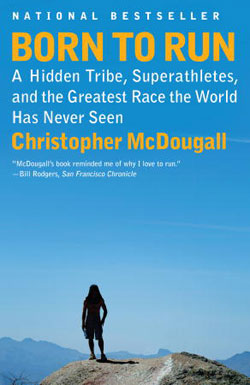
Some of you will remember my original post about the book Born to Run and Micah True, the Caballo Blanco.  It is the fourth-most viewed post on this blog!  

 http://cdn2-b.examiner.com/sites/default/files/styles/image_content_width/hash/c8/6c/c86c59b08785c64d91192fdcf917b368.jpg?itok=hR9koUBD

I recently read that the book is likely going to be made into a movie, with Matt McConaughey playing the role of Micah.  Here is the blurb from deadline.com

Matthew McConaughey has become attached to star in a Matthew Michael Carnahan-scripted adaptation of Christopher McDougall’s best-selling book, Born To Run: A Hidden Tribe, Super Athletes, And The Greatest Race The World Has Never Seen.

The book told the story of how an award-winning journalist and often-injured runner headed for Mexico’s isolated, deadly Copper Canyons to find out how the blissful Tarahumara Indians honed the ability to run hundreds of miles without rest or injury. He tags along to discover their secrets and takes readers from Harvard science labs to sun-baked valleys and freezing peaks across North America, where ever-growing numbers of ultra-runners are pushing their bodies to the limit. This led to a climactic race in the Copper Canyons that pitted America’s best ultra-runners against the tribe.
The book spent 178 weeks on the NYT Bestseller list and is still selling 10,000 copies a month. It ignited the ‘barefoot running movement,” one of the most influential exercise innovations of the past decade and the catalyst for a new $2 billion industry in “barefoot-style” shoes. The book’s a bestseller in 12 countries and sold 2 million copies in the U.S. and half that around the world.

And this is a short portion from an article in Trail Runner Magazine:

Last week, Deadline that actor Matthew McConaughey would be starring in an upcoming movie based on Christopher McDougall’s 2009 bestseller, Born to Run. The book documents a 2006 race in Mexico’s Copper Canyon between top U.S. ultrarunners and the local Tarahumara people, famous for running days on end in homemade sandals.

Born to Run has been credited with fueling the barefoot-running craze and inspiring more Americans to take up trail running. Micah True, also known as Caballo Blanco, an ultrarunner who organized the Copper Canyon race and featured heavily in the book, became something of a cult hero following its publication. (True passed away in 2012.) With McConaughey’s star power and a big-screen audience, it’s entirely possible that the movie will have a similar—if not amplified—effect.

In reading about this, I learned that there already is a movie about Micah, and the trailer is below.  Any of you who are familiar with Boulder will recognize the west end of Pearl Street, where I believe it's Micah sitting outside a coffee shop reading from the book.


"Run Free - the True Story of Caballo Blanco" produced and directed by Sterling Noren.

“Perhaps the first trail running bum, True was an unusual suspect to inspire the recent barefoot-running movement. But when True invited Christopher McDougall to Mexico’s Copper Canyon Ultra Marathon, he became a central figure in McDougall’s book, “Born To Run,” illuminating the minimal running techniques of the Tarahumara people. True passed away on a run in New Mexico’s Gila Desert in 2012, and now the Copper Canyon race has been renamed in True’s memory as Ultramarathon Caballo Blanco.”

Saturday, November 22, 2014

BACK TO BACK NATIONAL CHAMPIONSHIPS

Although the National Championship for the CU Men's Cross Country team will likely line the pockets of our already well heeled Athletic Director, the real honors go to the runners and to Coach Wetmore.  CU won with an amazing total of only 65 points, soundly defeating number 2 Stanford at 98 points - any total under 100 is generally considered excellent.  All five CU runners finished in the top 40, making them All Americans, with three of the five in the top 10!  I watched both the women's and the men's races [the CU women took 7th place] as well as the awards ceremony.  Kudos to all!!!!

Members of Colorado’s men’s cross country team hoist the championship trophy. 

From The Denver Post:
 
TERRE HAUTE, Ind. — Carrying their status as defending champion and heavy favorite not as a burden but with pride, the University of Colorado won the program's fifth NCAA men's cross country championship Saturday in dominant fashion.

On a windy day with strong gusts under leaden clouds and a damp course that left runners speckled with mud, Oregon's Edward Cheserek and Eric Jenkins went 1-2, but the Buffs put three in the top 10, led by junior Ammar Moussa in fifth. Sophomore Ben Saarel was seventh and senior Blake Theroux was ninth.

"It's no pressure to us, it's just business," Theroux said. "We're all veterans here. This is what we do every day. We train, we just have to do exactly what we've been doing and we're going to win. I trust these guys with my life. I'd take a bullet for them. I knew they were going to come out here and do it."

They may have approached their task in a businesslike manner, but when Moussa emerged from the finish area, a wave of emotion crossed his face and caught in his throat.

"Just blessed," he said, tears pooling in his eyes. "Really blessed."

Colorado finished with 65 points for the lowest (best) score of its men's titles. Runner-up Stanford finished with 98.

"We start training in June," said Theroux. "We train harder than anyone in this country. We're up in the Rocky Mountains, zero degrees, (running) 18 miles and we say, 'Screw this, we're going to go out there and win in Terre Haute.' That's just what it's all about. We've been talking about winning every single day since June 1. We talk about this day, we're going to come out here and kill it. That's what we did."

Moussa got a good luck text Friday night from Adam Goucher, who won the NCAA individual title in 1998 to lay the foundation for the elite program Wetmore has built. Moussa was touched to hear from him.

"I told him (Saturday) is just another chapter in the legacy he started," Moussa said. "We're not special, we're not different than anybody else, but we push each other every day. I do it for them, and I know we all feel the same way. We just care about each other."

This was Wetmore's first team to repeat, but his emotions were "half relief" and pride for his team.
"It's so hard to be the favorites, it's so hard to have the attention, it's so hard for nine or 10 21-year-old men to keep their egos in check and they really did it," Wetmore said. "That's the biggest feeling I have, pride, not for me but for them."

A month ago Wetmore said if CU won, it would be his best team. In recent days he's been more reluctant to say that.

"This is probably our best team ever," he said. "This is certainly the best third, fourth and fifth (runners) we've ever had. They're real good and they belong in the pantheon."

Saarel was the top Buff at NCAAs last season as a freshman, finishing eighth, but he battled nagging health issues this season. He ran strong Saturday.

"He's a very serious student, he's in a very hard arduous engineering program, he lives on four or five hours sleep," Wetmore said. "The other night he got seven and he said, 'I feel so much better.' I was encouraged for him this weekend, that he got his exams out of the way and was going to feel well."

Cross country teams tend to be extremely close because of the mutual suffering the sport entails, but that is especially true of this team fueled by the legacy Wetmore has built.

"It really is a team sport when you have the best team in the sport," Saarel said. "You do the best you can. Our coach stresses running your race, so I focused on trying to run my race. It's an amazing feeling to win, and it's privilege to run with these guys.

Wednesday, November 12, 2014

FOUR-PEAT

http://www.colorado.edu/sites/default/files/styles/large-feature-image/public/features/feature/2014XCPac12champs.jpg?itok=3whWdn9R

All of those four fingers raised by members of the CU Men's Cross Country Team signify their fourth straight PAC-12 Championship!  The success of Coach Mark Wetmore's teams over the years rivals that of the legendary John Wooden.  And for such outstanding accomplishments, the Boulder Daily Camera devoted a very short blurb with no pictures, no names, not much of anything - you will be reading a lot more here than in the local paper.  And an equally egregious irritation is the ridiculous amount of ink given to the CU Football team that is win less in the PAC-12, and with a grand total of 2 overall wins this season and no hope for another.

Here are some clips from the PAC-12 coverage of the Championship:

OAKLAND, Calif. – With all five of their scoring runners crossing the finish line in the top eight, the top-ranked COLORADO men captured their fourth-consecutive Pac-12 Men’s Cross Country title in Oakland on Friday morning at the Metropolitan Golf Links.

The defending NCAA and Pac-12 Champion Buffs scored 30 points to win the league crown. Colorado has been ranked the No. 1 team in the country all season, receiving all first-place votes each week. It is the first time since STANFORD won six in a row from 2000-05 a team has claimed four-straight league titles.

“I’ve been at this long time and we’ve been lucky enough to have a lot of good things happen to us,” said Colorado head coach Mark Wetmore said. “It feels great, but I always put it in big perspective and know that we have more work to do in the next couple of weeks … They had a great run and I'm really happy with them.”

The top-two individual men’s finishers were Ducks, with Eric Jenkins crossing in second place with a time of 23:34, behind Cheserek’s winning time of 23:23. The Cardinal’s Joe Rosa was third with a time of 23:37, and the next five runners were Buffs: Blake Theroux (4th, 23:42), Connor Winter (5th, 23:44), Ammar Moussa (6th, 23:49), Pierce Murphy (7th, 23:53) and Ben Saarel (8th, 23:54). Stanford’s Maxim Korolev (23:56) and Cal’s Chris Walden (23:57) rounded out the top 10, placing ninth and 10th, respectively.


MEN’S RESULTS

1. Colorado 30
2. Oregon 57
3. Stanford 60
4. Washington 87
5. UCLA 168
6. Arizona State 182
7. California 189
8. Arizona 206
9. Washington State 224

INDIVIDUAL MEN’S RESULTS
 
1. Edward Cheserek, ORE 23:23
2. Eric Jenkins, ORE 23:34
3. Joe Rosa, STAN 23:37
4. Blake Theroux, COLO 23:42
5. Connor Winter, COLO 23:44
6. Ammar Moussa, COLO 23:49
7. Pierce Murphy, COLO 23:53
8. Ben Saarel, COLO 23:54
9. Maxim Korolev, STAN 23:56
10. Chris Walden, CAL 23:57


Monday, March 03, 2014

TONY GROSS & MICAH TRUE aka CABALLO BLANCO

In February of 2013, I wrote a post Born to Run - Caballo Blanco & The Tarahumara. On the Blogspot version of this blog, it is the fourth most visited page, having over 650 page views.  On the WordPress version, it is also among the highest visited pages.  There have been numerous comments, but the most interesting just arrived at WordPress from Tony Gross.  Because Tony gives a unique perspective, his comments are worthy of a separate post here:

I am sure I was the last one to speak to Micah True. We were staying at the Gila Hot Springs bed and breakfast and got to know Micah a bit. He was not quite the mysterious person documented in Born to Run. Seemed like the usual ultra long distance type I had seen during our support of the Leadville 100 at Hope Pass with our llamas. Maybe a bit more knowing and less outwardly hard headed. One word would be peaceful. I did not know of his celebrity status and he did not project as such. The owners of the bed and breakfast were gone to Silver City for a movie and left Micah in charge. He prepared for his evening run by talking to his dog gently asking us to make sure he did not follow. I can not remember the dog’s Spanish name but it was “the crazy one” in English. No routine of stretching and other runner’s antics I had seen before. I asked how far he would run. He said he did not know and it dependent how he felt maybe 8 to 10 miles. The sun was nearing its wonderful afternoon warmth and glow that New Mexico is famous. He began to trot off and I said “Have a good run” and he said “Yeah”. It got dark and we noted his absence. Later we contacted a neighbor and she contacted the B and B owners on cell phone. The next morning the search was on and it was days of following the story until we knew his demise. 

Later I read Born to Run. We thought he was a nice guy. Very within his self.  Peaceful. From my brief 2 days of contact before he left on his last run.

 http://media2.onsugar.com/files/2012/05/22/2/192/1922729/34bac1387efb77e5_1337449932500.cached.xxxlarge_1.jpg

 http://www.mensrunninguk.co.uk/media/images/micahslider_2893.jpg

Saturday, December 07, 2013

CU WINS NATIONAL CHAMPIONSHIP


In a previous post, I wrote about the PAC 12 Championship of the CU Mens Cross Country team.  As a follow, the men proceeded to win the National Championship held in Terre Haute.  


TERRA HAUTE, Ind. — Through cold, windy and muddy conditions, the No. 3 ranked University of Colorado men’s cross country team once again proved to be the top team in the land as they claimed the 2013 NCAA Cross Country team title here today at the La Vern Gibson Championship Cross Country Course.

This marks the fourth team title for the Buffs since 2001 and is their first since 2006. They also won in 2004. The Buffs now have six overall cross country titles along with two women’s titles, all coming under Coach Mark Wetmore. On top of being the fourth men’s cross country national championship and sixth overall cross country title, it’s the 26th in CU history and 460th in Pac-12 history.
 
The Buffs soundly defeated runner-up and current No. 1 Northern Arizona (149-169) for the team crown after losing to NAU just eight days ago at the regional meet by eight points. Oklahoma State, ranked second overall, was an overwhelming favorite heading into the race and placed third with 230 points. BYU was fourth (267) and Oregon took fifth overall (274).

Full article here.

Sunday, November 03, 2013

CU WINS PAC 12 CHAMPIONSHIP

The University of Colorado cross country team wins the 2013 Pac-12 Championships at Coal Creek Golf Course on Saturday. Cliff Grassmick/ November 2, 2013.
 

In Men's Cross Country, that is.   And the Colorado Women came is second, surprising quite a few folks and just missing taking the top spot by only a few points.  The 2013 men's championship makes it a three-peat for the team - first place in all three years that CU has been in the PAC 12 Conference.


http://www.cubuffs.com/ads2/1208659.jpg?M=201310290245

This past Saturday, my good friend and running colleague Doug Laufer and I attended the Championships.  It could not have been a better day for a cross country event - cool, crisp, cloudless, not a bit of wind, and a beautiful rolling course at the Coal Creek Golf Course.  We got there early enough to stroll the course and check out good vantage points for watching the race develop - since it was a triple loop, the race was very spectator-friendly.  And there were indeed a lot of spectators; not only many CU fans but folks from all of the PAC 12 universities were abundant, sporting their school's hats, shirts and jackets.  Coming into the race, the CU men were ranked #1 in the country, so there was a bit of pressure to live up to their billing.  Here is a pic of the CU men leaving their starting box, running nine and scoring the top five.

The CU mens' team begins the race on Saturday. For more photos of the races, go to www.dailycamera.com.
Cliff Grassmick / November 2, 2013

Note that Oregon was in the adjacent box, and Oregon runner Edward Chesereck was the overall winner at 24:36 for the 8K.  But this is a team sport, and Colorado's Blake Theroux was third overall, finishing in 24:47.  The next four CU runners were all on the top 10 -  Connor Winter (fourth place), Ben Saarel (fifth), Pierce Murphy (seventh) and Ammar Moussa (ninth) and all were all within 28 seconds of Theroux.  The scoring ended up with the Buffs having 28 points for the win, with Oregon (54 points) coming in second and Stanford (79) third.  Doug and I knew that things were looking good when you see an abundance of Colorado jerseys in the lead pack, as below.


Morgan Pearson, left, Pierce Murphy (52), and Connor Winter, all of CU, lead early in the 8K race. For more photos of the races, go to www.dailycamera.com.
Cliff Grassmick / November 2, 2013

The CU women finished better than expected - they came in ranked 16th in the country, and 4th in the PAC 12.  But they pushed top-ranked Arizona hard, with Arizona scoring just 6 points fewer than Colorado.

2013 PAC 12 Cross Country Championships953.JPG 


All in all, A Great Day for the Race.

Curmudgeon End-Note - CU Football PAC 12 Loss to UCLA, Front Page of Boulder Daily Camera Sports Section; CU PAC 12 Championship, Third Page

Wednesday, July 10, 2013

IT'S ALL ABOUT ME

Now that I have your attention, I am copying below Our Monthly Featured Runner for March, 2013, on the Evart, Michigan 4th of July 5K Race website.  This year was the second annual Walk/Run, and once again I finished second in my age group - need to train harder for next year.  Probably should more precisely say that I need to train for next year - I have been battling a bit of plantar fasciitis for a few months and did not really get to prepare properly for the race.  Of course the good news is that there are not too many runners in my age group!!

Picture

Our Featured Runner for March is Doug Swartzendruber.  At the 2012 Evart 4th of July 5k Doug was 66 years old and finished second in the 60 and over age group in a time of 29:47.  As a semi-retired college teacher, Doug is either traveling the world for Pepperdine University or at home in Boulder, Colorado where he trains at high altitude.  As one of the fittest cities in the United States, and one of the main centers of running activity in the country, Boulder offers Doug plenty of opportunity to stay in shape.

Doug began running “a little over 30 years ago,” but his primary sport has always been basketball. When he was in high school Doug played for the New Paris (Indiana) Cubs, a school about the same size as the school in the movie HOOSIERS.  Doug took up running as an activity in itself because of a bet with his brother-in-law.   “While recovering from a holiday meal, my brother-in-law and I thought we had better go for a run.  We were not particularly successful and decided that a challenge was in order.  My brother-in-law took it seriously and quickly became one of the top runners in the region, and I pretty much kept playing basketball.”  Doug has continued to run off and on as his schedule permits and has maintained his fitness level so well over the years that he still plays basketball regularly and holds his own against players 30 years younger.

Doug credits running as the activity that has helped him control the weight gain that naturally occurs with advancing age.  He has not had to change his diet much in order to accomplish this.  Doug says that his extended family has quite a few heavy folks and that he consciously tries not to go down that path.  At this time Doug runs several days a week and walks on most of the other days.  Though Boulder is blessed with many, many runners, Doug usually runs alone.  He doesn’t “mind running alone” but has, in different situations, routinely run with a small group of close friends.  Running on trails is Doug’s favorite workout.  He particularly enjoys running on the Barr Trail (Pikes Peak), the Garden of the Gods in Colorado Springs, or on Mt. Sanitas in Boulder, describing these runs as a combination of a “good workout and an adventure.”

Doug’s personal record for 5k is 18:49 and for 10k “just under 40:00.”  Doug has run several marathons.  He has run the incredibly tough Pikes Peak Marathon where the Ascent (half marathon) is considered to be about equal in time to a regular marathon.  His best Ascent time is 3:42.  Doug also did the round trip on Pikes Peak in slightly under 7 hours, and has also run the Las Vegas Marathon and Grandma’s Marathon in Duluth, Minnesota, both in the 3:50’s. 

Doug plans to make the journey from Colorado to Evart again next 4th of July to run our race. He says that Evart is “a great place to visit and the 4th of July 5k is one of the most enjoyable” events he has done,” even though “it was a tad hot” last year.

Friday, February 08, 2013

BORN TO RUN - CABALLO BLANCO & THE TARAHUMARA


If you have ever laced up the running shoes, gone for a run, felt a bit of exhilaration, peace, wonder, accomplishment and exhaustion all wrapped together, then you definitely need to read Born to Run by Christopher McDougall.
 
The Hidden Tribe is the Tarahumara of Mexico's Copper Canyon, the Super Athletes are folks like Scott Jurek shown at the top running with Tarahumara Arnulfo Quimare, and the Greatest Race the World Has Never Seen was the brainchild of Caballo Blanco, and it matched the top Tarahumara runners against some of the top US ultramarathoners in a 50+ mile race on the trails through the Copper Canyon. 
 
 
Here is an interesting YouTube video about the Tarahumara


There are many reviews of McDougall's book, such as this one, that discuss not only the race and the runners, but also topics such as sports medicine and evolution.  However, here I want to share a bit of what I learned about Caballo Blanco, aka Micah True, aka Michael Randall Hickman.


The first time that I had heard about True, Caballo Blanco, is when he disappeared.  On March 27 of 2012, True went for a run in the Gila Wilderness of New Mexico.  As usual, he was alone and was going for a long run - but he never returned. Here is a timeline of the search, and the New York Times wrote an extensive story about Caballo here.   But the stories in the Boulder Daily Camera brought True's story closer to home because of Caballo's long-standing relationship with Boulder and the Colorado running community. 
 
In the final chapter of McDougall's book, we read about the moment that Christopher had been waiting for - Caballo was telling his story about how he came to be the White Horse of Copper Canyon - his progression from Michael Hickman to the Gypsy Cowboy to Micah True to Caballo Blanco.  Sorry - you will have to read the book for all of the details, but suffice it to say, you will surely find it fascinating. 
 
What struck me most was this passage that McDougall wrote:
 
"When I get too old to work, I'll do what Geronimo would've done if they'd left him alone," Caballo said.  "I'd walk off into the deep canyons and find a quiet place to lie down."  There was no melodrama or self-pity in the way Caballo said this, just the understanding that some day, the life he'd chosen would require one last disappearing act. 
 
"So maybe I'll see you again. Or maybe I won't"
 
And at the age of 58, Caballo went out for his last run, deep in the canyons, and found a quiet place to lay down and die.


Monday, September 10, 2012

RUNNING WITH THE AMISH

From Runner's World


Running with the Amish


Pennsylvania's old order Anabaptists famously eschew modern conveniences, extolling the virtues of hard work and self-reliance. That turns out to be a great way to produce incredibly strong runners—as long as the elders approve.

By Bart Yasso with Steve Friedman

Published 02/27/2012

Every autumn for as many years as I can remember, I have made a trip to Pennsylvania Dutch Country. I drive two hours from my home in Bethlehem through rolling hills, past tidy main streets lined with diners and craft shops. I pull to the side of country roads on the outskirts of New Holland, or Bird-in-Hand, or elsewhere in Lancaster County, and get out of my car to stretch and breathe in the crisp air and the rich, loamy odors.
I like to watch corn being harvested, which looks just as it does in the tourism brochures: A man wearing black pants held up by suspenders over a white buttoned shirt, with a straw hat, follows a slow, heavy draft horse pulling a corn-picking machine. It seems difficult and simple and inefficient and clean.

My mom and dad brought me to the harvest when I was a kid, and when I could drive I made the trip myself—which was just as well, because for a time in my teens and early 20s, I wasn't getting along too well with my family, or anyone else. I drank and got into trouble. The idea of a nine-to-five job filled me with a dull fear, but I wasn't sure what other options I had. I had long hair and, I suspect, a look in my eyes that would have alarmed any of the farmers had they bothered to look my way.

Eventually I stopped drinking and, for the most part, stopped driving. I don't quite trust myself to remember exactly what I was thinking when I was that young man—I'm 56 now—but I think it had to do with the world being a dangerous place. I rode a bicycle everywhere—to the grocery store, the hardware store, and just about everywhere except Lancaster.

Through the years, I may have changed, but that annual trip didn't. Even as I grew older and began traveling more often, even as I began my career as a marathoner, then a race director and, for the past 25 years, as an ambassador for long-distance running, serving as this magazine's chief running officer, I kept returning for the corn harvest. Had I stopped to think about it—which I didn't—I might have admitted that the trip served as restorative pause in a life increasingly complicated, a life filled with texts and tweets, hotel lobbies, and air miles. Had I stopped to think about it—which I didn't—I also might have noted that the qualities I had been preaching as essential to any great long-distance runner were right in front of me on those fall pilgrimages: a love for the land, strength, endurance, and an appreciation for simple, productive labor. Had I stopped to think about it—which neither I nor anyone else I ever met had ever stopped to think about—I might have wondered what would happen if a community of inward-looking, healthy-living, labor-revering, modernity-shunning, tradition-bound religious people who looked really, really fit and strong ever got serious about athletics, ever committed themselves to winning foot races.

I started thinking about it because of my wife. Laura returned from the Bird-in-Hand Half-Marathon last September, where she won her age group and was as excited as I had ever seen her after a race. (Which is saying a lot, as she's run in 90 ultras and 128 marathons, in 17 countries on three continents.) She raved about how sweet everyone had been at the race, how polite, and how different the race was from any other. She said the race organizer, Jim Smucker, had asked if she was related to me, and when she told him she was my wife, he asked if I might be interested in coming to deliver one of my talks about running to some of the local citizens. He mentioned a regular run under the full moon, through something called the Valley of No Wires. The next one would occur the second week of October.

And that's how I ended up running with the Amish.

When Jim Smucker turned 25, he made a list of life goals. He wanted to be a successful businessman. He wanted to be a good husband and father. He wanted to run a marathon. Twenty years later, he hadn't crossed that last item off his list. Only when his younger brother, Jeff, told him that he was going to run a marathon did Smucker get serious about his lingering goal. He started training in June 2006, and ran the Steamtown Marathon in Scranton that September. His sister Ruthie's son, Jason, joined his uncles that day. Shortly thereafter, niece Laura started training, and by 2011 she had qualified for the Boston Marathon. Smucker is 50 now, and in the past four years, he has run 22 marathons, two 50-mile ultras, and one 50-K. His personal best is 3:30 (Jeff's is 2:58). There are five other Smucker siblings, and among them and their children—30 people in all—16 have now run at least one half-marathon. The slowest, Jim's daughter Rachel, has run a 4:29 marathon. "She's young," Smucker says. "She'll get faster."

The Smuckers are Mennonite, one of dozens of ways to be Anabaptist, a Christian tradition in which baptism takes place as an adult rather than as a child. In terms of strict adherence to a code of conduct and attachment to time-honored rituals, the Old Order Amish of Lancaster County sit on one end of the spectrum, and the more progressive groups of Mennonites on the other (though there are some Old Order Mennonites, too). Both groups hold fast to the principles of their forebearers—hard work, humility, modesty, community togetherness verging on clannishness, self-reliance, and a skeptical view of modernity—but whereas the Old Order Amish drive buggies and wear suspenders, Mennonites (at least most of them) drive and wear just about whatever they want. To make a crude and overly simplistic analogy, Old Order Amish are like Ultra-Orthodox Jews, and Mennonites are a more acculturated, reformed branch. (Smucker's mother and father, for example, left the Old Order Amish to join the Mennonites.)

The running Smuckers became somewhat well known in the rolling hills of Lancaster County. At least among other Mennonites. Two years ago, Smucker was sitting at the counter of the restaurant he owns, the Bird-in-Hand Family Restaurant & Smorgasbord. A friend of his, a Mennonite insurance agent, told Smucker that one of his Amish clients liked to run, and that maybe they should meet. When they did, the Amish man told Smucker that he was thinking of running a marathon.

"That was new," Smucker remembers. "I didn't know the Amish ran marathons."

Smucker invited the Amish man to join him and another Mennonite runner, Terry Yoder, during one of their speed workouts. (I'm not using the Amish man's name because he and the other running Amish I met asked to remain anonymous, partly out of concern that church elders might think their running is self-centered or otherwise violative of the group's teaching.) The three met at the Conestoga Valley High School track to run 800-meter intervals. Yes, Yasso 800s, the workout I had devised 30 years ago to help runners predict their best marathon times. (What I discovered is that if you could run ten 800-meter intervals at a speed of three minutes, 50 seconds, for example, you could run a marathon in three hours, 50 minutes.)

Smucker and Yoder considered themselves fairly decent marathoners, but after nine 800s, the Amish man—who had never raced before—was keeping up with them. Not only that, he didn't seem to be struggling. In fact, Smucker remembers that he wasn't even breathing hard.

Smucker told him he needn't be polite, that he should go all out the last 800. "Run as fast as you like. See what you have left."

The trio started out together, but immediately the Amish man shot ahead. Yoder and Smucker finished in 3:30. The Amish runner had finished at least 30 seconds ahead of them.

"I said, 'Holy cow!'" Smucker remembers. "'That guy is fast. Are there more of them?'"

There were. The Amish man who ran the 800s ran a marathon in 2010. Later that year, number two joined him. Then another friend ran. Last year, some three years after the track workout, six of the fastest competed in the 200-mile Lancaster to Mt. Pocono Ragnar Relay Series race. The Amish team called themselves Vella Shpringa (loosely translated, "let's run") and wore T-shirts they had designed. On the front of the T-shirt was a drawing of a running man with a beard and suspenders, and a hat flying off his head. He looked happy.

Of the 106 teams in the Ragnar Relay race, 90 had 12 members, and each of those team members ran three legs of the race, distances of 1.8 to 10.2 miles. Vella Shpringa was one of 16 "ultra" teams of only six runners each, whose members each ran six legs of 5 to 17 miles, twice the distance of the 12-person teams.

Vella Shpringa finished first among the ultra teams. It came in fourth overall.

Since then, the Amish runners have gotten faster, and now number several dozen. Smucker told me one even posted on his Facebook page his desire to run Boston and a 100-miler.

I don't know which surprised me more—the Amish runner's audacity or the fact that he had a Facebook page. I wondered something else, too. How had he—and his running cohorts—gotten so fast, so soon? What was their secret?

Last October I ran with Smucker, some of his Mennonite friends, and about 20 Amish. The Mennonites wore running shorts and running pants, and synthetic tops. The Amish men wore black pants held up with suspenders and long-sleeve, button-down shirts. Most were clean-shaven (Amish don't grow beards until they marry, which is usually a few years after they formally join the church). The one woman in the group wore a long dress and a head scarf. I should note that they all wore running shoes. I should also note that we were running by the light of the moon.

Todd Weaver, another Mennonite, Terry Yoder, and a few others had started the full-moon runs in the fall of 2007. Smucker joined in 2008, and early the next year he brought the marathoning Amish man, and then that man brought a few of his friends. These days, the full-moon runs draw as many as 30 people, Mennonites, Amish, and English (which is what the Old Order Amish call non-Anabaptists). The course changes each month, designed by whoever is hosting the run. That person notifies the holder of the contact list, who then e-mails and texts everyone where to meet. The host provides refreshments afterward.

We ran under a full moon, along back roads and unpaved farm lanes, past empty fields of cornhusks. I had never seen such a bright moon. It lit up the hills and roads. If I had been carrying a paperback, I could have sat down and read it. I swear that at times I could feel the moonlight like brushed velvet on my neck. Only later did I realize why the moon seemed so otherworldly. We were running through farmland populated almost entirely by Old Order Amish, who don't use electricity from public utility poles. That's why locals refer to the area as the Valley of No Wires. A pilot once told Smucker that he and some fellow flyers use the dark patch of geography as a landmark when heading into Philadelphia at night. They call it the Black Hole.

When I remarked at the impressive luminescence, one of the runners mentioned that the moon had risen at 6:03 p.m. and would set at 6:48 a.m., and mentioned that the next full moon—and the next full-moon run—would occur on November 10, and that the moon would reach its maximum fullness at midnight. The information came to him naturally, the same way that I might mention that the Philadelphia Eagles would be playing the New Orleans Saints on the following Sunday evening, and that while the telecast started at 8 p.m., kickoff wouldn't occur until 8:15 p.m.

All six members of the Amish relay team ran that night. We kept to a 10-minute pace, though it was obvious to me, because of their strong, easy strides, that a few of the Amish runners could have surged ahead at any moment. One of them, a man in his 20s, about six-foot-two, most of that legs, ran in Vibram FiveFingers. He said he did so because he believed in the barefoot movement as a way to feel good and avoid injury when running. Someone joked that running barefoot had a more practical justification: Considering the farm lanes they ran, it was easier to wash horse manure off bare feet than it was off running shoes.

The discussion during the full-moon run was the same one that every group of runners I've ever joined has participated in: personal bests, upcoming races, business ups and downs, good-natured insults. A few of the faster Mennonites sped ahead the last mile, and when they got to the Bird-in-Hand Fire Station, doubled back to join the group.

"You can tell they're Mennonites," one of the Amish cracked, "they're going the wrong way again."

We gathered back at the fire station, where we had started, and were joined by wives, all in traditional head coverings and long dresses, barefoot children wearing straw hats, and, in back rows, church elders with long beards. Now, I have delivered talks and slide shows about running hundreds of times, in places ranging from equatorial Africa to Alaska. I have talked to overweight people skeptical that anything could help them get healthy, elite marathoners doubtful that anything coming from someone like me, who couldn't break four hours anymore, would be interesting. But as I gazed out at the silent faces, mostly nonrunners, at men who had never driven cars and small children who had never watched a television show, I thought this would be my toughest crowd ever.

But as I talked about marathons in Antarctica, and 146-mile races through Death Valley, and some of the more exotic African tribes I had met, and scarily large snakes I had encountered on trail runs in India, the crowd was just as curious and engaged as any I had ever addressed. Afterward, as coffee and whoopie pies (two pieces of chocolate cake or gingerbread sandwiching a creamy filling) were served and as the Amish and a few Mennonites milled about, I took some questions. Many of the young men were eager to know what it took to qualify for a marathon, and whether I thought they could do it. One of the elders was fascinated by my trip to Jerusalem.

One man, who had already raced in seven marathons and who had recorded a PR of 2:49, wanted to talk training techniques.

It was around this time that it began to dawn on me that I had stumbled upon something wondrous. Practically in my backyard, I had discovered a semi-secret society of, if not running savants, at least raw running talent. The Mennonites were good runners, but the Amish—with their even harder lives, and even stricter rules—were clearly a cut above. I felt a little like Christopher (Born to Run)McDougall tracking down the legendary Tarahumara Indian runners in Mexico's Copper Canyon. Man, I wondered, with a little more training, just how good could these guys be?

Here are some of the things I learned about the Amish while running with them: Some Old Order Amish don't pay Social Security taxes and don't receive Social Security benefits. They attend church services every other Sunday and visit each other in their homes on the nonchurch Sundays. Public-utility electricity is forbidden, but battery power is okay. Cell phones and iPads are allowed (and sometimes powered by the sun), but generally only when they're used for business or in emergencies. Some Ohio Old Order Amish can ride bikes; most Lancaster County Old Order Amish are not supposed to. Many young Old Order Amish get around on inline skates. Young and old use homemade scooters, which are made by attaching bicycle tires to a low frame with handlebars. Most Mennonites can drive cars, but Old Order ones ride black buggies, and Lancaster's Old Order Amish gray ones.

One is not an official member of the Old Order Amish church until adulthood, and before then, one can drive a car, though it's not encouraged. Joining the church occurs before one marries. Marriage for men means it's time to stop shaving. Like teenagers everywhere, some youngsters have discovered ways to live within the letter if not the spirit of the law: A few have battery-powered horns in their buggies, as well as battery-powered boom boxes. But all Amish, young and old, are expected to dress modestly. For the women of Lancaster County, this means long skirts and hair coverings. For the men, it means solid-color shirts, black pants and dark shoes, and suspenders—yes, even when running.

If you choose not to join the church, you're still part of the community, but if you join, then leave, you are "shunned," which, one of the Amish tells me, isn't as harsh, in many cases, as you might imagine. "You don't sit at the same table as the church members at a wedding, but you're still invited," he says. Shunning aside, to forgive is not only divine, it's practiced. After 10 young girls were shot (five died of their wounds) at an Amish schoolhouse in 2006 by a non-Amish man who then killed himself, the community banded together and consoled the shooter's wife and parents. The Amish also set aside funds to assist the family of the shooter, and more than 30 members of the community attended his funeral.

I learned that many of the young community members who haven't yet joined the church—not just the runners—had computers, were online, and had Facebook accounts, and that many of the older members were chubbier and more sedentary than past generations. Amish have until recently worked mostly as farmers—hard-working ones. (According to several studies, while the average American adult takes 5,000 steps in an average day, the average Amish adult male takes 18,425.) Because of a finite supply of farmland and growing families (there are approximately 30,000 Old Order Amish in Lancaster County, double the number from 25 years ago, and none of them believe in artificial birth control), though, more and more Amish are going into business, often for themselves.

One of the Amish runners is a solar-power installer. Another is in construction, and a third is a shoe dealer (all dark colors, including running shoes). One of the Vella Shpringa buys properties, fixes them, then sells or rents them.

The Old Order Amish, whose very existence in 21st-century America offers an object lesson on the inherent tensions between an old religion existing in a modern society, approach running with enthusiasm and some trepidation. On the one hand, the sport provides exercise, and a way to be part of a community, and simple, difficult labor with clearly demarcated rewards. An active lifestyle has always been natural for the group, and though overweening pride is anathema, a sense of achievement is not. "We get awards for doing well in school," one of the Vella Shpringa runners points out. "It's not like we're not encouraged to do our best."

Long-distance racing also offers a chance for this insular community to allow the English to see (and buy from) the Amish. The Bird-in-Hand Half-Marathon in September 2011 attracted 600 people (about 100 Anabaptists), down from 1,000 the year before, its first. This year, Smucker tells me, race organizers are hoping to get back to 1,000, partly by an increased number of Anabaptists. Smucker wants the race to become a strong local tradition as well as an annual destination for tourists and runners. He's arranged for Amish children in buggies to travel up and down the course, handing out water to runners. The outhouses at each of the six one-room Amish schoolhouses spread throughout the valley will provide bathroom breaks.

The Friday night after the 5-K and before the Saturday morning half-marathon, there will be the usual touches, like the launching of 10 hot air balloons, a big bonfire, and Amish pizza. I ask what Amish pizza is. "It's just like regular pizza," Smucker says, "but Amish."

As more Amish race, though, and get faster, there are risks. No one wants a repeat of the softball ban.

It's not something I'd previously noticed, but every Amish schoolhouse has a ball field next to it. Consequently, the Amish have for generations been really, really good at softball and baseball. So good, in fact, that some, in the past, were recruited to play on semipro teams. In the late 1940s and early 1950s, Smucker's uncle, who was Old Order Amish, pitched semiprofessionally under an assumed name (his Amish catcher did the same). They didn't want their parents or church elders to see their names in any stories or box scores in local papers. They weren't sure either would approve. They were right to have worried.

Smucker's uncle and his battery mate eventually retired without having been found out, but 15 years ago, some other young Amish men weren't quite as careful, or quite as fortunate. They started playing in a number of leagues, and wearing uniforms, and after a while, it was apparently too much for the church elders to ignore. Whether it was too obvious a display of pride, or modernity, is not exactly clear. Kids can still play, but Amish church members in Lancaster County are now banned from playing softball and baseball.

None of the runners wants that to happen to their sport. None thinks it should happen. Of course they want to run faster, they say. Of course they want to improve. And yes, sure, winning is nice. But those are all secondary goals.

"I love the serenity of running alone as well as the fellowship of running with a group," one of the runners wrote to me in an e-mail. "I realize that every step, every breath, and every PR is a gift from God."

"My prayer," he continued, "is that [this article] can inspire many people, not only because we are a conservative and peculiar people, but because we love the Lord."

"Humility is important," says another Amish runner, a member of the victorious Ragnar Relay team. "When you start to elevate the individual above the community, that's a bad thing. I don't care for myself whether my picture or my name is in the paper. I wouldn't want to win a race to put the attention on anything I've ever done, but if I could do it to inspire other people, that's something I would do. That's something I hope can come out of it."

Smucker the Mennonite believes that physical fitness and goals are good for everyone. Smucker the businessman wants a lot of people to enter the Bird-in-Hand Half-Marathon in September. Smucker the runner believes in happy endings and the inspirational power of one. "My brother ran one marathon, and he inspired 16 of his family members to run half or full marathons," he says. "Imagine the power of example—how this could spread among the Amish."

The last time I ran with the Anabaptists, on December 10, 30 of us met in a barn on a hilly piece of land at the intersection of two roads just outside New Holland, Pennsylvania. Inside the barn, men pulled fleece jackets over their suspenders. Runners knotted around the propane heaters and lamps, and at 7 p.m., we set off.

All of the Ragnar victors were there again, and one wore his Vella Shpringa T-shirt. The barefoot runner was back in his FiveFingers. There were a few English runners, including a woman who worked at a nearby assisted-living center and who, at the barefoot runner's request, had given him swimming lessons so that he could compete in a triathalon.

We ran through the Valley of No Wires again, but on different roads, for 10 miles instead of five. We ran at a nine-minute-plus pace, and the Ragnar champions and many others held back, in deference to the slower members. I was one of the slowest. It was 30 degrees out, and under the clear, bright-moonlight sky, the air was dry and cold. We ran down Musser School Road, and along Groffdale Road, and past empty cornfields. (In the summer, runners need to pay attention at cornfield intersections, because visibility is blocked. A buggy might be coming round the bend.)

A buggy caught up with us at mile seven, and a woman in a long dress and head scarf hopped out. She had run 1,000 miles in the past year and wanted to join us for the last few miles. She looked to be about 30. One man running in the group had never gone farther than five miles and was ready to quit after six. When he saw me struggling (because of Lyme disease, distance is tough, and my limp is visible), he said, "You seemed to be having such a good time," so he decided to tough it out, too. Another buggy passed and the people inside—teenagers, I presumed—honked a battery-powered horn at us, and a few of the runners yelled out good-naturedly, "Vella Shpringa!"

Mile eight, and we had seen only three cars. Two more miles, and we would file back into our host's barn. Bathed in propane-powered lights, we would help ourselves to bowls of creamy vanilla ice cream, made at a dairy farm just down the road, and more whoopie pies, chocolate, and peanut butter. (The Old Order Amish, at least the ones in Lancaster County, seem to have a sweet tooth, their rangy physiques, ruddy complexions, and athletic prowess notwithstanding.) The host's father would join us, bearded and suspendered, and the runner's sister-in-law, and his four young nieces in blue dresses, one more wide-eyed and pink-cheeked than the next, and they would gaze in mute wonder at their big, sweating co-religionists. When the iPhones attached to the biceps of an English couple announced, in the metallic voice of Lance Armstrong ("This is Lance Armstrong!"), that each had achieved a personal best that night, the little girls would peer at the couple as if they were visitors from Pluto.

But we wouldn't have at the whoopie pies for another two miles. First we had to run down a hill, and up a ridge, past a desolate field of slaughtered corn, alongside a paved country road, breathing in the aromatic farmland, puffing out clouds into the chilly night air. There we were, some evangelical (when it came to marathons) Mennonites, a handful of curious English, and the running Amish—a knot of religious and cultural outliers with powerful, easy strides and great faith and no discernible body fat.

I was in the back of pack, and as I watched the men of Vella Shpringa lope through the buttery moonlight, it was easy to imagine upcoming triumphs, to calculate headline-grabbing records, to wonder again exactly what these Old Order Amish were capable of, running for God and community, searching for divinity in speed, especially with some nutritional counseling and professional coaching. If they chose to, I am sure, they could run faster than I ever did.

I wondered what the church elders would think of a tastefully done movie.

A week later, over lunch at the Bird-in-Hand Family Restaurant & Smorgasbord with Smucker and one of the Vella Shpringa runners, I mentioned some of my impressions.

I said that the Old Order Amish might have a sizable advantage at long-distance running, coming from a culture that was so active, and that lived such a healthy lifestyle (Amish eschew alcohol and don't smoke, though there are exceptions; tobacco used to be a big cash crop on the farms and is still grown by some Amish today). I suggested that the Amish traditions of hard work and endurance, their history of farming, of stoicism and few automobiles conspired to create a potential stockpile of superior long-distance runners, and that Pennsylvania Dutch Country might be the birthplace of a new generation of marathon champions. Sort of Born to Run meets Witness.

"The Amish are hard-working people," Smucker agreed. "Running a half-marathon, or a marathon, is daunting for anybody, but they're more used to the hard work and effort than the average American is."

Sure. But wasn't there something more? With coaching and training, couldn't the Men Who Run Through The Valley of No Wires be made into dominant marathoners? Couldn't they become like Canadian curlers, or Finnish Nordic skiers, or Samoan linebackers, or Dominican shortstops, or the Old Order Amish softball sluggers of yore? I refrained from mentioning my movie idea. But they could see my excitement.

The Amish runner smiled. He, like many of his co-religionists, is an eminently practical man. He comes from generations of farmers, after all. He is a runner, to be sure, optimistic and cheerful, but unlike some more sentimental and soft-headed marathoners (mea culpa), not particularly given to flights of fancy.

"Well, we might be pretty fast compared to some of the Americans who eat fast food and don't exercise much," the humble young runner responded. "But I'm not sure it's such a good theory when you compare us to the Kenyans."

Sunday, September 02, 2012

PANTS ON FIRE


Perhaps if Paul Ryan's pants were on fire he would have run a sub-three hour marathon.  It seems to be fairly well established that Ryan plays fairly loosely with the facts [e.g. the numerous erroneous claims made at the Republican National Convention - or as Salon calls it Ryan's Brazen Lies]  However, one 'misstatement' that I simply cannot tolerate is his claim of running a marathon in "two hour and fifty-something."  As many others have pointed out, anyone who has run a marathon [or fifty] can pretty much recollect the precise time of each effort, often down to the second.  It is unfathomable to think that one could make a claim that was off by more than an hour - Ryan finished his marathon in just over four hours!!!  Perhaps he was using one of my favorite running lines "Ya, I ran that marathon in 2:50 - I just wasn't at the finish line."

Saturday, July 14, 2012

EVART'S FOURTH OF JULY FESTIVAL

We headed to Evart Michigan on Sunday, July 1, and one of the serendipitous events of that day was noting the billboard advertising half-price Frosties and a Wendy's at the following exit!  Great way to prepare for a race.  We helped with many of the last minute details for the First Annual Evart 5K Walk-Run - stuffing goodie bags, putting up notes along the race course reminding folks to keep their dogs under control, assembling nice sponsor signs, and helping set up the starting line and finishing line tables and with race day registration.

One of the highlights was the annual fireworks show which draws thousands of folks from around central Michigan and the preceding concert by a Beatles tribute band named Shout - billed as the Best Beatles Tribute Band in Michigan, and I will say they are quite good.  They play three extensive sets, generally divied up as Early Beatles, Sgt. Pepper and Abby Road.  The four members produce all of the music [no canned backups] and are very talented singers and musicians, with "George" and "John" moving from guitar to keyboard, even playing both on some tunes.  "Paul" has a great voice and even plays the bass left-handed.  


And as far as the went in relationship to my Setting Goals post, I achieved nearly all of my goals, and even brought home some hardware - a nicely designed silver medal [got beat by an Evart fellow four years my senior!].  Here's a visual of the finish line - and wow, was it hot!!!!  Great event.


Wednesday, June 13, 2012

SETTING GOALS

No, this is not some transformational, life-coach-inspired self-actualization, but rather a generally less than serious preparation for a 5K walk/shuffle/jog/run.  In a moment of weakness, I registered for the Evart, Michigan, Fourth of July 5K Race, and as I generally do before such events, I set some goals:

1.  Finish the race
2.  Start and finish on the same day
3.  Start and finish within the same hour
4.  This is pushing it, but start and finish within the same half hour
5.  Finish ahead of all 200 pound women
6.  Finish ahead of all 250 pound men
7.  Finish among the top 5% of women in my age group
8.  Finish among the top 20% of men in my age group
9.  Finish among the top 50% of all runners
10.  Conserve energy for the post-race beer drinking

Also, in the spirit of a dictum of race director Ken Willems, I hope to drop a couple pounds before race day because "The lighter you are, the faster you go."

Happy Trails


Saturday, January 14, 2012

THE E-I-L TRAIL

The late Ron Wisner and I loved to explore new terrain on our trail runs.  Our good friend Luis Lowe would often accompany us as our designated whiner - but that's another story.  We logged many satisfying hours on Barr Trail, the Santa Fe Regional Trail / American Discovery Trail, Waldo Canyon, Section 16, and the trails at Mount Saint Francis, the Air Force Academy and Austin Bluffs, to name a few.  For some time, Ron had been talking about running on Trail 713, and so one weekend we headed out in search of the trail-head.

Disclaimer - What follows is a re-creation of our adventure, and anyone who knew Ron as a runner or tennis player will certainly recognize that the legs shown are not Ron's!   As a gift to Ron, my friend and colleague Jeff Jasperse from Pepperdine helped me recreate this outing, with photography by Steven McClurg.  Click on the pictures for enlarged versions.

In Search of the 713

A typical beginning of a trail run - Ron leading and no doubt chatting while I focus on keeping up.  We had followed the not-so-straightforward directions to the trail head, but saw no signs or markers.


It was not very long before we came to a fork in the trail - decision time!


Well, the EIL was not what we were looking for, nor was it anything that we had ever heard of before, so after a moment, we jumped the rock in the middle of the right fork and headed out.


Well, after about 500 feet and a couple of turns, the trail ended.  Note that Ron would not concede that this was leading nowhere and that I was ready to turn back!  After a bit of bushwacking, Ron agreed that perhaps the EIL trail was going nowhere.


So, we returned to the original fork in the trail, and within a few moments, we were both laughing out loud.


The mystery of the EIL Trail was solved!!  And we headed out on the 713 for a memorable run that will always be referred to as "The E-I-L."

Saturday, November 20, 2010

BARR TRAIL

As one season gives way to the next, my thoughts often go toward the Barr Trail.  The trail is beautiful, and it holds many fond memories - of New Year's Day "runs" to Barr Camp; of countless training sessions preparing for the Pikes Peak Ascent and the Pikes Peak Marathon; of "up and overs" starting at the trail head, across the summit, and down the back side of the Peak ending up at Rocky Mountain Mennonite Camp; but especially of time well-spent with the best of friends, particularly the late, great Ron Wisner.


The trailhead is at the outskirts of Manitou Springs, which is just west of Colorado Springs.  The trail is named for Fred Barr, who designed and pretty much built the trail from 1914 to 1921. Barr Camp was built between 1921 and 1924, and is at about the half-way point up the Peak.  Here is a graphic of the trail:


The trail passes through four of the eight Colorado biomes - The Foothills Zone (6,000 to 8,000 feet) is composed of small bushes and trees such as scrub oak, juniper, sagebrush and pinion pine and is inhabited by raccoons, skunks, various squirrels, deer and an occasional bear and mountain lion.  The Montane Zone (8,000 to 10,000 feet) has various wildflowers and small shrubs, but large forests of pines and Douglas fir, as well as the colorful aspen tree, are predominant. Deer, elk, bear and mountain lions can all be found at this attitude.  The Subalpine Zone (10,000 to 11,500 feet) is less hospitable. Englemann spruce, Douglas fir and bristlecone pine comprise the area’s dense forests. It is estimated that some bristlecone pine trees on Pikes Peak are over 2000 years old.  In the Alpine Zone (11,500 feet and above), tundra composed of tiny flowers, mosses and lichen eke out a cold existence in the short growing season.   Here are some views from along the way - if you have been there, enjoy, and if you have not yet done the trail, make plans!


Postscript - Compare the Barr Trail Pictures with the pictures I took Along the Maclehose Trail in Kowloon, Hong Kong.

And One For The Wintertime Denizens Of The Trail

Thursday, December 06, 2007

ALONG THE MACLEHOSE TRAIL


Lion Rock
The prominent peak straight north of the HKBU campus is Lion Rock. Stage 5 of the 100 kilometer [62 mile] MacLehose Trail passes just behind Lion Rock. The MacLehose winds its way along the rugged range that more-or-less separates the Kowloon Peninsula on the south from the New Territories to the north. It undulates with many ups and downs from Pak Tam Chung on the east end to Tuen Mun on the west, and it is comprised of 10 sections. There is an annual Trail run/hike for 700 teams that attempt to complete the trail in less than 48 hours. The leading groups finish in well under 24 hours.
From campus, a 20 minute walk will get you to the trailhead of a stone path that goes from Lion Rock Park to the Trail. Another 20 minutes of fairly steep grade will get you to Kowloon Pass and the intersection with the Trail on Stage 5. Here one has several choices - head west toward Beacon Hill and Sections 4-1; head east toward Sections 6-10; start to the east, and then break off on the trail that goes to the summit of Lion Rock; or go straight on a trail that leads to Amah Rock. Below are some pictures related to each of these choices.

Kowloon Pass Looking Out on Kowloon Tong


This is the decision point - if one needs a bit of time to ponder which way to go, there are a couple of shelters available for contemplation. Let's first head toward Beacon Hill


The path to Beacon Hill

One of the Beacons

The trail toward Amah Rock with Amah in the distance. The legend is that a woman holding her child stood on the ridge, awaiting the husband's return from the sea. He never returned and she and the child turned to stone.


Amah Rock


The trail toward Lion Rock - for those familiar with running in Colorado Springs, this is rather like a hybrid between a Garden trail and the 16 Golden Stairs


The summit of Lion Rock


Just like in the Rockies, wildlife can be seen along the Trail :-)