Showing posts with label New Mexico. Show all posts

Tuesday, September 30, 2025

ART FROM THE BINS - AMADO PEÑA

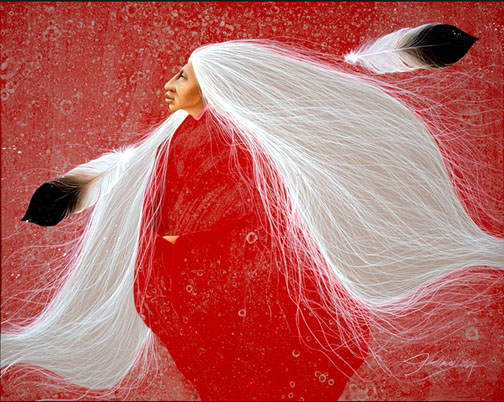
I have found two art pieces by Amado Peña, who is described as "a contemporary American visual artist of Mexican and Yaqui descent. Born in Laredo, Texas, in 1943, his work is known for celebrating the culture of the Southwest and its indigenous peoples with bold colors, dynamic compositions, and stylized figures."

The Artist 

A Retrospective Conversation with Artist Amado M. Peña Jr. | Latino  Business Report
        

The first piece is a Native American Gallery Poster - I could not find a title, and it measures approximately 10" x 12"

Amado Pena Native American Gallery Poster

The second picture is a signed pencil lithograph with the full name
Amado Maurilio Peña Jr. 1983
Size is 8" x 10"
 
Three Women Red Chilis
 
Amado Maurillo Pena Jr Pencil Signed Art Print Framed Matted Wall Art  Beautiful! | eBay 
 
I very much enjoy Pena's style and subject matter.  For much more, visit this link - https://penagallery.com/

Saturday, March 27, 2021

FRANK HOWELL

 Quite a few years ago, we were wandering around the Santa Fe square, checking out the shops and galleries.  One gallery had several original oil paintings by Frank Howell, and I was particularly struck by a large [maybe four feet by six feet] that was similar to this, but even more impressive:

Frank Howell Limited Edition and Originals

I checked the price, and in retrospect, it might have been a decent investment at $20,000 😄  Here are a few more examples of his art that I really enjoy:


Spring Matrix

 480 FRANK HOWELL ART ideas | howell, native american artists, native  american art


Sunday, September 18, 2016

BUN RYAN

Image result for Bun Ryan pitcher

We lived in Los Alamos, NM from 1974 to 1980. I could not find a basketball group, but there was a fast-pitch softball league in town. With the advent and growth of slow-pitch, fast-pitch was loosing its preeminence in the softball world.  We purists scoffed at slow-pitch, noting that any beer-guzzling lard-butt could play slow-pitch, but fast-pitch required real talent.  Also, it is fairly well accepted that pitchers dominate in fast-pitch, with many games decided by only a run or two.  I made it on to a team with pitcher Tony Lujan, a most excellent pitcher.  However, our league of just six teams had a team with an even better pitcher, Bun Ryan.  I had heard anecdotes about Bun, but never really did any research on his background.  With a couple of outstanding pitchers in my family, Claude and Larry Swartzendruber, I had been given some inside tips on hitting.  Having played a lot of baseball, I was used to seeing curves and sliders, all of which go down.  Good fast-pitch revolves around the rise-ball.  Claude said "Roll over your wrists when you swing and that will raise your bat to the ball."  It works really well.  I think that I hit around .500 in fast pitch, and every time that I got a hit against Bun, he would scowl because he often threw no-hitters.  As will be noted below, he could throw over 100 mph, which is amazing for softball - plus the mound is 30 feet closer than in baseball!!  After each game, Bun was always a gracious gentleman, even on the rare occasions that we would win.

Several folks have written about Bun, so I will just cut and paste here. This is from the Leadville-Lake County Hall of Fame page - Bun was a native of Leadville, and is an inductee:

Bernard Bullet Bun Ryan was known nationally as one of the fastest softball pitchers in the country. He had been clocked throwing a softball faster than 100 miles per hour. Raised in Leadville, Bun was a 1941 graduate of Leadville High School. He started his playing days on Leiter Field during Leadville's infamous fast-pitchdays.

Pitching for the Varsity Cleaners in 1947 and 1948, Bun's team won the district tournament and advanced to the Colorado State tournament both seasons. Bun pitched in about 35 games per year from the age of 18 to the age of 65. He pitched in seven World Softball Tournaments, every State Tournament in New Mexico from 1949 to 1988, and he played in twelve different states.

 He rarely missed the opportunity to return to his hometown to play in the annual tournament in Leadville, where he often pitched for the Silver Dollar Saloon. Bun won numerous MVP awards throughout his career. 

On several occasions, games were called by the ten run rule in the fifth inning when he had struck out all fifteen opponents batters. During the 1951 New Mexico State Tournament, Bun pitched 29 straight innings for the S-Site; he gave up only one run and six single hits. At one time in his career, Bun held the lowest earned run average in the nation.

Perhaps the highlight of Bun's career was serving as the star pitcher of Pierotti's Clowns for 25 years. Known as the "Globetrotters of Softball", the five-man team toured the Rocky Mountain states in the 1950's, 60's, and 70's raising hundreds of thousands of dollars for charitable organizations.

The Clowns were recognized in several magazines, including the very first issue of Sports Illustrated on August 16, 1954. In 2002, the Town of Los Alamos erected a mural as a permanent memorial to the Clowns whom they consider the "Goodwill Ambassadors of Los Alamos".

Bun will forever be known as a life long historian and ambassador of the sport of softball. In 1984, the softball field in Los Alamos was named Bun Ryan Field in his honor. In addition, he is a 1991 New Mexico Softball Hall of Fame inductee. "It all started in the place that will always be my home town." states Bun.

Here is an extensive story about Bun and Pierotti's Clowns from Veterans Today some of which is copied below:


Over 25 years, The Clowns won 177 games and lost only 23. The success of the team was due in part to Bun’s exceptional pitching. During his heydey, “Bullet Bun” was one of the most feared pitchers in the nation. His fastball was clocked at better than 100 mph.

With Pierotti’s Clowns, Bun was nearly unhittable, so much so that Lou Pierotti, the team’s third baseman, and the other players would often be seen throwing dice in the infield to pass the time when batters were struggling to make contact with his pitches.

Bun said in an interview that the team would constantly have to recruit catchers for him. “I changed catchers like socks,” he quipped.

One of the final catchers to try to stop a Ryan fastball was Alan Kirby. Kirby caught for him for two years and said that, even in his 60s, he could fire pitches as hard as anyone, to the point where Kirby had to keep his hand in an ice bucket between innings.

“He was the best teammate you could ever have,” Kirby said. “He was a leader… everybody respected him. Not only our team, but on other teams.” Bun was honored to be named a Los Alamos Living Treasure in 1999.

In September 2014, Bun Ryan passed away. He is now a treasure for the ages and currently — we suspect — greatly “ups the game” on the heavenly Fast-pitch Softball Team. The community and his family, through the tears, celebrate and share our memories of his life… Erica P. Wissinger ]

-----------------------------------------------------------------------------------------------------------------------
One of our favorite and beloved residents since 1949, Bun Ryan has passed on to eternity. Known as a “full-blooded Irishman”, he was nicknamed “Bullet Bun” and became famous nationally as one of the fastest softball pitchers in the country, able to throw more than 100 mph.

During his softball career, he pitched in seven World Softball Tournaments; every State Tournament in New Mexico from 1949 to 1988; and played in twelve different states.

Born in Leadville Colorado, Bernard “Bun” Ryan was drafted in the US Army in 1943, serving in Field Artillery during the WWII Pacific campaign; he was awarded the Bronze Star for his service and promoted to the rank of Master Sergeant at the age of 22, something that was a rarity at the time.

In 1945, he was part of an invasion force on the island of Luzon in the Philippines that was occupied by Japan that made significant headway for the Allies before it was halted because the force was getting too near a POW camp that the Army feared would lead to the death of several American prisoners.

Despite his service in the Army, Bun was repulsed by the idea of war. “War is so stupid,” he was quoted in an interview. “Nobody wins. Everybody loses.”


After World War II, Bun returned to Colorado to work at the JC Penney Corporation. He married his wife, Jean, a nurse, and moved to Los Alamos in 1949.

Four years after moving to the small mountain town of Los Alamos, he became a pitcher for Pierrotti’s Clowns, a five-man exhibition all-star fast-pitch team created by Lou Pierotti. Their clown antics, performed during regulation softball games, became a favorite form of entertainment in the community.

Pierotti’s Clowns was featured in six national magazines, including the first issue of Sports Illustrated published in 1954. One of the few games Bun lost as a pitcher with the Clowns came the day Sports Illustrated snapped a photo of him and his teammates for the first edition of the magazine, making the Clowns among the first victims of the SI Curse.

Bun was inducted into the New Mexico Softball Hall of Fame, and the Leadville Colorado Sports Hall of Fame.


He was an active member of the Democratic Party, and played a pivotal role in bringing President John F. Kennedy and President Bill Clinton to visit and speak in Los Alamos during their terms. Mr. Ryan was the Democratic candidate for State Representative in 1994.

In retirement, and volunteering as a member of the non-profit Los Alamos Education Group, Bun worked to bring the Army veterans, the Navajo Code Talkers, to a conference in Los Alamos, where the town honored the Code Talkers by officially declaring it as “Los Alamos Navajo Code Talkers Day.”

This occasion ended up being an indelible and dignified community event honoring all WWII veterans — a rediscovery of so many unheralded men and women living among us, who had put their lives on the line in contributing their diverse skills to the American war effort.

_____________________________________

If you get knocked down … Get back up

Bun joined Alcoholics Anonymous in February, 1966. He served as a substance abuse counselor and public speaker throughout his life and was dedicated to assisting others on their road to sobriety.

Bun’s son, Michael, related that when he was ten years old, he wasn’t sure if Bun was going to live. “Dad rescued himself from alcoholism, and then spent the rest of his life rescuing other people from alcoholism.”
During the latter part of his career, he received a Distinguished Performance Award from Los Alamos National Laboratory for his work in establishing their Employee Assistance Program — a confidential and structured program which focused on individuals’ recovery from substance abuse.

He worked at Los Alamos National Laboratory for 40 years, from 1949 until his retirement in 1990.
Bun was a published author, having written a book “My Cat-Skills,” which chronicled the adventures of his adopted cat, Big-A-Boy, and donated the proceeds from the sales of the 2009 book to Felines and Friends. Bun was preceded in death by his wife, Jean Ryan. He is survived by his son and daughter and a large and loving extended family. Always a soft touch for animals, Bun requested that any memorial contributions be made to an animal rescue service of the reader’s choice.


Bun in has latter years

Image result for Bun Ryan pitcher

Wednesday, March 25, 2015

ONE OF OUR 50 IS MISSING

This post title is a regular section of New Mexico Magazine.  I love each issue, and we have many fond memories of living there and we continue to travel there.  Each month, there are several hilarious anecdotes about how folks have had to explain in various and sundry circumstances that New Mexico really is one of the states of the Union!  It reminded me of a short anecdote that I sent along to the magazine, and they published it!  Here it is:


During the 1970’s, we lived in Los Alamos and I worked at the LANL’s Health Research Lab.  These were the days before online publishing and internet access to research journals.  Thus, whenever we published a paper, we would get many post card requests for a reprint.  Invariably, among the post cards would be several that carried 37 cents international postage rather than the 8 cents required. Many requests came from the Northeast, but most states were represented!   I often signed the reprint and highlighted USA after the Los Alamos, NM.

 In a recent issue, I saw a tote bag sporting the message below - made me chuckle, and I need to get one:

https://img1.etsystatic.com/000/0/6375341/il_570xN.346451025.jpg


Wednesday, August 20, 2014

NAMPEYO

http://www-tc.pbs.org/wgbh/roadshow/fts/images/louisville_200704A15_02.jpg

Nampeyo - "the snake that does not bite"


http://www.jayneshatzpottery.com/FANNIE_NAMPEYO-2.png

When we lived in Los Alamos, NM, we became quite familiar with the pueblo potters of Northern New Mexico, the most famous being Maria from the close-by San Ildefonso Pueblo.  Maria's pottery was in such high demand we were never able to afford any of her creations - we did get to see a lot of pieces in galleries!  One of our friends was able to purchase a Maria while prices were merely high rather than exorbitant. We settled for purchasing a few pots made by lesser known potters from the Santa Clara, Zia and Acoma pueblos.

So what about Nampeyo and why write here?  She and her daughters were Hopi-Tewa from Arizona, and we were not aware of them when we lived in New Mexico.  However, when we lived in New Mexico, Rhonda's parents, Abe and Ruth, visited us many times and we enjoyed introducing them to the Land of Three Cultures.  Having learned a bit about the New Mexico potters, Ruth had the presence of mind to reclaim a pot that had been used by another teacher to hold pens, pencils and assorted classroom necessities.  It was a bit beat up, but Ruth carefully cleaned off some of the pencil, crayon and ink marks.  She thought we would be interested to see it, and we were.  It was obviously an older Native American pot, and we were surprised that it still had a legible signature on the bottom - Fannie Nampeyo.  Most graciously, Ruth and Abe gave us the pot to add to our small collection.

http://www.shiprocksantafe.com/beta/thumbnail.php?height=375&width=500&file=1163723595_00l.jpg&legacy=1

This is not a photo of the actual pot, but it is almost identical.  Because of its use in the classroom, ours shows more wear than this one, but the shape and design is nearly a match.  The pot was likely purchased in Arizona by an Indiana tourist and made it back to Goshen.  It would have been pitched into the trash if Ruth had not come to the rescue.  The owner obviously did not know the significant history of Nampeyo and her daughters and their role in resurrecting ancient pottery techniques and using designs from "Old Hopi" pottery dated to the 15th century.


Wednesday, November 28, 2012

IN CASE OF NUCLEAR ATTACK

On my first day as a post-doc at the Los Alamos National Laboratory, in the lab I saw an instructional sign, with point 3 slightly modified from the one below.  Since LANL is one of the US nuclear weapons laboratories, I read it seriously, and point by point, it pretty much made sense all the way through.  Presumably you will agree!!


Tuesday, October 26, 2010

NEW MEXICO - OJO SARCO

If you go to the Google map of northern New Mexico, you will see that there are two distinctly different routes from Taos to Española.  Just southwest of Taos, in Ranchos de Taos, NM 68 continues SW and follows the Rio Grande gorge through Embudo, Velarde, and Alcalde into Española.   By heading south out of Ranchos de Taos on NM 518 and then on NM 75 and 76, you are on the "High Road to Taos" scenic route.  To go this way takes quite a bit more time, but it is most worthwhile - the scenery and the small towns of Vadito, Peñasco, Chamisal, Trampas, Ojo Sarco, Truchas, Cordova, Rio Chiquito, Chimayo, and La Puebla are all interesting.  In Ojo Sarco, we saw a sign for a local potter, and we decided to stop and browse.  We have been looking for individual table settings by different potters [and idea that we got from Ron and Jane Wisner], and we found a very nice set.  Since many of the NM towns have Spanish names that are readily translatable, e.g. truchas = trout, we asked the locals about ojo sarco.  We knew that ojo = eye, but we did not know how sarco would be translated - in biology, sarc refers to "fleshy" and often is related to connective tissues, and so "fleshy eye" did not make too much sense!  What we learned is that ojo sarco refers to the nearly transparent ice-blue eyes that are common in huskies and some other dogs.  Muy interesante, sí?

Sunday, October 24, 2010

NEW MEXICO - LOS ALAMOS

We had two objectives in mind when we headed up to "The Hill" - to visit with our long-time friends, Mark and Pauline, and to look for obsidian.  We succeeded on both counts!  After coffee and bagels in downtown Los Alamos, we headed to North Mesa.  Pauline had packed some snacks and a lunch, so we headed up into the Jemez, through the burn area of 10 years ago, for an obsidian-hunting hike.  We noted some hunters, which made us a bit wary, but soon we happily learned that the season was muzzle-loading-only and that there were no deer to be found.  In fact, one hunter had given up on deer and was also off to hunt obsidian  The weather was wonderful, the conversations were great, the hike was invigorating, and we found a fair amount of shiny black volcanic glass.


The Rock Hounds

Saturday, October 23, 2010

NEW MEXICO - SANTA FE

The second part of our NM trip was spent in Santa Fe.  The original town name is La Villa Real de la Santa Fé de San Francisco de Asís, or the Royal Town of the Holy Faith of Saint Francis of Assisi.  We stayed at the Inn at Loretto which is adjacent to the famous Loretto Chapel.  The Chapel is noted for its amazing staircase:

Loretto Chapel staircase

"When the Loretto Chapel was completed in 1878, there was no way to access the choir loft twenty-two feet above. Carpenters were called in to address the problem, but they all concluded access to the loft would have to be via ladder as a staircase would interfere with the interior space of the small Chapel.


Legend says that to find a solution to the seating problem, the Sisters of the Chapel made a novena to St. Joseph, the patron saint of carpenters. On the ninth and final day of prayer, a man appeared at the Chapel with a donkey and a toolbox looking for work. Months later, the elegant circular staircase was completed, and the carpenter disappeared without pay or thanks. After searching for the man (an ad even ran in the local newspaper) and finding no trace of him, some concluded that he was St. Joseph himself, having come in answer to the sisters' prayers.

The stairway's carpenter, whoever he was, built a magnificent structure. The design was innovative for the time and some of the design considerations still perplex experts today.

The staircase has two 360 degree turns and no visible means of support. Also, it is said that the staircase was built without nails—only wooden pegs. Questions also surround the number of stair risers relative to the height of the choir loft and about the types of wood and other materials used in the stairway's construction."

Interestingly, the chapel has be "decommissioned" by the Catholic church, there is now a $3.00 charge to get in, and a primary use seems to be weddings.  Sad.
 
The Inn at Loretto
 
The Inn is only a block from the central plaza, so we were able to walk to everthing that we wanted to see or do - exploring the galleries, marveling at the lovely Native American handcrafts at the Governor's Palace, walking along Canyon Road, dining at La Posada de Santa Fe and the Ore House, and wandering through 109 East Palace
 
"Everybody knows J. Robert Oppenheimer, Edward Teller and many of the military minds that directed the effort to develop the atomic bomb. Nobody outside of Los Alamos knew Dorothy McKibben. McKibben who ran 109 East Palace was like the Rosencrantz and Guildenstern of this war time "Hamlet"-like drama; she viewed the action not from the heart of the research but from the outside at the gateway where she issued security passes, helped new personnel settle in, dealt with complaints about water pressure, food supplies, etc. She knew everything and nothing about the community she helped as she wasn't privy to the secret goal of the Los Alamos community."
Tuesday, October 19, 2010

NEW MEXICO - ZIA

THE NEW MEXICO ZIA


On our trip, I bought a hat with this design.  The Zia is on the New Mexico State flag and on the NM license plates, which I believe are the only US plates that actually have USA printed on them.  The Zia Indians of New Mexico regard the Sun as a sacred symbol. Their symbol, a red circle with groups of rays pointing in four directions, is painted on ceremonial vases, drawn on the ground around campfires, and used to introduce newborns to the Sun. Four is the sacred number of the Zia and can be found repeated in the four points radiating from the circle. The number four is embodied in:


* the four points of the compass (north, south, east, and west);

* the four seasons of the year (spring, summer, autumn and winter);

* the four periods of each day (morning, noon, evening and night);

* the four seasons of life (childhood, youth, middle years and old age); and

* the four sacred obligations one must develop (a strong body, a clear mind, a pure spirit, and a devotion to the welfare of others).  
[Wikipedia]

Sunday, October 17, 2010

NEW MEXICO - TAOS

Nuestra familia vivió en Nuevo México desde 1974 hasta 1980.  Nuestro segundo hijo y nuestra hija nació en Los Álamos.  Disfrutamos volver al norte de Nuevo México para visitar el campo, los pueblos y nuestros amigos.  Aquí hay algunas fotos de nuestra visita en octubre.


We took the "long way" to Taos.  After a nice breakfast buffet in Castle Rock, we headed south on I-25 to Colorado Springs and then west on US 24 toward Buena Vista.  There was a bridge out near Florissant, and the detour to the south was quite lovely.  After getting back on US 24 west, we soon headed south on US 285 through Poncha Springs, and then south of Villa Grove, we took CO 17 [the Gunbarrel Highway - straight as an arrow] into Alamosa.  There, CO 17 rejoins US 285 and continues south into New Mexico.  At Tres Piedras, US 64 heads east, crosses the Rio Grande Gorge, passes the funky Earthship community, and joins NM 522 south into Taos.  We quickly found the Dream Catcher Bed and Breakfast which is about a 10 minute walk to the plaza, but it is very much a quiet, country-type of place.


Rhonda and Jake

It seems like most everywhere we go, Rhonda finds a canine friend!  Some of you may remember Rhonda and Chueco in Argentina  [see the blog about Estancia Los Patos on September 5, 2006].  Jake is an excellent B&B dog, greeting new guests, hanging out on the patio, hopping onto laps if invited, and appearing to be depressed when folks departed.


Jake the Cavachon - a Bichon/King Charles Cavalier Spaniel

On Sunday evening, we headed to the Adobe Bar - we heard there would be live music, and on arrival, we got quite lucky and found a good table.  We sampled some of the appetizers, and when we asked about the evening's music, our waitress said that it is hard to describe, but that we would enjoy it.  And indeed we did - the group was the Taos Gospel Choir.  This youtube video is not recent, but it gives a taste of the style - lots of swinging a capella, and now and then, a bit of keyboard and electric guitar.  The director/keyboardist is the only professional in the group; everyone else sings for the joy.