Showing posts with label Science. Show all posts

Monday, December 16, 2024

THE COMING CALAMITIES

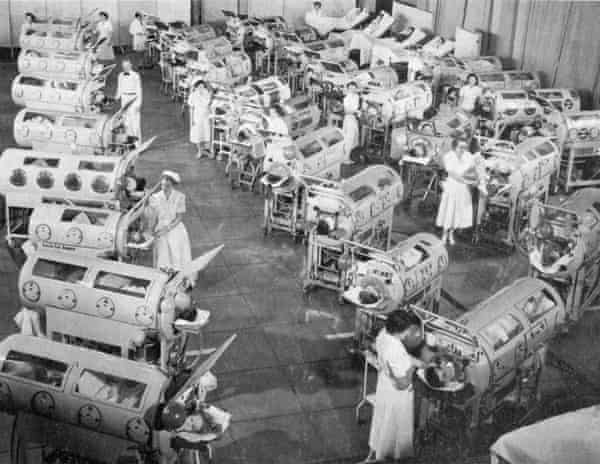
The man in the iron lung | Polio | The Guardian

As a biologist who teaches immunology and authored a BSCS high school textbook chapter on immunology, I am beyond appalled by the incoming administrations' plans for directing the FDA to rescind the approval of the polio vaccine as well as several other important vaccines.  The claim is that their safety and efficacy has not been shown in a double-blind clinical trial of vaccine versus placebo.  Anyone who knows anything about clinical trials understands that such a study for polio and other childhood diseases would be unethical, immoral, and a health-care disaster.

The incoming Trump cult had claimed that they would not attack the well-established benefits of vaccines, but of course they lied.  Not surprising given their troves of previous lies, from Supreme Court nominees to disclaiming Project 2025 to assuring the gullible that grocery prices would immediately drop to the thousands of verifiable untruths spewed during the last eight years.

RFK Jr. and his rabid anti-vaccine minions are more interested in self-promotion than in public welfare.  The polio vaccine has proven to be safe and effective since the 1950's.  In the late 1700's, Edward Jenner established the scientific basis for vaccines.  And over 2000 years ago, Chinese folk medicine practiced variolation to greatly lessen the illness caused by smallpox.  The anti-science ignorance of the Trump cult is astonishing, but more importantly, it poses a danger to millions of Americans.  What will they attack next?  Antibiotics?  Appendectomies? Chemotherapy?  ???

I have a simple proposal for the Trump anti-vaxxer crowd - there is no need for their proposed double-blind clinical trial - just let parents choose for their children whether or not to be vaccinated for polio, and then expose the two groups to the polio virus.  Perhaps the debilitation, paralysis, and deaths in the unvaccinated group and their absence in the vaccinated group will change some minds in the no-vaccine crowd.  PLEASE NOTE - this paragraph is written with extreme sarcasm.  As a scientist and a grandfather,  I would never condone a study that would surely cause great harm to the unvaccinated.  Similarly, I do not support any parent who chooses not to have their child immunized against deadly diseases.  These people are benefiting from the herd immunity provided by those who are vaccinated, and this will disappear if the Trump cult has its way.

Please share if you agree.

Tuesday, January 22, 2019

CUMBRE VIEJA


Lots of folks like to envision "the big one" in California and all of the destruction that would ensue, but not too many think about the effect that Cumbre Vieja, or the "old summit" on La Palma in the Canary Islands, might have on the eastern US from the northeast to Florida.

Image result for cumbre vieja

The fear is that the Cumbre Vieja might fail, and if it does so in one complete collapse, the crumbling mountain falling into the ocean would cause a mega tsunami that would quickly spread across the Atlantic Ocean.
Related image
Related image


Here is a simulation of the tsunami:


So, not too worried about this here in the Rockies!!
Related image

Saturday, November 25, 2017

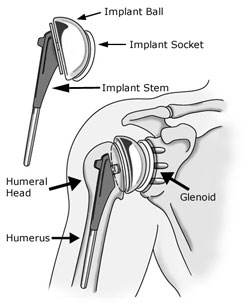
SHOULDER REPLACEMENT SURGERY

 https://www.hss.edu/images/corporate/ShoulderReplacementAnatomy.jpg

Posting has a been a bit light lately since I have been Rhonda's personal servant for a few weeks.  Some of you know that she recently received a new right shoulder, and the rehabilitation takes quite a while - e.g. she cannot drive until mid-December, and physical therapy is still limited motion.

So for those of you who might be interested, I found a video of shoulder replacement surgery - and - if you are at all squeamish about blood and gore, I highly recommend that you refrain from viewing!! 😊  It is quite amazing what orthopedic surgeons can accomplish, and that is probably why they are rewarded quite handsomely, eh Cousin Mark??


Sunday, September 11, 2016

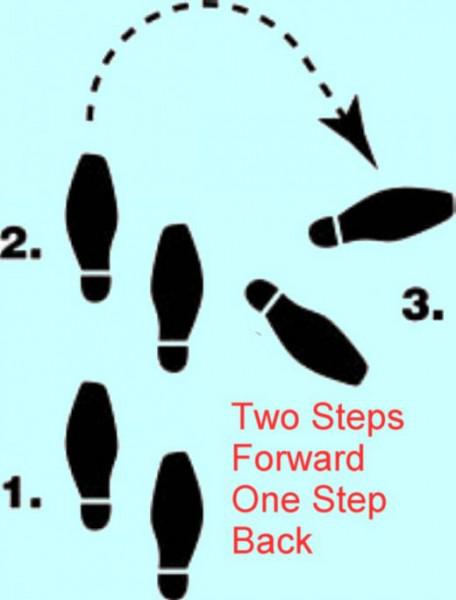
THE TEMPLETON TWO-STEP


https://staticseekingalpha.a.ssl.fastly.net/uploads/2012/8/5/saupload_2-steps-forward-1-step-back-stock-market-trading-technical-analysis-market-outlook-option-trading.jpg


Or maybe the Templeton Tango, or the Templeton Run-Around or the Templeton One Step Forward Two Steps Back. Regardless, this is a rather lengthy account of my interactions with the Templeton Foundation's funding bureaucracy. It was neither particularly pleasant nor fruitful, but it was enlightening. At the time of the saga, thought was given to writing an exposé on the experience but my colleagues and I decided to cool off for a while. Occasionally during the past several years, thought was once again given about writing it up, but I never got around to it. Having recently received some encouragement to put 'pen to paper', here it is. Many of you regulars here may want to hang it up now - this will be fairly long, and like many of my posts, interesting to me and uninteresting to most - thus you have been warned!!

Prologue - this all got started with some fairly random personal associations. Me - [not this guy or this guy] biology professor retired from research and teaching [Los Alamos National Lab, MD Anderson, and the University of Colorado at Colorado Springs] to enjoy some time on the Southern California beaches; serendipitously employed for several years by Pepperdine University in Malibu. Joe - neighbor in Colorado Springs [not a friendly place to teach or discuss evolution], good friend and colleague; formerly the Director of the Biological Sciences Curriculum Study, an independent publisher of biology textbooks that make evolution the organizing principle [Nothing in biology makes sense except in the light of evolution. Theodosius Dobzhansky]. Francis - friend and colleague of Joe, mainly via their expertise in genetics and education; high-profile physician/scientist; Francis established BioLogos. Darrel - friend of Francis, initially via the books that they wrote; Francis' The Language of God and Darrel's Coming to Peace with Science. Darrel was a biology professor at Point Loma, and soon became deeply involved with BioLogos, serving as President for several years. Pete was brought in to BioLogos as the resident Biblical Scholar, likely because his edgy scholarship fit fairly well with the concept of theistic evolution/evolutionary creationism. Lastly, a quick overview of our perspectives on Christianity: Me - Marginal Mennonite; Joe - Staunch Ex-Catholic; Francis - adult acceptance of the evangelical Christian faith; Darrel - evangelical Christian in the Nazarene tradition; Pete - hard for me to classify - maybe you can figure it out from his website.
Of course each of these folks has their own opinion regarding the JTF, and thus it should be noted that this narrative is solely mine.

STEP ONE - FOOL ME ONCE, SHAME ON YOU

After we all figured out how we knew each other, we decided that perhaps there could be a collaborative project concerning evolution and faith, specifically a project to help evangelical students come to grips with the incontrovertible reality of evolution. The John Templeton Foundation had funded the establishment of BioLogos, and the organization was looking for projects and programs for possible additional funding by the JTF. After considerable discussion, the group decided to focus on the fact that that the vast majority of university biology professors were not well prepared for dealing with students and parents who did not accept evolution because of their young-earth creationist beliefs. Thus, the project would basically assemble easily-accessible resources for faculty to use for directing students to various thoughtful perspectives on science and faith. Title - “Integrating Evolution and Faith: Resources for College Biology Professors”.

Granting agencies often request a pre-proposal to determine if a project fits their funding goals. We did that and were invited to submit a full proposal. In addition to the usual narrative of a project [rationale, scope of work, expected results, etc.], the Foundation required a considerable amount of supporting information such as "Cost Effectiveness," "Theory of Change," "Benchmarks of Success," "Audience and Dissemination Strategies," "Enduring Impact," and a potpourri of additional information that is not a part of the typical NIH or NSF type of proposal. Completion of the proposal took a fair amount of time and effort, but the result was what we believed to be a reasonable three-year project with a total budget of a modest $260,303 to support the part-time efforts of me, Joe, and Darrel, with Francis as a consultant. Because the four of us were at different institutions, we concluded that either Pepperdine or Point Loma would be a reasonable host institution for grant submission. Ultimately we chose Pepperdine, primarily because Darrel's book had caused quite a ruckus at Point Loma, and in fact nearly cost him his job.

As one would expect, the Foundation took several months to complete their internal and external reviews. We received the following correspondence.

Thank you for the opportunity to review your proposal Integrating Evolution and Faith: Resources for College Biology Professors. We have completed the expert review phase of our process. In general, reviewers were supportive of the project. However, before we render a decision, we request your responses to several concerns and constructive comments raised by reviewers. These comments are on the pages to follow and also include a selection of the endorsements.

We would appreciate your response to these comments and look forward to hearing further from you regarding this interesting project. You are welcome to respond with a point-by-point response to each critical or constructive comment (or clusters of comments). Naturally, due to the nature of our review process, we cannot guarantee any particular outcome at this time. But we can say that we remain very interested in this project.

The "Selected Reviewer Comments" were quite detailed. This comment was fairly representative of the positive reviews, some of which explicitly recommended funding:

“My enthusiasm for this idea, which is so clearly explained and thoughtfully conceived, comes from the following aspects of the proposal. First, the authors have identified a genuine need; they have defined it precisely and given the right reasons for its significance. Their analysis of the actual classroom situation, relative to evangelical students, is highly accurate, and they understand one of the important things that needs to be done to help those students be more receptive to evolution. Second, I cannot conceive of people more qualified to carry out this particular plan."

This particular comment was fairly representative of the 'concerns':

"This project is built on a speculation—namely that biology profs are willing to put in efforts to learn how to overcome objections that their students have to learning evolution. Supposedly, if materials are readily available, these profs will learn how to use them and incorporate them into their teaching. I think this speculation is reasonable, but I wish the proposal had something resembling an incentive for these busy profs to take advantage of the new materials."

The group decided that as suggested, we would prepare a point-by-point response to the criticisms and concerns. However, at this juncture, there was a departure from the standard granting process that Joe and I were familiar with, e.g. submit a grant, receive reviews, address concerns, get secondary reviews, receive a funding priority score and wait to see if the score qualifies for funding. Because Francis/Biologos had an established relationship with the JTF, Francis had a chat with Foundation representatives about the proposal and was told that there was great interest in funding the project and that perhaps some of the concerns could be addressed by including some teacher training/incentives. Thus, in addition to preparing a nine-point, four-page response, we included the suggested component, and revised the budget upward to $499,166 for the three year period. This prompted the following response from the JTF:

"We have a few questions about the new elements you added to the project. We are still generally supportive, but have some questions about some of the project changes that you have added in response to the expert reviewer comments."

So - we now had to prepare a Response II to address the added proposal activities and the associated budget increases. We submitted that, and then received this:

Yesterday, the John Templeton Foundation announced some important news about a year-long initiative to restructure our grant-making system, with key changes in our deadlines and calendar. The overarching objective of this initiative is to align our grant-making system more fully with the Foundation’s long-range strategies.

I am writing today to assure you that our restructuring initiative will have no effect on the review of your funding requestor [sic] on our ultimate decision whether to fund this project. The Foundation is still committed to a careful, thorough review of your proposal, including, in most cases, asking experts in the fields related to your request to review the merits of your proposal.


As the time dragged out, Joe wrote:

In the old days, before one received grant scores and decisions via grants.gov, NSF and NIH sent out rejection letters before grant letters, so no news was good news, at least in the short run. I'm not sure how it works with Templeton. In my experience it's unlikely that any granting agency would put an applicant through two rounds of questions -- program and budget -- and then deny funding.

Joe is seldom wrong. But there was yet another round coming. We had phone conversations with Templeton folks to discuss the project, particularly the budget. We were told that the JTF reorganization and significant fiscal restraints had put our project in the purgatory known as approved but not yet funded, but would be evaluated by a parallel Templeton foundation. Then after more waiting for a response, we received yet another letter requesting that we address five more issues.

The Grants and Programs Committee of the Templeton World Charity Foundation has now discussed your proposal Integrating Evolution and Faith: Resources for College Biology Professors. They have highlighted some addition information that will be very important as they work toward a final decision on the proposal at their next meeting, scheduled for early June.

Joe quipped that this process was certainly a roller coaster experience, but he remained optimistic as did Darrel. I was growing tired of responding, but respond we did, and the nature of the requests meant that the response required a fair amount of work. The JTF letter suggested that we add new components, which affected the budget; three year total was now $699,543. We sent in all of the material and again waited and waited. Then, we got this:

On behalf of the John Templeton Foundation and the Templeton World Charities Foundation, thank you for the opportunity to review your request for support of the project entitled, Integrating Evolution and Faith: Resources for College Biology Professors.

After careful consideration and analysis led by our Executive Staff, and ultimately by the Trustees of the Templeton World Charities Foundation, I regret to inform you that we will not be able to fund your proposed project.


The letter went on and on about "why" but I really didn't care what they had to say. I responded with a one word email: Astonishing. Darrel pretty much felt the same. But Joe expressed what I was thinking:

This is among the worst processes I have experienced in more than 30 years of seeking funding from a wide variety of public and private agencies. It reminds me of the old joke about the game-show host who says to the contestant, "For $1M: I'm thinking of a color. What is it?" The contestant responds, "White." The host says, "Actually, I was thinking of an off-white." It seems to me that they don't know what they're doing so far as a coherent review process is concerned. I would be very cautious in applying to the TF again. This was really a pathetic process -- and more than a little offensive. Have a beer for me....

While Joe and I were discussing our interest or lack thereof in assisting Francis, Darrel and Karl with other BioLogos projects, I received this email from the JTF:

Dear Doug,

I would venture to guess that your experience with the Foundation has left a sour taste in your month. This is probably too little, too late, but I do want you to know that as we dive into our restructuring this summer – re-evaluating every aspect about how we receive proposals, review them and communicate decisions – your experience will be one of several case studies guiding our thinking about things we need to improve. As a result, we are committed to making sure that if you choose to pursue grant support from the Foundation in the future, it will be a better experience for you.

Cheers,


Well, ya. Case Study?  More like autopsy.  Feeling obliged to respond, I simply said

I sincerely believe that a unique opportunity was missed, and that the confluence of experience, interest, and expertise presented in the proposal will not pass this way again.

Buscaremos la luz. Buscaremos la paz. Danos nuevos ojos par ver el mundo.


STEP TWO - FOOL ME TWICE, SHAME ON ME

Joe and I were quite certain that we did not want to deal with the JTF, but we did feel that we were still willing to assist BioLogos with projects that supported the teaching of accepted science, particularly evolution, in the context of evangelical Christianity. We knew that would be a tough task, but we might develop some generalized guidance that could help others if we could find ways to convince evangelicals to re-examine their theological positions in the face of scientific facts. We had had a good experience working with Darrel, and felt that we wanted to help him if we could. Francis and Darrel once again had conversations with the presumed Templeton poobahs, and were convinced that the Foundation was very interested in biology education in private Christian high schools and Christian home school settings. Darrel had secured some funding from another foundation, and thus,
with non-Templeton money, BioLogos was able to organize several focus group meetings with Christian school teachers and administrators and with home school-parents. Joe and I agreed to assist.

At the time of these discussions and activities, three significant things were going on. First, it was becoming clear that President Obama was going to nominate Francis to head the NIH. That appointment would necessarily remove the most prominent person at BioLogos [an aside - the JTF apparently has a proclivity for funding high-profile persons/institutions. One well-known person in the science/religion arena told me regarding our initial experience "If you all were from Harvard, or Yale, or Oxford and not Pepperdine, you would likely have been funded."] Second, the leadership of BioLogos was being transferred from Francis to Darrel and Karl. And third, Pete was becoming an integral part of the BioLogos team.

Again, considerable time and effort went in to collecting and organizing the responses of the focus groups, determining the problems that the biology teachers face, and formulating strategies to overcome the barriers to teaching good biology to fundamentalists.

Now - I am going to skip over many of the details of preparing a pre-proposal, a full proposal, reviews and responses, and so on. Just re-read FIRST STEP - FOOL ME ONCE, SHAME ON YOU and you will understand what went on. Although the total three-year budget for "Curriculum Resources for Biology Education at Christian Schools"was $1,133,100, the JTF's underlying concerns were not about the dollars.  A confounding issue was that non-JTF funding was also being pursued which added another explanatory section to the JTF application.  Darrel and I actually made a trip to the Foundation headquarters to make sure that this proposal was not going to go down the same path as the first one.

As Joe and I worked and re-worked the proposal with Darrel and Pete, it became ever more clear to Joe and me that the barriers that teachers encounter in the Christian-education setting are not related to biology, but rather are dominated by theology. Indeed, we found that many teachers were using standard textbooks such as Biology by Miller and Levine. Very few teachers were using the noxious curricula published by Bob Jones University Press or A Beka Books although a fair number of home-schoolers used the young-earth creationist A Beka Book biology text. And virtually all of the teachers were anxious to have resources that addressed the interface of evolutionary science and Christian faith.

Because Joe and I were firm in our position that the emphasis of the project should be on theology, clearly not our specialty, we suggested that the time commitments and thus the budget reflect the primary activities of the project personnel. Joe and I wrote a very extensive memo to BioLogos outlining issues that we felt had to be addressed, stating that we understood that BioLogos was "in a state of flux, practically and philosophically." We detailed the reasons for the proposed emphasis on theology. Pete added thoughtful commentary to our memo, especially regarding how to engage evangelicals in rethinking their theology in light of conflicting science. Joe and I recommended that we scale back our involvement and that Pete become the Project Leader. Pete found this acceptable. This approach became a basic component of our revised proposal [surprise - another revision]. Our first indication that this was going to be problematic was embedded in this request from the JTF:

Information Requested: In our December correspondence, requesting the revised proposal which we are currently reviewing, we asked you to consider the "theological credibility" of the program. The revised proposal offers some hints as to where that credibilty [sic] will come into play, specifically the advisory boards, but it does not name any individuals or institutions who might offer that additional credibility. Therefore, we would ask for greater detail as to who you would like to make up the various advisory boards for the project (or any other specific partnerships or plans you have to establish greater 'theological credibility'). Please note that we do not expect that you will have secured committments [sic] for this role, but if you have, please indicate as much. For any whom you have not secured, or not even asked, please simply provide the names of the top candidate or two you would ask to fill those roles if your grant application is successful. Please keep in mind that we are referring to scholars with credibility in the community you are seeking to reach, a group of people often too ready to dismiss good work as too “liberal” or whatever. Our concern is not about the intellectual quality of the project in itself, but about the likelihood it will be used extensively by your target audience.

In retrospect, this should have been translated as "Pete needs both guidance and a leash." Pete would likely admit that he is not the most diplomatic person, and often uses challenging and controversial ideas to generate meaningful discussions about important topics. The titles of his books indicate his positions: The Bible Tells Me So - Why Defending Scripture Has Made Us Unable To Read It; The Evolution Of Adam - What The Bible Does And Doesn't Say About Human Origins; The Sin Of Certainty - Why God Desires Our Trust More Than Our "Correct" Beliefs. I think that it would be safe to say that these are not the types of things that many fundamentalist Christians want to hear, and certainly would not be inclined to accept; hence the Foundation's fixation on 'theological credibility.'

Also, in retrospect, it seems quite clear that JTF personnel had privately conveyed concern to BioLogos about how the details of Theist Evolution /Evolutionary Creation were going to be presented in a pastoral manner to the targeted evangelical community. Note my emphasis on 'pastoral'. The target community needed more pastoring than biblical scholarship, especially if that scholarship accepts the scientific evidence for human origins, not a literal interpretation of the Genesis account of the creation of Adam and Eve. To accommodate this perceived need, the JTF proposed that we add personnel to the proposal to address the pastoral component, and that Pete's time and effort be cut back. Understandably, Pete was not pleased. The implicit message was that targeted evangelicals would likely not be particularly receptive to Pete's Old Testament scholarship regarding creation and Adam and Eve. As one Templeton official said: "They need an Adam and Eve."

This is when Joe and I said "Nope". We agreed that this is not how projects should be developed, reviewed, funded and managed. We had established a good working relationship with Pete and respected his theological positions in relationship to what we biologists accept as established science. We were not interested in being funded by an organization that appeared to be involved with micromanagement, control, and influence.  It seemed clear to Joe and me that the JTF had a  literalist/creationist bias regarding the project and its expected outcomes, e.g., many evangelicals need a real Adam and an Eve; thus promote any data and any experts that support such a notion.  Not possible from my and Joe's perspective. 

End of story regarding Joe and me. Darrel and Francis expressed their disappointment re our decision. As far as I know, the proposal was withdrawn, and BioLogos pursued other projects funded by the JTF. And as many know, when Pete's contract with BioLogos was up for renewal, it was not renewed.

Well, end of story is not quite accurate for me because there was one last bit of irony:

Dear Dr. Swartzendruber

As part of the John Templeton Foundation’s proposal review process, we typically solicit outside expert opinions to help us evaluate funding requests.

You have been identified as someone who could provide valuable feedback on a proposal we have received from xx entitled, "Science, faith and professional development in new teachers". We would greatly appreciate your input regarding this work.

In order for the Foundation to meet its promise to applicants of a timely decision of all Full Proposals, we need your completed review submitted back to us by xx. As compensation for your work, we will pay you an honorarium of $300.00 for your timely completion of an electronic review in accordance with the instructions and terms provided by the Foundation.


Epilogue:

The Evolution of BioLogos - it is interesting to postulate what BioLogos might look like today if Francis had remained as President, Karl and Darrel as Vice-Presidents and Pete as Biblical Scholar.  I believe that it would be quite a bit different, particularly considering that Calvinists  and Calvin College folks now have considerable influence including holding the Presidency Among the myriad Protestant theologies, I find Calvinism particularly noisome.  But that's the subject of another post....

The Evolution of The John Templeton Foundation - I am no expert here, but I do believe that there was a significant shift in vision when Sir John died and his physician-son Jack became President.  As noted in this blurb, Sir John was nearly new-age in his views of religions, cultures and philosophies. He died in 2008, and Jack took over.  Necessarily the Foundation's bio of Jack is complementary, but others noted his right-wing, Republican brand of evangelical Christianity.   I happened to see Jack in action once in Heidelberg, and I think that it is safe to say that Jack's perspective influenced the Templeton staff who were responsible for vetting proposals before he had a look.  Jack died in 2015, and the current President is Jack's daughter Heather Templeton Dill, whose primary qualification seems to be that she is the daughter of Jack and grand-daughter of Sir John.  It would appear to be business as usual at the JTF, at least for the time being.

People - me; I remain mostly retired, teaching a course now and then, writing here about things that interest me and a few other folks, and keeping track of retired CU faculty; catch up with Joe here; Darrel is also mostly retired, but remains a Senior Advisor for Dialogue at BioLogos; Pete is a faculty member at Eastern University, Karl is affiliated with Stonehill College, and Francis is still the Director of the NIH - we will see what President Trump has to say about that!

Addendum - Over at WEIT, Jerry Coyne has written about this post.
Wednesday, June 01, 2016

SCIENCE AND RELIGION

From one of my favorite comic strips, Non Sequitur:

7752db6003430134605c005056a9545d

Just some observations from the more-editorial-than-comic:
     The Abrahamic Religions are not contributing
     They have their backs toward the board, and thus do not know what is going on
     They are holding tight to their particular source of truth
     The scientist is having to 'work around' the faith leaders

Monday, April 28, 2014

NBA or NOBEL?

 https://pbs.twimg.com/profile_images/425520873286950912/dQwMSlPp.jpeghttp://upload.wikimedia.org/wikipedia/en/6/6a/Nobel_medal.png


So, as your fairy godfather, I can grant you wish between these two choices - an outstanding career in the NBA leading to a Championship or an outstanding career in the Academy leading to a Nobel Prize.  Register your 'vote' on the poll and it would be nice if you would add a comment about why you chose one way or the other.

My Letter to the Editor of the Boulder Daily Camera - this is what got me started....


I would wager a couple of dinners at Jax that the Camera used more ink covering Spencer Dinwiddie’s decision to leave CU for the NBA draft than in reporting CU-Boulder’s Tom Cech winning the Nobel Prize in Chemistry.  It seems apparent to some of us that winning a Nobel at age 42 is a couple of orders of magnitude [for at-risk CU admits, that’s 100 times] more significant than a very good player, from a team that may be among the top 50 in the country, leaving school.  Like many basketball fans, I too would have liked to see Spencer continue at CU, but also understand that the lure of the NBA is a prime consideration for athlete-students.  Who wouldn’t be tempted by an annual salary that is more than many CU folks will make during their careers?  Also like many fans, I too wish him well in the upcoming draft.  However, as a long-time player, I must take issue with his self-analysis of ‘having first round talent’.  There is no doubt that he has many/most/all of the attributes of a first round pick, but basketball talent is only a portion of the requirements.  There are thousands of players who have as much basketball talent at Spencer – even my career statistics are at least as good as his, but alas, I am barely 5’10” – and thus physical attributes are an important part of the draft-day equation.  Spencer has no doubt worked hard to get where he is today, but he should also give a hat tip to his genes for at least some of his privileged position.

Wednesday, March 05, 2014

EARTH'S LAND MAMMALS BY WEIGHT

This is from the cartoon xkcd - a nerdy and insightful commentary, and I guess that's why I like it!  This is both informative and discomfiting, especially the data regarding Wild Animals.


Land Mammals

Friday, December 06, 2013

POWERS OF 10

In some of the courses that I teach, it is important for students to have a reasonable understanding of scale - how big things are and how small things are - and the Powers of 10 videos below are good tools for introducing the subject and to begin discussions.


I also like this website - you can control the speed of the "tour"
http://micro.magnet.fsu.edu/primer/java/scienceopticsu/powersof10/

Monday, November 11, 2013

JESUS & MO

Yeah, I understand that this cartoon can often be beyond edgy, but sometimes cartoonists challenge our beliefs and make us sharpen our thinking about what we consider to be true.  Jesus & Mo is certainly irreverent [I believe that the author is anonymous because the series uses images of Mohammed, a real no-no in the Muslim world].  Jesus and Mo chat about many subjects, but I am fond of their conversations regarding evolution, three of which are shown below.  If you think you can handle more, visit the website.

pow!
 blame

tiny

Wednesday, October 16, 2013

THE SEQUESTER BLUES

An original by my colleague and friend Francis Collins - context - Francis is the current head of the National Institutes of Health.


Note the design on the guitar neck - a double helix - Collins formerly was the Director of the Human Genome Project

Thursday, October 10, 2013

POOP PILL

When I read the article about the latest research for preventing Clostridium difficile, I was both amused and positively impressed.  Just the image of a poop pill induces the potty-humor response, but the initial clinical results are impressive.  C.diff infection is a fairly common problem in hospitals, nursing homes and assisted living facilities, and folks like my uncle Arch not only suffer the direct effects of the infection but also suffer because of the required quarantine and isolation.  So for some folks it won't be 'shut up and eat the vegetables', it will be 'shut up and eat the poop!'

Sunday, July 28, 2013

G. BARRY PIERCE - MENTOR

The Germans have a word for it - Festschrift - and it is something that we should probably do more often -honoring a respected person during their lifetime.  Memorials are nice, but I have often thought that it would be great if the person who passed away could have heard the many nice words said in their honor.  A Festschrift is usually honoring an academic, and the one below is something that I wrote IN 1993 that appeared in a special issue of the International Journal of Developmental Biology, with numerous articles honoring Dr. G. Barry Pierce.  I am hoping to write more festschrift posts here about good friends and colleagues, to honor them whilst they are still with us!
 

G. BARRY PIERCE - MENTOR

Douglas E. Swartzendruber
Department of Biology, University of Colorado at Colorado
Springs, Colorado Springs

It is a privilege to participate in this Festschrift honoring the career of Dr. G. Barry Pierce. Throughout the past 25 years, there are innumerable examples of the impact that Dr. Pierce has had on my career. However. I would like to use two descriptors that characterize many of our professional and personal interactions: serendipity and mentoring.  Serendipity means -finding valuable things not sought for, and a mentor is -a close, trusted, and experienced counselor or guide.

First - serendipity. In the Spring of 1968, I graduated from Goshen College (IN) with a Bachelor's degree in natural sciences. A college classmate, Marlin Nofziger. had graduated at semester and had found a research technician position in a pathology laboratory at the University of Michigan. Marlin told me that there would be other positions available because the laboratory was moving to the University of Colorado. I traveled to Ann Arbor for an interview and, in the Fall of 1968, moved to Denver to join the research laboratories of Drs. Pierce and Nakane. It was through this set of fortuitous circumstances that I came to know Dr. Pierce, first as an employer, then as the Chairman of the Department in which I pursued my graduate studies, and finally as a mentor and member of my Dissertation Committee.

Second - mentoring. During my years at the University of Colorado Health Sciences Center, Dr. Pierce provided encouragement, guidance, and scientific insight, and was always quick with a thoughtful question or a challenging comment. His weekly research meetings were an important learning forum for research assistants, graduate students, residents and faculty. Results were discussed, new experiments were designed, and strategies were planned for answering specific questions. And most importantly, Dr. Pierce would discuss how the research pieces fit into the bigger topic of the biology of cancer.

I began my graduate research project in the laboratory of Dr. John M. Lehman in 1972. Dr. Lehman and Dr. Pierce had begun a collaborative project to combine Dr. Lehman's SV40 experimental system with the mouse teratocarcinoma system of Dr. Pierce. The goal was fairly straightforward: infection of teratocarcinoma stem cells with SV40 would provide well-character;zed genes and gene products that could be readily followed as the malignant stem cells gave rise to well-differentiated. and often benign, progeny. The first task was to establish the teratocarcinoma in vitro, and to characterize growth and developmental potentials. Dr. Lehman. Dr. Wendell C. Speers (a pathology resident working in the lab) and I successfully established several cell lines and demonstrated that their in vitro growth and differentiation closely mimicked in vivo development (Lehman, et af., 1974). We determined that frequent subculture would greatly enrich for stem cells whereas long-term nutrient feeding without subculture would promote differentiation to a widevariety of cell types. 

Once teratocarcinoma cultures were established, my task was to infect the stem cells with SV40 and then assess the regulation of expression of SV40 genes, such as T antigen, as the stem cells differentiated. Even though I was convinced that all of the experimental procedures had been carried out correctly, numerous attempts to infect the stem cells failed. Since SV40 is nonpermissive in mouse cells,infection with a permissive virus (polyoma) was also attempted, without success. However, I noted that if any differentiated cells developed in the culture. they were susceptible to infection with both SV40 and polyoma. When these results were discussed at the research meetings. serendipity and mentoring again were both evident. Something very unique was occurring in that the stem cells were innately resistant to infection, but upon differentiation, the progeny became susceptible in typical mouse. system fashion. Thus, the emphasis of my thesis research shifted to focus on the resistance of the stem cells to infection with small, DNA viruses (Lehman et al.1975: Swartzendruber and Lehman. 1975; Swartzendruber et al. 1977). Interestingly. the teratocarcinoma system again mimicked normal developmental biology in that stem cells of the very early mouse embryo also resist such viral infections. I was fortunate to encounter such a unique set of experimental findings. These initial findings have been greatly expanded and investigated in depth by students and fellows in Dr. Lehman's laboratory, as well as in other laboratories.

In 1974, I moved to the Los Alamos National Laboratory to begin a postdoctoral fellowship. As I began to develop my own experimental investigations of the biology of tumors, and even today as I do the same, there are several key guiding insights that Dr. Pierce made very clear: i) a tumor is a tissue: ii) all tissues including tumors are innately heterogeneous, from molecular genetic properties tophenotypic characteristics to differentiation potential to growth kinetics: and iii) tumors are often caricatures of tissue renewal. At Los Alamos, it became clear to me that flow cytometry was a powerful tool for quantitative analysis of tumor heterogeneity in the teratocarcinoma system as well as in other experimental and clinical neoplasias. High-speed single cell analysis provides the means to analyze single cells isolated from tumor tissue. to quantitatively assess a wide variety of genotypic and phenotypic characteristics of individual cells. and to determine population distributions of such characteristics. As a fellow and a staff member at Los Alamos, I utilized single- and multiparameter flow cytometry to quantitate in vitro differentiation of teratocarcinoma cells (Swartzendruber. 1976: Swartzendruberet al. 1976. 1979: Hoffman and Swartzendruber .1979).1 also developed several flowcytometric techniques to assess tumor cell heterogeneity. including discrimination of cycling cells from noncycling ce1ls (Swartzendruber. 1977a.b) and kinetic assessment of enzyme activities in individual cells (Martin and Swartzendruber. 1980). These techniques were used to assess both spontaneous and induced differentiation of teratocarcinoma stem cells. (Swartzendruber et al..1980a,b). Thus flow cytometric techniques provided quantitative information concerning attempts to direct the differentiation of malignant stem cells.

Many of the types of studies carried out in my laboratory in New Mexico were extended to human neoplasia while I was in the Department of Developmental Therapeutics at the M.D. Anderson Hospital in Houston. In collaboration with Dr. Bart Barlogie and his co-workers. quantitative flow cytometric analyses of cell cycle kinetics and other genotypic and phenotypic characteristics of human malignancies were carried out in an attempt to develop rational approaches to chemotherapy (summarized in Barlogie et al.. 1983).

As my interest in human cancer increased, the principles of tumor biology put forth by Dr. Pierce continued to be central to my studies: that is, neoplasia is a problem in developmental biology, cancers arise via abnormal stem cell development, and understanding the innate heterogeneity of tumors is key to developing effective treatments. During the past several years, much of my research in tumor biology has been toward understanding the growth kinetics of human breast cancer. Breast cancer tissue. like any normal renewing tissue is characterized by heterogeneity. The cells within the tissue often display a variety of morphologies, differentiated functions, proliferative capabilities. genotypes and metastatic potentials. This innate heterogeneity has confounded the understanding of the biology of breast cancer and has obfuscated the search for effective treatments. Specifically, adjuvant chemotherapy and hormona! therapy extend disease-free survival. but are not curative for the majority of patients.

In collaboration with Dr. Michael Retsky and co-workers, a computer model has been developed that simulates the biological characteristics of breast cancer. including growth kinetics. Although most standard chemotherapy is based on constant. exponential (or Gompertzian), regular (homogeneous) growth kinetics, our studies show that like many characteristics of cancer tissue  growth kinetics are also heterogeneous (Retsky et al.. 1987. 1989). Computer modelling  has reemphasized the need for an appreciation of the complex nature of  cancerous tissue, challenged the old paradigm of breast cancer growth  and treatment, and provided the basis for a new paradigm 
(Retsky et al., 1990, 1993).

Throughout the years since I graduated from the Pathology Department at Denver, Barry Pierce's work has influenced my own. His mentoring extended beyond the research laboratory to the classroom, to informal discussions with peers and students and to explanations of cancer to nonscientists. I am fortunate to have Barry as a mentor, colleague and friend.

References

BAR LOGIE, B.. RABER. M.N., SCHUMANN. J.. JOHNSON. T.S.. DREW\NKO. B.,
SWARTZENDRUBER, D.E. GOHDE. W. and FREIREICH, E.J. (1983). Cytometry in
clinical cancer research. Cancer Res. 43: 3982-3997.

HOFFMAN R,.A.and SWARTZENDRUBER D.E .(1979). Electrical impedance analysis
of single murine teratocarcinoma cells. Exp. Cell Res. 122: 426-429
.
LEHMAN,J.M., SPEERS, w.e. and SWARTZENDRUBER, D.E. (1975). Differentiative
and virologic studies of teratocarcinoma in vitro. In Cell Biology and Tumor
Immunology Vol. 1. E:-.cerpta Medica International Congress Series 349: 176-
177.

LEHMAN, J.M., SPEERS.w.e.. SWARTZENDRUBER D.E. and PIERCE, G.B. (1974).
Neoplastic differentiation: characteristics of cell lines established from a murine
teratocarcinoma. J, Cell. Physiol. 84: 13.28.

MARTIN J.M. and SWARTZENDRUBER DE. (1980). Time: a new parameter for flow
cytometry. Science 207: 199-201.

RETSKY, M.W., SWARTZENDRUBER D.E,WARDWELL, R.H. and BAME P, .D.(1990).
Med. Hypotheses 33: 95-106
.
RETSKY, M.W.. SWARTZENDRUBEDR.E, .,WARDWELRL,.H.and BAMEP, .D. (1993).
Proceedings of the Fourth International Symposium on Adjuvant Therapy of Primary
Breast Cancer. In Recent Results in Cancer Research. Springer-Verlag, Heidelberg.


RETSKY, M.W., SWARTZENDRUBER.D.E., WARDWELL,R.H., BAME,P.D. and PETROSKY,
V. (1989). Larry Norton: a gompertzian model of human breast cancer growth.
Cancer Res. 49: 6443.6444.

RETSKY, M.W., WARDWELL, R.H., SWARTZENDRUBER, D.E. and HEADLEY ,D.L.
(1987). Prospective computerized evaluation of breast cancer: comparison of
computer predictions with nine sets of biological and clinical data. Cancer Res. 4 7:
4982-4987.

SWARTZENDRUBER, D.E. (1976). Squamous cell differentiation in a clonal
teratocarcinoma cell line. Differentiation 7: 7-12.

SWARTZENDRUBER, D.E. (1977a). Microfluorometric analysis of cellular DNA after
incorporation of bromodeoxyuridine. J. Cell. Physiol. 90: 445.454.

SWARTZENDRUBEDR.D.E. (1977b). A bromodeoxyuridine-mithramycinfor detecting
cycling and noncyclingcells byflow microfluorometry. Exp. Cell Res. 109: 439-443.

SWARTZENDRUBER, D.E. and LEHMAN. J.M. (1975). Neoplastic differentiation:
interaction of polyoma virus and SV40 with murine teratocarcinoma cells in vitro.
1. Cell. Physiol. 85: 179-188.

SWARTZENDRUBER, D.E.,COX,K.Z.and WILDER, M.E.(1980a). Flowcytoenzymology
of the early differentiation of mouse embryonal carcinoma cells. Differentiation 16:
23-30.

SWARTZENDRUBER, D.E., CRAM, L.S. and LEHMAN .J.M. (1976). Micro-fluorometric
analysis of DNAcontent changes in a murine teratocarcinoma. Cancer Res. 36:
1894-1899.

SWARTZENDRUBER, D.E.,FRIEDRICH,.TJ. and LEHMAN J.M. (1977). Resistance of
teratocarcinoma stem cells to infection with SV40: early events. J. Cell. Physiol. 93:
25-30.

SWARTZENDRUBER D..E., PRICE, B.J. and RALL, L.B. (1979). Multiangle lightscattering
analysis of murine teratocarcinoma cells. J. Histochem. Cytochem. 27:
366-370.

SWARTZENDRUBER D.E. .,TRAVIS G, .L.and WILDER, M.E.(1980b). Flow cytometric
analysis of the effect of 5'bromodeoxyuridine on mouse teratocarcinoma cells.
Cytometry 1: 238-244.

Monday, March 18, 2013

Saturday, February 02, 2013

ANIMAL EYES


From both an aesthetic and an evolutionary perspective, eyes are fascinating.  This post is not a detailed reference to the great variability, complexity and development of eyes - google 'animal eyes' and you will find an abundance of information and images.  A good example of more detailed information is at the University of Utah link here - be sure to click through the 17 slides showing the progression from the most simple eye to the most complex. 

Here Are Some Of My Favorites


Tuesday, January 29, 2013

ORIGIN OF RACE

As a biologist, I will affirm the message of the first graphic - that the variations we see among human populations are variations in the expression of the genes that we all share.  For example, we all have the same number of melanocytes, the pigment producing cells, and the variation we see in skin pigmentation is due to which type of melanin is being produced, how fast it is being produced and how quickly it is being broken down.  Many folks have direct experience with changes in melanin production - for example the induction of more melanin production by exposure to sunlight [tanning]; or skin darkening during pregnancy; or age spots :-)  Also, this post is not at all intended to be a detailed discussion of the topic - you can find many, many books on the origin of race - but rather this is intended as a simplified introduction to the topic [in response to a classroom discussion!!]


However, a natural question is how did humans get from this


to this?


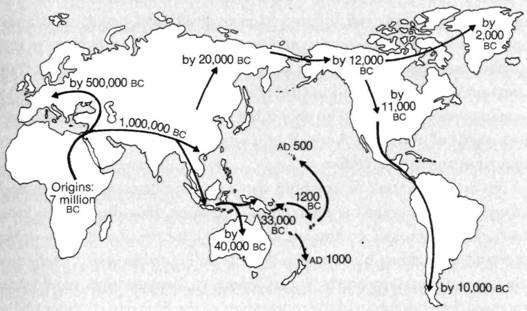
One thing to consider is the map below, from Jared Diamond.  It shows human origins in Africa, and then the migration of humans throughout the world.  An important concept here is to think of these populations as simply divergent groups, isolated from one another, and therefore any genetic changes related to appearance could become distinctive for that group.
 
 
 The following graph of genetic analysis of different groups demonstrates both the divergence of different groups as well as the nearness of relationships [genetic distance] within groups. Notice the concordance of the genetic data and the migration graph [the migration graph is based partially on genetic data as well as on archaeological and anthropological data].  Sorry - you will have to turn your head sideways to read the names of the different human populations.


Perhaps a helpful analogy would be the derivation of different breeds of dogs - a common ancestor that through selective breeding [genetics] has given rise to dozens of different 'races' of dogs.  The are all the same species, with variations on a theme, and the variation can be due to the differential expression of a single gene as has been shown for the differences in dog sizes.  The take-home message for humans is that a complex of genes control the size and shape of facial features and other morphological [body] characteristics, and that heterogeneity among those genes give rise to folks who look different, and likewise homogeneity would produce similar traits.


When one considers how much variation can be generated in the dog species over a relatively short period of time, it is rather amazing that there has not been greater diversity among human populations given the long periods of time.  Given the 'shrinking' globe, it is not hard to conceive that the future will see a diminution of human variability, with physical differences becoming less and less prominent.


Monday, November 19, 2012

FIBONACCI SPIRALS


0, 1, 1, 2, 3, 5, 8, 13, 21, 34, ...
 
Draw Squares for Each Number and Fit a Spiral to the Sum Corners