Showing posts with label Germany. Show all posts

Friday, January 16, 2015

HERR D

This is another post regarding my promise to write about relatives, friends and colleagues while they are still alive rather than give posthumous tributes.

One of my favorite quotes is "You can't walk on the water unless you get out of the boat."  Of course I do not take it as a literal claim but more toward "You will never know what all is out there unless you get out there!"  It is oh so much easier to roll with the status quo, keep the same routines and environs, be comfortable, stick with the thought that you are not in a rut but rather in a well worn groove!  I am not speaking about dumping stability for high-stakes risk-taking, but about carefully considering new opportunities, new horizons with the expectation of new adventures and new friends.  If Rhonda and I had not decided to step out of our comfortable lives in Colorado Springs for a new life chapter at Pepperdine University in Malibu, we never would have come to know a whole host of wonderful colleagues, friends, students and neighbors.  Here is one of the many remarkable folks that we never would have known had we stayed in Colorado - Daniel Daugherty.

http://seaver.pepperdine.edu/internationalprograms/images/contact/danield.jpg

Daniel is the Resident Director of Pepperdine's International Program in Heidelberg.  Daniel and I likely would have never met had it not been for a last-minute medical complication for the faculty person scheduled to be the Visiting Faculty person in Heidelberg combined with my availability and inclination to pinch-hit, albeit after the semester had started.  Given the nature of such an abrupt change of plans that are laid out over a year in advance, it is not surprising that there was some apprehension, particularly on Daniel's part given that he has the ultimate responsibility for the quality and success of the program.  Since Daniel, the program faculty and staff, and the students did not know me from Adam, I could not blame them for their concerns!!  Fortunately, as time went on, things progressed fairly smoothly and major catastrophes were avoided.  Daniel and Doug became Herr D and Dr. S, although Daniel loved to give the uber-German emphasis on my last name - Schwaaaarrtzenttruber ;-)  Here are just a few of the delightful aspects of my time with Herr D.

Herr D the Polyglot - Anyone who can speak more that one language is a polyglot in my book.  I know, two languages doesn't really fit the polyglot definition, but Daniel does.  Upon first meeting, his English sounded like he must have grown up in mid-America.  However, having lived in Germany for many years, German would appear to be his native tongue.  But, when you learn that he grew up in Paris, it becomes clear that French is his beloved native language.  That qualifies for polyglot - but - Herr D also studied in Spain, and as we traveled to Barcelona for our Educational Field Trip, it became apparent that he also quite adroit in Spanish.  Rumor has it that he is studying additional languages.  Color me envious.

Herr D the Program Director - I am quite certain that every year, there some recurring situations and events that need to be addressed by the Director, usually in conjunction with the Visiting Faculty Member.  Academic warnings and probations.  Behavior warnings and probations, particularly regarding a bit too much alcohol.  Roommate incompatibilities.  And so on.  And Herr D handled each of these with a balance of sternness and understanding.  However, I think he faced a new challenge during my time there - an illegal music download.  Justin Bieber at that!  Herr D received a very disturbing notification letter from the German authorities detailing the specifics and the significant fine for the download.  Naturally none of the students would actually admit to downloading a Bieber album; however, with the help of the program's IT guru, the computer and the time of download were identified.  The computer owner adamantly, and believably, held that he was not the culprit, which pointed to the likelihood that someone had hacked the system.  After a discussion with all of the students regarding that the fine still had to be paid, some of them stepped forward with contributions. I am sure that Herr D lost more sleep than usual over this escapade, but no doubt learned how to avoid a similar situation in the future.  I want to also commend Herr D's commitment as the Program Director to be the spiritual guide and mentor for the Heidelberg program - he provides both wisdom and food for thought.

Herr D the Musician -  Similar to the Mennonites, the Churches of Christ folks have a very strong affinity for good music of all sorts, from congregational and choral singing to folk, R&B and contemporary music to classical orchestral music.  Thus it was not too surprising the Herr D and I shared an affinity for similar types of music.  I was pleased to introduce Daniel to another type of music that I very much enjoy -  Taizé and the attendant worship service. However, one significant difference between us - I am a very reluctant solo singer whereas Daniel is an unabashed performer.  A wonderful part of the semester is the 'talent show' that showcases the varied and impressive talents of the students - and the less impressive talent of the faculty.  Below, Herr D and I work through "Knocking on Heaven's Door" with some ad lib lyrics by Daniel, with his usual energy, enthusiasm and gusto.


Herr D the Epicurean - not the philosophy of Epicurus, but rather being a connoisseur of the arts, of life and the refinements of such things as food and drink.  I cannot recount the many and varied experiences that we shared, sometimes just the two of us, sometimes with a small group of colleagues or students, and often with our whole group of Heidelbergers -  from Die Kartoffel to the Belvedere to the Krypt to Weihnachtsmarkt to Lincoln to Vienna to Barcelona to.......

Herr D, Husband, Father, Son, Teacher, Scholar, Mentor, Colleague, Follower of Jesus, and Friend

Thursday, December 12, 2013

GLÜHWEIN

http://www.plantij.nl/wp-content/uploads/2012/12/gluhwein.gif

http://aroundtheworldin80jobs.com/wp-content/uploads/2012/12/Best-Gluhwein-stand-in-heidelberg.jpg 

Last Christmastime in Heidelberg, I learned of Glühwein, and quickly became a fan, finding it particularly enjoyable on a cold, snowy evening.  

Recipe from Food.com, and having given it a try, I recommend it highly!

Ingredients:

Units: US | Metric

3/4 cup water (or orange juice)
3/4 cup white sugar (or less to taste)
1 cinnamon stick
1 orange
10 whole cloves
1 (750 ml) bottle red wine

Directions:

1  In a saucepan, combine the water, sugar, and cinnamon stick. Bring to a boil, reduce heat, and simmer.
2  Cut the orange in half, and squeeze the juice into the simmering water. Push the cloves into the outside of the orange peel, and place peel in the simmering water. Continue simmering for 30 minutes, until thick and syrupy.
3  Pour in the wine, and heat until steaming but not simmering. Remove the clove-studded orange halves.
4  Serve hot in mugs or glasses that have been preheated in warm water (cold glasses may break.).


http://kateschefer.files.wordpress.com/2013/12/img_0765.jpg 

This Year's Heidelberger Weihnachtsmarkt Mug

Saturday, May 04, 2013

FOR THE LOVE OF HEIDELBERG

The Heidelberg Year In Review - 2012-2013


What an amazing year and truly a wonderful group of students.  In my parting comments, I bid them Farewell, but more importantly, my wish for them is to Fare Well.

Saturday, April 06, 2013

LIGNE MAGINOT

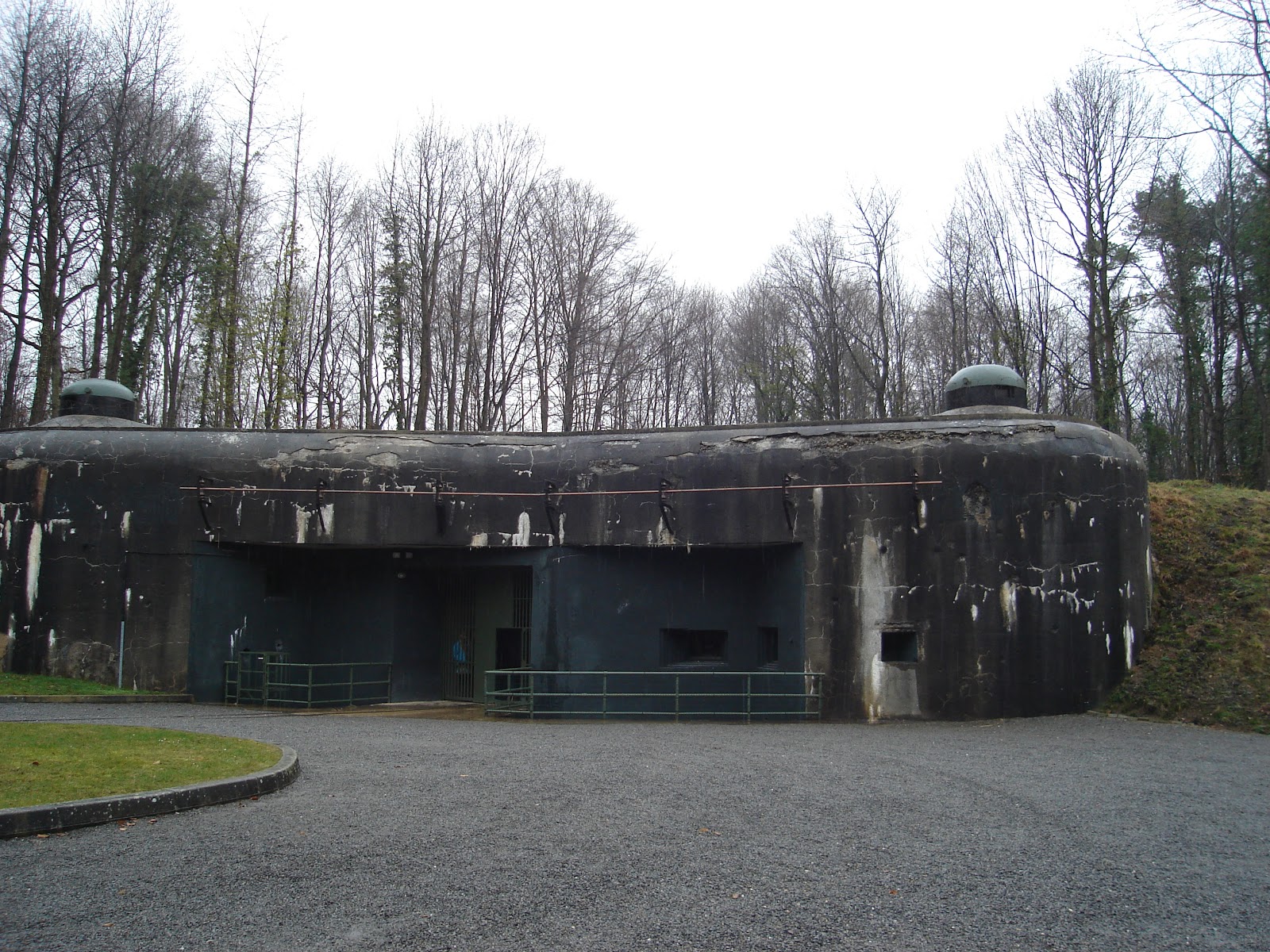
Fort Schoenenbourg

Many of us learned about the Maginot Line somewhere between kindergarten and 12th grade, and perhaps studied it again during college.  However, I really do not think that one can fully appreciated the enormity of the line without a visit to France.  You can learn more about the Line at this link, and although there are many pictures there, I am posting some that I took on a recent field trip to Fortress Schoenenbourg.  It is interesting to note that the fortresses themselves were indeed impenetrable to the invading Nazis, but the French did not expect the Germans to simply bypass the heart of the line along the border, but rather flanked the line by passing through the low countries.  Clicking on a picture should provide a nice enlargement. 


The main part of Fort Schoenenbourg is nearly 100 feet below ground.  There are two major wings, one for living and maintenance and the second for weapons, and they are nearly a mile apart.  The train would bring in supplies at ground level, and then a very large elevator would transport the train down to the main level.  The main level had everything needed for self-sufficiency as seen below - generators, water processing, air filters [fear of poison gas used in WWI], kitchen, living quarters, clinic, and of course a wine cellar!  The living was similar to being on a submarine - small with no access to light and fresh air.


There were only a couple of places where soldiers had painted on the walls - too busy working.


Wednesday, March 20, 2013

WANDERWEG - KÖNIGSTUHL

Click on image to get a nice enlargement.
Photos by Douglas A.


Along the path to Königstuhl

Here is a view from the top

 File:Vom Königstuhl Blick auf Heidelberg.JPG

Wednesday, March 06, 2013

SECULAR EUROPE? NOT REALLY


The relationship between the church and the state has been a source of discussion and conflict for millenia.  I am certainly not going to summarize the intricacies of the separation or non separation of the two - for that, you can start at Wikipedia here.  What I would like to address is the fairly common notion that many European countries have become secularized, with the church being relegated to minor status.  This perception has been declared tragic by some and victory by others.  Folks like Bill O'Reilly claim that the "Secular Progressives" want to model the US after Western Europe where all religion is removed from public life and thought.  On the other side of the coin are folks like Jerry Coyne who often remarks that secularization of Europe is nearly complete. 
 
Austin Cline accurately sums up O'Reilly & Company's perspective thus:
 
Most Americans are at least dimly aware that many European nations are highly secular and less religious than America. What they don't realize is that these same nations retain official state churches and deep church/state entanglements that would be illegal in America. Truly dim commentators and politicians ignore this and act like American secularism could lead to European socialism.
 
I believe that Coyne and others who tout the European model over-simplify the relationship between the church and state in Europe, especially in Germany.  It is no doubt true that public religious showmanship of politicians is absent - no God-talk from candidates or office holders, no taking oaths on Bibles, no prayer breakfasts at the Rathaus.  Even in private conversations among Germans, a discussion of religion and church seldom comes up.  And when it does enter the conversation, it is only after it is clearly established that there is a mutual interest in discussing the matter.  Unlike many Americans, the Germans, regardless of belief or non-belief, simply regard secular spaces and activities as secular, and religious spaces and activities as religious, and cannot imagine admixing the two. 
 
Thus, the outward appearance of secularization is why most casual observers believe that secularization is pervasive.  Having lived in Heidelberg for a number of months, I have learned a few things that counter the perception of a secular Germany. 
 
First - education.  Interestingly, it is illegal to home school children in Germany, and thus all children attend public schools.  [Check out the continuing saga of a German couple seeking asylum in the US because of this ban].  And, in public schools, all students participate in religious education curriculum, choosing between Catholic and Protestant courses, or a much less used alternative that is ethics based.  These curricula are intended to be solely educational and not proselytizing, but they are usually taught by members of the clergy.  Interestingly, virtually all of the pre-schools and kindergartens are operated by the church with state funding. 
 
Second - taxation.  In Germany, you must make a choice on your tax form of Catholic, Protestant or other, and about 60% choose a church tax, almost equally between Catholic and Protestant.  Thus, the state collects about 10% from the populous to be given back to the churches that are on the "approved" list of denominations.  If you check a church box, you can direct your taxes toward a specific approved denomination.  The current big question is what to do with Muslims.
 
Third - church attendance and activities.  Interestingly, virtually all shops that are not cafes or restaurants are closed on Sunday.  Church bells are predominant on Sunday morning, but also send out calls throughout the week, so much so that there are municipal limits on bell-ringing!  As opposed to many congregations in the US where the silver-blue-gray heads predominate, many church attendees are college-age and young families.   Traditional services, contemporary services and special events such at Taizé all seem to be fairly well-attended.  My impression is that many US folks say that they go to church and generally don't, whereas Heidelbergers don't talk about it, but many do.
 
It is really quite interesting - the US often claims the strict separation of the church and the state, but in reality that line is both ill-defined and often crossed, in both directions.  In Germany, the church and state are deeply intertwined, but in most ways remain separate magisteria.  Go figure.

Tuesday, February 26, 2013

THE YELLOW CAR I BUILT


The Yellow Car I Built
by
Janine Strecker
(Mother of Heidelberg Student Shelby)

     My name is Mike and it was June.  School was almost out and I needed a job.  Although I was young, I always remember having chores and summertime jobs.  I did chores and earned money to buy the extra things that I wanted.

     Mr. Wells was a man who lived across town.  He needed someone to help make a car from a kit for his son, Carl.  These kit cars were like real cars, but made for kids.  They were made from steel and had windows that really worked!  The chrome rims on the wheels were so shiny that they actually reflected like a mirror.  Yes, these kit cars were made only for the rich.  They were made for a different kind of people – people with a lot of money.  I didn’t come from that.  Don’t get me wrong; my family never went hungry.  We were just ordinary folks who had ordinary things.

     When I heard about Mr. Wells needing someone to make a kit car, I knew that I wanted the job.  I called him and told him that I worked on many things with my hands.  I explained that I made rafts, go-carts, and even fixed bicycles.  He knew I worked hard, so he hired me.

     After he told me I got the job, I went over to his house.  His house was just amazing.  I never knew houses could be so big!  He showed me a picture of the car that I was going to build.  “Wow, this car is awesome!” I shouted with excitement.

     Mr. Wells smiled and said, “I’ll bring the kit car to your garage tomorrow and you can work on it all summer long.”  Mr. Wells was going on vacation with his family and wasn’t coming home until August.

     The next day, he brought it over and I couldn’t wait to get started.  I opened the box.   I had never seen so many parts.  Before I got started, I read all the directions.  I didn’t want to make any mistakes.  Each day, I worked on the car.  I made sure that every screw was in just right.  I tested all the wheels to make sure they turned smoothly, without any squeaks.  I have to admit, there were times when I would get so frustrated because I couldn’t get things to work correctly.  I remember, I had a really hard time aligning the car doors.  They just wouldn’t close properly.  I got so frustrated, but I kept at it, and finally got everything to work. 

     Every night before I went in for dinner, I would cover up the car.  I didn’t want anyone to touch or ruin it.  Sometimes after dinner, I’d work on it some more.  It seemed like all I wanted to do was work on this car.  At last, it was time to paint the car.  I painted it red – a cherry apple red.  It was a beauty!  It was finished, and I was so proud.
 

     Mr. Wells and his family returned home from their vacation.  He called me and asked how the car was coming along.  I told him that it was finished.  He was excited to hear the news and came over to my garage to get the car.  He looked at the car and said, “Mike, the car is just gorgeous and I can tell you worked very hard.”   I smiled and was happy he noticed.  He paid me and then took the car to his home.

     It was now August, and time for football.  My friends and I would ride our bikes to the park and play some ball.   We always ended up filthy and our clothes were covered with grass stains, but we had the greatest time playing.   Sometimes when I was playing on the field, I would see Carl driving in the beautiful car that I built.  I noticed that the car needed to be cleaned and the chrome rims weren’t even shining.  “He doesn’t even appreciate the car,” I mumbled to myself.  “If I had a car like that, it would be sparkling.  He gets all the breaks.”

     At least I was having a good time with my friends.  But then one day, I got a call from Mr. Wells.  He asked me if I would like to build another car.  I didn’t really want to.  I don’t know why, I guess I just wanted to hang out my buddies.  But I needed the money, so I told him that I would do the job.  

     He brought it to my garage so I could start working on it.  I looked at a picture of the car.  It was going to be a mini sports car.  This car was even better than the first one.  Mr. Wells wanted it completed by October.  I knew I had plenty of time, so I didn’t start on it right away. 

     After a couple of days, I opened the box to get started.   There were a lot of parts, but this time I didn’t want to read the directions.  After all, I did such a good job last time, it didn’t seem necessary.   Besides, I bet Carl wouldn’t even notice if things weren’t done right. 

     I was having fun playing with my friends.  But then I would feel guilty, and knew I had to go work on the car some more.  However, it just wasn’t the same as the last time.  If I couldn’t find the right screw, I would use one that I already had.  The doors were a little wobbly – but the car was getting built.

     Each night before dinner, I’d cover up the car.  I didn’t cover up the car to protect it, but to cover up my work.  I didn’t want my family to see how uninterested I’d become.  Besides I knew with a shiny coat of paint, no one would know how the car was really built.  Finally, the car was almost finished.  All I had to do was paint it.  I chose yellow – a tangy citrus yellow.  The car was beautiful, at least from the outside.

     I called Mr. Wells and told him the car was finished and he could pick it up anytime.  The next day, Mr. Wells came over and paid me.  He thanked me for all my hard work.  I smiled, but looked down feeling a little awkward.  He then added, “Mike I want to give you this yellow car.  It’s yours to keep.  You’ve earned it.”


     I couldn’t believe my ears.  This car was mine.  I could have had the best car in town, but I did shabby work.  If I had only known, I would have built it so differently.  But the car was mine, just the way I built it.

     “I thank you Mr. Wells.  You are so generous to give me such a gift.  I will never forget it,” I said - knowing that I never would. 

     It has been many summers since I built that yellow car.  I’m now older and have an office job.  But I keep a picture of the mini yellow sports car on my desk just so I remember that the choices we make today affect our tomorrow.

Friday, December 14, 2012

HOME FOR THE HOLIDAYS


Back in Boulder for the Christmas-New Year break between semesters, and decided to make a few random observations regarding being back in the USA vis à vis Deutschland:

     1.  Plus-sized people.  This was apparent as early as the boarding area for the Lufthansa flight from Frankfurt to Denver.  XXL and beyond is quite uncommon in Heidelberg.
     2.  Clear skies and sunshine!  Fairly uncommon in Heidelberg this fall which is noticeable when one is used to 300+ days of sunshine per year.
     3.  Far fewer smokers.  US Males = 26.3%  US Females = 21.5%  German Males = 37.4%  German Females = 25.8%  And what is very noticeable is the preponderance of young smokers in Germany.
     4.  Shorter people.  Far fewer men over 6'6" and women over 6'0" - I have no data, but there sure are a lot of tall folks in Heidelberg.
     5.  SUV's and big trucks.  Rare in Heidelberg
     6.  Good Mexican, Tex-Mex and Southwest Cuisine!  Sketchy in Deutschland.
     7.  Boulder is less ethnically diverse than Heidelberg.
     8.  An abundance and nice variety of excellent beer on tap at most restaurants and tasting rooms.  A typical German pub/restaurant will have 3 or 4 on tap.
     9.  Far fewer bicylclists and walkers even though Boulder is a biking town.
   10.  I prefer being in GMT -7 versus GMT +1
   11.  Go Broncos and Nuggets!!  [Avs too if they ever get past the lockout]

Thursday, December 06, 2012

SAINT NICHOLAS DAY

December 6th has long been a special day because it is the birth day of our daughter.  However, I learned that it is also a special day for many folks, particularly in Germany, because it is Saint Nicholas Day.


You can read about Saint Nicholas here and here, but the Saint Nicholas Center website is completely dedicated to Nicholas and Saint Nicholas Day.  Here are a couple of snippets from the site:
 
The true story of Santa Claus begins with Nicholas, who was born during the third century in the village of Patara. At the time the area was Greek and is now on the southern coast of Turkey. His wealthy parents, who raised him to be a devout Christian, died in an epidemic while Nicholas was still young. Obeying Jesus' words to "sell what you own and give the money to the poor," Nicholas used his whole inheritance to assist the needy, the sick, and the suffering. He dedicated his life to serving God and was made Bishop of Myra while still a young man. Bishop Nicholas became known throughout the land for his generosity to the those in need, his love for children, and his concern for sailors and ships.
 
Under the Roman Emperor Diocletian, who ruthlessly persecuted Christians, Bishop Nicholas suffered for his faith, was exiled and imprisoned. The prisons were so full of bishops, priests, and deacons, there was no room for the real criminals—murderers, thieves and robbers. After his release, Nicholas attended the Council of Nicaea in AD 325. He died December 6, AD 343 in Myra and was buried in his cathedral church, where a unique relic, called manna, formed in his grave. This liquid substance, said to have healing powers, fostered the growth of devotion to Nicholas. The anniversary of his death became a day of celebration, St. Nicholas Day, December 6th (December 19 on the Julian Calendar).

In Roman Catholic areas of southern Germany, such as Bavaria, Sankt Nikolaus still comes as a bishop with flowing beard and a bishop's miter and staff. Houses are thoroughly cleaned and children clean and polish their shoes or boots in preparation for the saint's visit. On the evening before St. Nicholas Day, children put letters to the good saint along with carrots or other food for his white horse or donkey on a plate or in their shoes. These are left outside, under the bed, beside a radiator, or on a windowsill in hopes of finding goodies from St. Nicholas the next morning. During the night Sankt Nikolaus goes from house to house carrying a book in which all the children's deeds are written. If they have been good, he fills their plate, shoe or boot with delicious fruits, nuts and candies. If not, they may find potatoes, coal, or twigs.

Monday, December 03, 2012

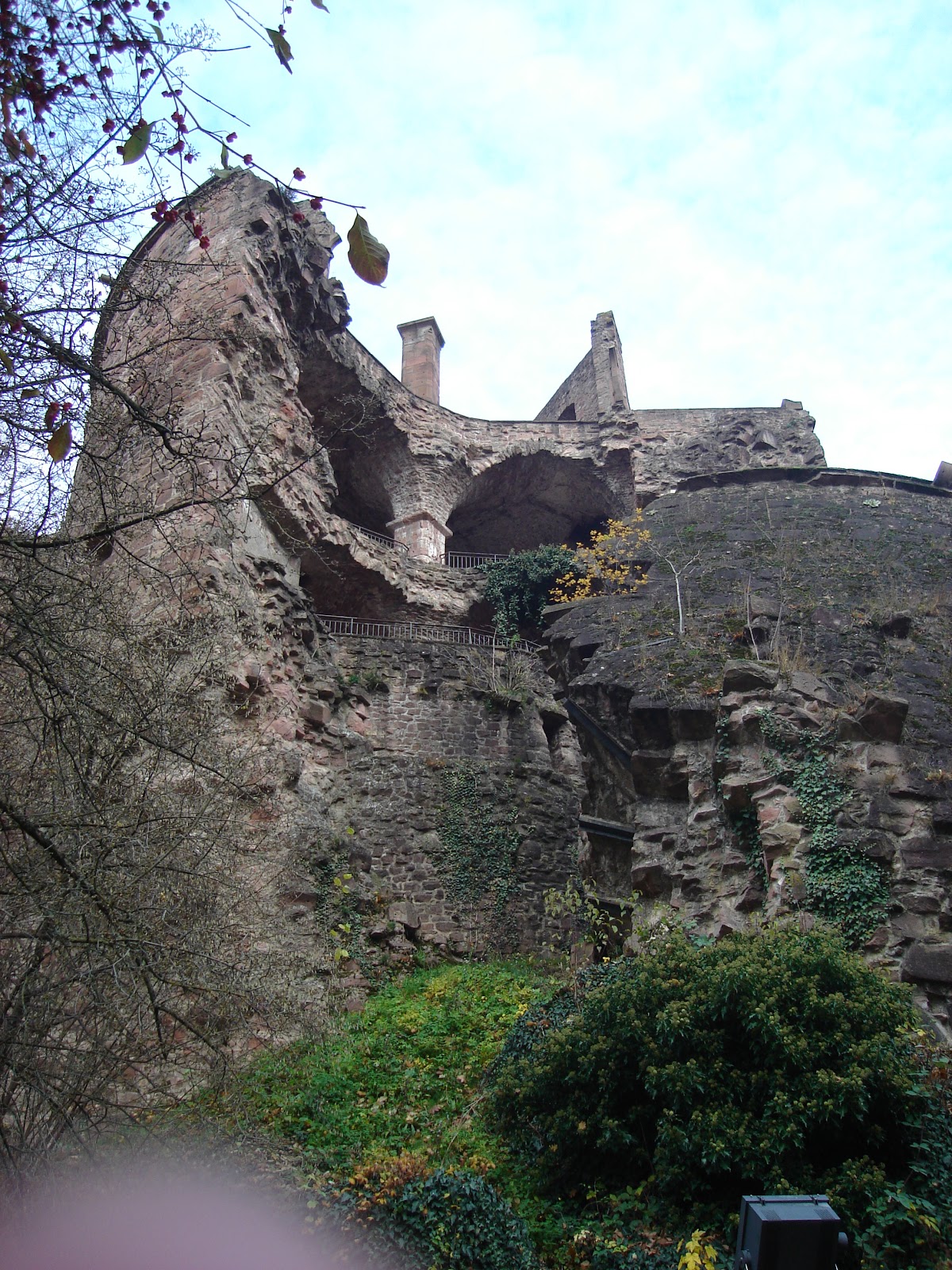
SCHLOß HEIDELBERG

You can read all about the Heidelberg Castle here and here, and see nice pictures here, but what follows are pictures that I took which means that when you click on them, you will see enlarged versions with nice details.  The Pepperdine house is only a couple of blocks from the castle with an address of Graimbergweg 10, and you can read about Graimberg here.


Sunday, November 25, 2012

TAIZÉ


Regarding a Taizé service, a colleague said "I don't think that it matters whether or not one is a believer, if you enjoy communal singing and a time of meditation, you will be moved by Taizé."  And I agree.  I have been to several Taizé services, from Malibu to Hong Kong to Heidelberg, and although each has been slightly different, they all have the same sense of communal inward reflection.  The Taizé service at Peterskirche was typical of a larger service, with hundreds of participants and songs accompanied by a seven piece chamber group and a lead singer.  A previous service in Heidelberg was at the Jesuitenkirche Krypta and was much smaller, more intimate, and accompanied by only a single keyboard.  The service in Hong Kong was amazing - the new leader of the Taizé community, Brother Alois, was present, and thus the gathering was large and the singing and accompanyment ethereal.
Jesuitenkirche Krypta
 As usual, the language changed from song to song.  Below is a favorite in German.


Behüte mich, Gott, ich vertraue dir, du zeigst mir den Weg zur Leben. Bei dir ist Freude, Freude in Fülle.

Keep me, O Lord, for I trust in you. You show me the path of life. With you, there is fullness of joy.

Garde-moi,mon Dieu, j'ai confiance en toi. Tu m'entraînes sur le chemin de Vie. Auprès de toi, plénitude de joie.