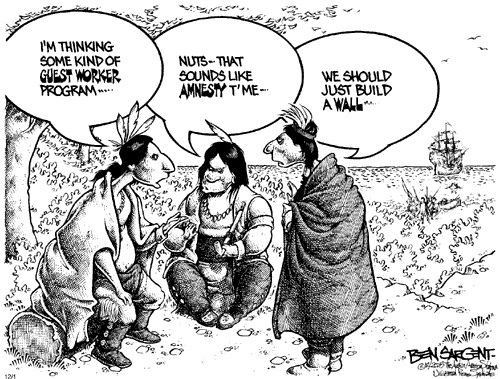
This could be one reason folks live there!
Perspectives of a Colorado Curmudgeon on topics ranging from Basketball to Music to Science & Religion to Travel to Memories, touching on a bit of everything.
Saturday, December 12, 2015
Tuesday, December 01, 2015
MENNO PAUSE - THE UNDERGROUND PAPER
I have been meaning to write about Menno Pause, an "underground" newspaper that came out with two issues during my senior year at Goshen College. I was one of the secondary group of folks who helped the primary five with some of the grunt work. The five were the intellectual voice of the paper and the rest of us helped with printing, graphics, ideas for articles, etc. Four of the five signed both issues of the paper, and not long after the second issue, they were all kicked out of school - Sam Steiner, Jim Wenger, Lowell Miller and Tom Harley.
I write now because Sam Steiner recently wrote an article reflecting
on his role in the publication of Menno Pause, an underground newspaper
at Goshen College. Read the whole article here.
A couple of clips from Sam's article:
Jim Wenger was the intellectual leader of our little band. He had studied the growing phenomenon of underground newspapers in spring 1967 for the Communication and Society course. He was a convinced adherent of the free speech movement, and wished for a living example at Goshen College. He also wanted to shake his “egghead” reputation because he had a near 4.0 grade average.
Jim drafted our purpose statement thusly: “The Menno-Pause is a gadfly (poking and prodding the GC sacred cows), a watchdog (checking and analysing disciplinary action), a critic (positive or negative analysis of GC education), an extended student opinion board–and general all-around crap.” We characterized ourselves as the “campus underground newspaper team.”
In early September the five of us began to plan, mostly in Yoder 201, often against the backdrop of “Sgt. Pepper’s Lonely Hearts Club Band.” By September 10 we were serious about producing an underground paper. Tom gave us the name of the paper. We co-opted others to help. They included Carol Beechy (women’s perspective), Doug Swartzendruber (design), Eric Yoder, and Bill Horrisberger. We delegated Jim and Lowell to give Sue Clemmer a “head’s up” that our alternative publication was coming.
I would encourage any of you with an interest to read Sam's entire article and the comments, as well as the linked article by Dan Hess who was a Professor of Communication at the time. I added this comment to Sam's article:
Sam – thanks for sharing this reflection, and bring back many memories of our years at Goshen College. I indeed helped with the graphic of Menno Pause, and some of us secondary MP-ers helped with various aspects of the publication. My recollection was that one of the issues was printed after-hours at the Menno Travel Service offices downtown, with the help of Will Poyser and an MTS employee.
Jim Wenger was my assigned roommate for our freshman year; sort of the odd couple. Jim was very bright, a talented piano player and no particular interest in sports – me, average intellect, OK guitar player and always ready to play basketball, or whatever. We got along fine, but lined up new roommates for our second year. In retrospect, it is clear that Jim was dealing with his sexual identity in 1964. He would occasionally peruse a Playboy and had numerous dates with college girls, but did not seem particularly comfortable living that role. While it saddens me deeply that he as well as others such as Eric Alderfer, could not express their innate identities at Goshen, I was pleased that Jim was able to find a loving long term partner in Peter.
I have dug out my two issues of Menno Pause and also a manuscript by Stacy Vlasits who wrote a book entitled “The Menno-Pause Incident At Goshen College. And thanks for the reference to the Dan Hess article – both interesting and illuminating.
A few more thoughts:
Another recollection of Jim was that he was very fond of his mother, but not so much of his father who was a minister in Pennsylvania who no doubt had a very unaccepting view of homosexuality. Goshen College's expulsion of the four ended what I believe would have been a stellar academic career for Jim.
A nickname for President Mininger was Pious Paul, and one late evening we spent a fair amount of time writing on the wooden fence surrounding the construction site of the Good Library outlining all of the things that Pious Paul Prevented [all starting with P].
A nickname for Sam was Pig-Pen, not disparaging but rather for his resemblance to the lovable Pig-Pen in the Peanuts cartoons.
Lastly, I, perhaps incorrectly, put part of the blame on Goshen College for the premature deaths of Jim and Eric Alderfer and perhaps others whose struggles with sexual identity could not be acknowledged and openly discussed. By GC, I mean all of us because even though some of us were supportive of the expelled gang of four, there likely was more that we could have done on their behalf.
Jim Wenger, Tom Harley, Sam Steiner & Lowell Miller
A couple of clips from Sam's article:
Jim Wenger was the intellectual leader of our little band. He had studied the growing phenomenon of underground newspapers in spring 1967 for the Communication and Society course. He was a convinced adherent of the free speech movement, and wished for a living example at Goshen College. He also wanted to shake his “egghead” reputation because he had a near 4.0 grade average.
Jim drafted our purpose statement thusly: “The Menno-Pause is a gadfly (poking and prodding the GC sacred cows), a watchdog (checking and analysing disciplinary action), a critic (positive or negative analysis of GC education), an extended student opinion board–and general all-around crap.” We characterized ourselves as the “campus underground newspaper team.”
In early September the five of us began to plan, mostly in Yoder 201, often against the backdrop of “Sgt. Pepper’s Lonely Hearts Club Band.” By September 10 we were serious about producing an underground paper. Tom gave us the name of the paper. We co-opted others to help. They included Carol Beechy (women’s perspective), Doug Swartzendruber (design), Eric Yoder, and Bill Horrisberger. We delegated Jim and Lowell to give Sue Clemmer a “head’s up” that our alternative publication was coming.
I would encourage any of you with an interest to read Sam's entire article and the comments, as well as the linked article by Dan Hess who was a Professor of Communication at the time. I added this comment to Sam's article:
Sam – thanks for sharing this reflection, and bring back many memories of our years at Goshen College. I indeed helped with the graphic of Menno Pause, and some of us secondary MP-ers helped with various aspects of the publication. My recollection was that one of the issues was printed after-hours at the Menno Travel Service offices downtown, with the help of Will Poyser and an MTS employee.
Jim Wenger was my assigned roommate for our freshman year; sort of the odd couple. Jim was very bright, a talented piano player and no particular interest in sports – me, average intellect, OK guitar player and always ready to play basketball, or whatever. We got along fine, but lined up new roommates for our second year. In retrospect, it is clear that Jim was dealing with his sexual identity in 1964. He would occasionally peruse a Playboy and had numerous dates with college girls, but did not seem particularly comfortable living that role. While it saddens me deeply that he as well as others such as Eric Alderfer, could not express their innate identities at Goshen, I was pleased that Jim was able to find a loving long term partner in Peter.
I have dug out my two issues of Menno Pause and also a manuscript by Stacy Vlasits who wrote a book entitled “The Menno-Pause Incident At Goshen College. And thanks for the reference to the Dan Hess article – both interesting and illuminating.
A few more thoughts:
Another recollection of Jim was that he was very fond of his mother, but not so much of his father who was a minister in Pennsylvania who no doubt had a very unaccepting view of homosexuality. Goshen College's expulsion of the four ended what I believe would have been a stellar academic career for Jim.
A nickname for President Mininger was Pious Paul, and one late evening we spent a fair amount of time writing on the wooden fence surrounding the construction site of the Good Library outlining all of the things that Pious Paul Prevented [all starting with P].
A nickname for Sam was Pig-Pen, not disparaging but rather for his resemblance to the lovable Pig-Pen in the Peanuts cartoons.

Lastly, I, perhaps incorrectly, put part of the blame on Goshen College for the premature deaths of Jim and Eric Alderfer and perhaps others whose struggles with sexual identity could not be acknowledged and openly discussed. By GC, I mean all of us because even though some of us were supportive of the expelled gang of four, there likely was more that we could have done on their behalf.
Friday, November 20, 2015
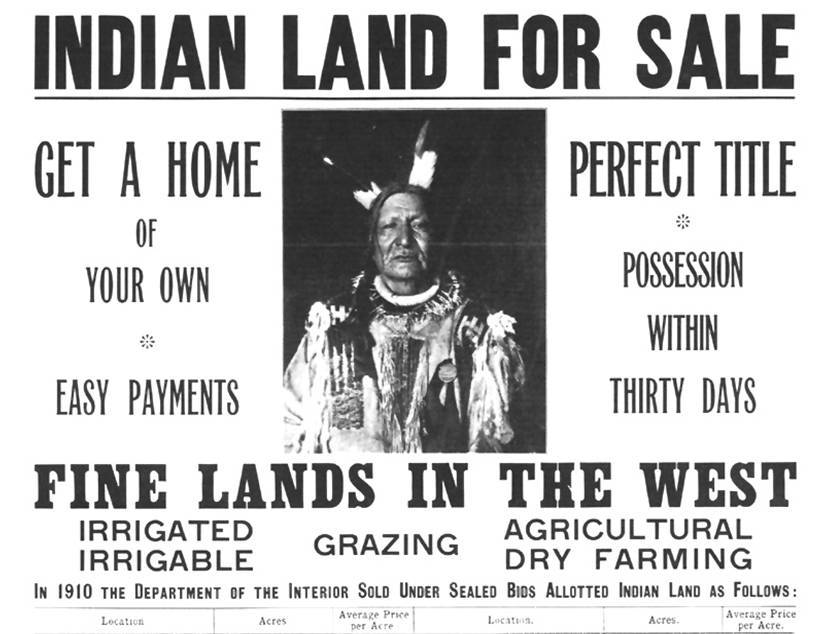
THE DOCTRINE OF DISCOVERY
Raise your hand if you are familiar with the Doctrine of Discovery, and add a comment about when you learned about it. I am almost 70 and am pretty sure that I never learned about this in school. We all learned the story of Custer's Last Stand, but we certainly did not learn about the Trail of Tears, Wounded Knee or Sand Creek. After over 500 years of this immense injustice, I will join the call to have the Doctrine repudiated. There is no way to make compensation or to reverse past injustices, but certainly we can acknowledge the travesties that grew out of the doctrine and try to head down a more just path.
The graphics will begin with a bit of commentary and then move on to a few examples of the results of the Doctrine of Discovery.


Wednesday, November 18, 2015
MENNONITES LEAVING THE CHACO
For a long time, I have been aware of the Mennonites who migrated to Mexico to live and farm in The Chaco and elsewhere. A nice summary is here. Locations shown below.

Mennonite/Anabaptists have a long history of migration, generally to avoid conflict and religious persecution, but also to find new land for farming and family living. The New York Times recently had a lengthy article about the Mennonites in Mexico, and of the conflicts there, and once again, looking to move on after many decades in Mexico.
Read the article given in the link, most of which is copied below:
RIVA
PALACIO, Mexico — On the edge of a high plain fringed by craggy
sandstone hills, Johan Friesen’s small farm is a testament to the rural
providence of his Mennonite people.
Neat
fields of onion, soybean and yellow corn stretch behind his concrete
and adobe house. In the farmyard, a few dozen cows stand in a corral,
ready for milking, and a canary-colored reaper awaits repair. But
beneath this valley of orderly farms in the center of Chihuahua State,
the picture is less than serene, officials and farmers say.
Underground
reservoirs have been drained by thirsty crops, like corn, that are the
mainstay of the Mennonites’ success, they say. Competition for
groundwater — which officials have warned could run out in 20 years —
has strained relations between the pacifist, Low German-speaking Mennonites and other farmers and, on occasion, incited violence.
In
Chihuahua, nearly a century after the Anabaptist Mennonites migrated
from Canada and transformed this valley into a lush carpet of crops,
hundreds are trading the land they call home for one where land is
cheaper and water is more plentiful.
“People
say the water is going to run out,” said Mr. Friesen, 44, who in the
spring will join 25 Mennonite families who have begun a new colony in
central Argentina. “Without water you can’t grow anything.”
Santa
Rita, in Mexico’s Mennonite heartland, is a colony of one-story,
pitched-roofed homes, clipped lawns and straight roads — a world away
from a typical Mexican village.
On
a recent Saturday, perhaps the loudest noise was that of a lawn mower,
steered by a young woman wearing a long dress and a straw hat.
For all their good husbandry, though, Mennonite farmers have been prodigal consumers of groundwater, experts said.
“Water
has been a source of wealth in Chihuahua, and while that wealth lasts,
people are not thinking about how much they are using,” said Arturo
Puente González, an agricultural economist.
Still,
it was “very unfair” to blame the region’s water problems on the
Mennonites, said Kamel Athié Flores, the head of the Chihuahua branch of
the National Water Commission, known as Conagua, which regulates
supply. He pointed to city dwellers and big non-Mennonite farms that
produce apples and pecans — also thirsty crops.
Cornelius
Banman, a farmer from the Manitoba colony, about 50 miles south of
Santa Rita, said nobody complained about the pecan farmers because they
were of Mexican descent and, unlike Mennonites, who do not vote, had
political clout.
“They look on us as foreigners,” he said.
The
Mennonites live apart in their colonies and rarely marry outside,
though they pay workers above-average wages. The most conservative
eschew electricity and other devices that would link them to the outside
world.
Others
use WhatsApp, a messaging application, and research land prices on the
Internet, but they discourage distractions like Facebook.
The
women speak little Spanish, and children are raised for a “wholesome”
rural life, attending Mennonite schools until eighth grade.
The
Mennonites began digging wells for irrigation in the 1980s, said Víctor
Quintana Silveyra, a sociologist and politician in Chihuahua City who
has studied local water use. As their population grew — they estimate
their number at 60,000 — they used credit from
Mennonite banks to buy land in the desert and to install irrigation
systems. Since 2000, irrigated land in Chihuahua has doubled, to about
1.3 million acres, and farmers are pumping water at an “exploitative”
rate, Mr. Quintana said.
Farmers
said wells had to be dug three times deeper today than they were 20
years ago, a process some cannot afford. To slow extraction, the
government in 2013 ruled that all new wells require a permit.
“I
can see a point, in my lifetime, when the water here is finished,” said
Luís Armando Portillo, a farmer who is the president of the Technical
Committee of Groundwater in Ciudad Cuauhtémoc.
A
group of activists known as El Barzón has campaigned to shut down
illegal wells and break dams on Mennonite land. Joaquín Solorio, a
Barzón activist whose parents had to sell their cattle after their well,
next to a Mennonite farm, dried up, said the group had lodged
complaints about illegal water use. “It’s not just Mennonites,” he said.
Defending
water rights can be deadly in Chihuahua, where links between organized
crime, mining and farming are murky. Alberto Almeida Fernández, a former
politician who protested against illegal wells and against a Canadian
mining project, died after he was shot in February. Two other activists,
Mr. Solorio’s brother and sister-in-law, were killed in 2012. The
police have yet to solve the crimes, and members of Barzón — three of
whom have state police escorts — discard a Mennonite connection. But the
deaths have added to tensions.
“You
think about buying land, and then you think, ‘I don’t want problems,’ ”
said Johan Rempel, a leader of the Manitoba colony who is looking for
land overseas for about 100 families.
In
some ways, the Mennonites’ migration is another turn of history. Those
who moved to Mexico from Canada had fled persecution in Russia. Over the
years, some settled in other parts of Mexico, and conservative groups
broke from the Mexican colonies and moved to Bolivia, Paraguay and
Belize.
But with younger farmers facing new pressures
— difficulty getting permits for wells, and soaring costs for irrigated
land — some predict that they will look to find land elsewhere.
About
50 of the 300 families in Mr. Friesen’s colony, Santa Rita, will move
to San Luis Province in Argentina, said Abraham Wiebe Klassen, the head
of the colony. Other colonies have looked at land in Russia and
Colombia.
The perception that Mennonites are more attached to their culture than to their country irks other farmers.
“Their world is everywhere,” Mr. Portillo said. “They arrive, they work the earth and when they need more, they move on.”
“This is my land,” he added. “My dead lie here. I won’t leave.”
Abraham
Wiebe Wiebe, who was preparing to leave for Argentina with his wife and
children, disagreed. “I’m 100 percent Mexican,” he said.
Sitting
in his kitchen as his wife rolled out cookies, Mr. Wiebe, 49, said he
had “lost a lot of sleep” over leaving. “But our children have no future
here,” he said.
Several
Mennonite farmers said they were skeptical that Chihuahua would run
dry. Water was God-given, one farmer said, and only God could take it
away.
“Doesn’t water go in a cycle?” Mr. Wiebe asked. “You pull it from the ground, and then it rains from the sky.”
Others
are less sanguine. Nicolas Wall, a Mennonite who farms 700 acres of
corn with his brother, worries that there will not be enough water for
his children to farm.
“I think there’ll be an end to it sometime,” Mr. Wall said. “But when?”
The
real problem lies with the government, farmers and experts said. The
water commission is a “den of corruption,” Mr. Klassen said, a place
where officials take years to process paperwork and sell well permits
for thousands of dollars.
Mr. Athié did not deny corruption, but said the problem was “older than Christ.”
Mr.
Puente said Mexico needed to start a national conversation. People are
turning to other energy sources, he said, adding: “But there is no
alternative to water. Water is water.”
Mr.
Friesen will trade such worries for the challenge of starting a new
life on the 250 acres he bought in Argentina. Those already there have
built some houses and bought cattle, he said. Three babies have been
born.
Hard
as it would be to leave “the homeland,” Mr. Friesen said, his five
children would “put down roots” in a new place. Standing in the dairy
barn as his wife, Gertruda, milked cows, he smiled.
“We’re going to create exactly the same world there that we built here,” he said.
Friday, October 30, 2015
COLORADO EVANGELICAL MESSAGE TO REPUBLICAN CANDIDATES
Unless you have been living in a cave, you likely know that the Republican candidates for POTUS gathered in Boulder on Wednesday for their third debate. CU touted it as a great opportunity for the students, but not surprisingly, CNBC limited the number of tickets to students at about 100, and allowed an audience of only 1000 in a venue that seats 11,000 plus. Like everyone else in the nation, the CU students had to decide whether or not to watch the debate on TV. On the morning of the debate, there was an interesting full-page ad in the Boulder Daily Camera - blurb below from here:
BOULDER, Colo. — In an open letter published Wednesday as a full-page ad in the Boulder Daily Camera, 63 Colorado pastors and other evangelical leaders call on GOP presidential candidates to craft respectful, solutions-based messages on immigration.
In a key state for 2016, the letter counters harsh rhetoric toward immigrants from some presidential candidates and other political leaders.
“The immigrant community and our community are one and the same,” the letter states. “Together, for several years we have diligently worked to create space to dialogue and learn from one another about how the broken immigration system has affected our communities, keeping us divided. And, we have come to this shared conclusion: Immigrants are vital in our communities, and we must treat them with respect and dignity. Our laws must reflect that conclusion.”
“So many of us feel that we need to do something to stand up to the negativity around the immigration debate,” said Michelle Warren, an Evangelical Immigration Table leader in Colorado.
“We are desperate for a conversation that welcomes immigrants with compassion.”
FULL LETTER - slightly better viewed in link as PDFsole Mennonite signator was Vern Remple.
BOULDER, Colo. — In an open letter published Wednesday as a full-page ad in the Boulder Daily Camera, 63 Colorado pastors and other evangelical leaders call on GOP presidential candidates to craft respectful, solutions-based messages on immigration.
In a key state for 2016, the letter counters harsh rhetoric toward immigrants from some presidential candidates and other political leaders.
“The immigrant community and our community are one and the same,” the letter states. “Together, for several years we have diligently worked to create space to dialogue and learn from one another about how the broken immigration system has affected our communities, keeping us divided. And, we have come to this shared conclusion: Immigrants are vital in our communities, and we must treat them with respect and dignity. Our laws must reflect that conclusion.”
“So many of us feel that we need to do something to stand up to the negativity around the immigration debate,” said Michelle Warren, an Evangelical Immigration Table leader in Colorado.
“We are desperate for a conversation that welcomes immigrants with compassion.”
FULL LETTER - slightly better viewed in link as PDFsole Mennonite signator was Vern Remple.
Thursday, October 29, 2015
RICHIE FURAY AND LOS LOBOS AT eTOWN
I know, I know, it's been quite a while [although no one mentioned it :-)]. Been quite busy with a new place in the mountains, shifting places in Boulder, etc. But the eTown YouTube Channel just put up the videos of the Richie Furay and Friends session. When we saw the initial announcement, we though "Well Furay will be good, and it will be interesting to see who the 'Friends' turn out to be." Well we were not disappointed - it was a very enjoyable evening with Furay and his daughter, the Friends Los Lobos and of course the eTown crew . Below is just one video from the evening; the most iconic of the tunes, but visit the eTown Channel to see many great songs and interviews.
Subscribe to:
Posts (Atom)