Showing posts with label Colorado. Show all posts

Wednesday, October 18, 2023

DALE LASATER 1943 - 2016

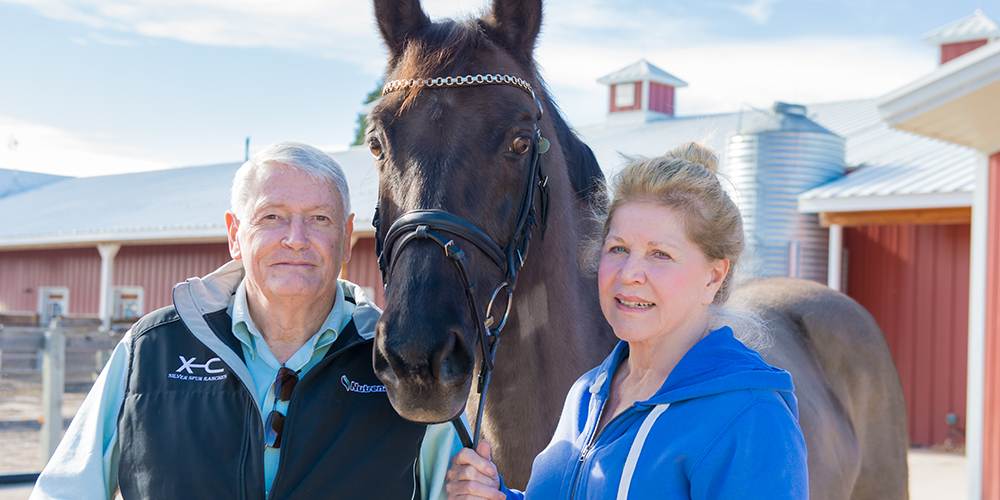
Rancher Dale Lasater remembered for his devotion to cattle, land | News |  gazette.com 


For several years while I was working at CU-Colorado Springs, I had the honor and privilege to serve on a committee with Dale and Janine Lasater to select recipients for the Lasater Family Scholarship.  The committee would review the applications of seniors in the Big Sandy/Simla region, and then gather for an elegant dinner at the Briarhurst in Manitou Springs.  After dinner we would meet with each applicant, and then set about the difficult task of ranking them - difficult because ALL of the applicants were truly exceptional with so many accomplishments in a variety of endeavors.

When I retired from UCCS, I lost track of the Lasaters and the scholarship program, although I was pretty certain that things continued.  Recently I thought that I would try to catch up, and was very much saddened to learn that Dale had died in a horse riding accident at the Lasater Ranch.
Beefmaster Breeders United Hall of Fame Inductees Honored by Beefmaster  Cowman

 Dales obituary briefly covers the multifaceted life of a gentleman renaissance cowboy:

Our treasured husband, father, grandfather, brother and friend died suddenly this past Friday afternoon following a tragic horse accident on the Dale Lasater Ranch (formerly The Lasater Ranch) at Matheson, Colorado. Dale was a well-known Colorado cattle rancher and conservationist. Dale's life will be celebrated at a Memorial Service with reception following on Saturday, October 22 at 9:00 a.m. at Our Lady of the Pines Catholic Church, 11020 Teachout Road, Colorado Springs, CO 80908. Dale is survived by his beloved wife Janine, sons Alex (Fiancé Sarah Cannady) and Tom Lasater (Spouse Peiching Lasater), two grandchildren, Thomas and Elizabeth, as well as brother Laurence Lasater of San Angelo, TX, and brother Lane Lasater and sister Sally Lasater of Boulder, CO. Dale's life touched many people throughout the worldwide ranching and land stewardship community. Dale was a beloved and visionary figure in his field, carrying on four generations of cattle breeding and ranch management. In 1986 he took over management of the Lasater Ranch in Eastern Colorado, founded in 1948 by Tom and Mary Lasater. He broadened and deepened his parents' commitment to working holistically with nature and the environment, producing organic grass fed beef cattle of the Beefmaster breed developed by his father. Dale and his brother Laurence made presentations about the family philosophy of cattle breeding and range management around the world. Dale worked throughout his career to implement conservation of irreplaceable Colorado short-grass prairie and other range environments. Dale was raised on The Lasater Ranch in Falfurrias, Texas and Matheson, Colorado. After graduating from Princeton University in 1965, Dale spent a year studying as a Fulbright scholar at the University of Buenos Aires, Argentina, and then spent two years working with a cattle improvement program with the Peace Corps in Colombia. Prior to taking over the family ranch, Dale worked as general manager of International Cattle Systems, a diversified livestock company headquartered in Kansas. Dale is a past president of the Pikes Peak Cattlemen's Association, and served on the board of directors of the Colorado Cattlemen's Agricultural Land Trust, the Texas Cattle Feeders Association, and the National Cattlemen's Association (predecessor of NCBA). He was a founding board member of the Holistic Management Colorado Branch. In 2002, Dale was awarded the Slow Food Award for Biodiversity in Turin, Italy. In 2012 Dale was awarded the Stuart P. Dodge award for lifetime achievement by the Palmer Land Trust. Dale is the author of Falfurrias (College Station, Texas A&M University Press, 1985) and the editor of Flatrock (Colorado Springs, Master Publications, 2001). Dale's memory will be treasured by all those touched by him and he is profoundly missed. Contributions in Dale's memory may be made to the Lasater Scholarship Foundation, 35437 Highway 24, Matheson, CO 80830. Photo by Watt M. Casey, Jr.

 We would all be fortunate to have a eulogy such as this:

Eulogy for Dale Lasater Mass

Our Lady of The Pines

Greetings,

I loved Dale as a brother, as so many people did. He was like that for me, easy to like, easy to love. But not always. He was a man of grace, of deep insight into many things, but especially people and cattle. He was the most influential person in my life. And he was that for many, many people. Dale Lasater is a giant among men, which is what makes it so hard today to even come close to describing him and his life. It is one of the greatest honors for me to be standing here. To put it into context, someone on the phone calling me about Dale said, “ The world just lost one of its greatest men”. And for all of us who knew him, that is not an overstatement.

I realized yesterday that besides being one of my closest friends, he is the oldest. He called me mano, short for hermano (which also means hand), and I called him bro. Bro Dale. Dale bro. I met him for the first time in 1965 when he taught my siblings and me fifth grade in Mexico on our home ranch, on his way to Argentina as a Fulbright Scholar just having graduated from Princeton University. He was relentless in and out of the classroom. Classes started at 6 am and ended at noon. He led us on horse pack trips on weekends into the mountains. It wasn’t enough to ride on horseback after class, we had to ride bareback, going for ten or more miles to look for arrowheads, and crystals or over the next hilltop. During the midday break he made us run on foot to the airport trap and back (two miles), with him in the lead, and then rewarded us with limeade with no sugar when we got back. He insisted that we write succinctly and to the point. He tortured us with his expectations and boundless energy and imagination. But let me tell you, it was fun.

Much later while I was a university student, we met at a Foundation Beefmaster Association convention in Reno and stayed up all night planning an epic horseback trip through Copper Canyon in Mexico – his idea. At the end of the night, instead of getting a little sleep, he insisted that we go climb a hill outside town to watch the sun come up. He was like that; endless, boundless energy in his pursuit of an unquenchable thirst for life. We never fulfilled that dream, but it became the focal point that inspired scores of letters afterwards between us. And many of you know how he liked to write letters.

In 1989, he invited me to come to Colorado to work with him at the Lasater Ranch. My family and I spent ten years with him, which led to our starting our ranching business in Colorado. If it wasn’t for him, I’m not sure what we would be doing right now. Moving here was a turning point in my life, giving me an opportunity to live my dream. I realized one day while we were in the Lasater Ranch office together that I needed to write down one thing every day that I learned from him because there was so much coming from him: the way he used a word, God, marriage, faith, bulls, wives, traditions, family. I grew accustomed to his laugh and how he could keep you going long after you thought it was time to stop. I can hear his yipping now as he sits up there bestowing his smile upon us.

His family and his marriage to Janine was holy ground to him. It was his highest priority. Today I see his sons Alex and Tom sitting here with their loved ones. He loved you both. He was very proud of you. I see in you the reflection of a lot of Dale’s qualities. I see his light, his darkness, his grace, his roughness, his gentleness, his anger, his brilliance, his love and faith and his goodness. But, as you know, your pa was a not a day at the country club.

No, he was something entirely different. He was so many things. He was a man of deep intelligence and contemplative thought, yet he was a man of the earth. He could write books and just as easily, go out and sort a pen of cattle. He could lead discussions about genetics as easily as he could talk about a poem. The cowboy and his family were as important to him as the financier. He was a man of God like no other whom I have ever met. He was one of the most consistent and giving members of his community that there ever was. And he had a sweet tooth like no other. My son asked me day before yesterday, “Are you going to talk about how he liked sweets?” And he went on to describe an occasion at a cattleman’s gathering when he passed Dale coming the other way. He said, “He had a plate in his hand and on it was not just one piece of desert, but a well rounded selection of every choice there was on the table.” And Duke said he just grinned as he walked by.

After attending Princeton, spending time in Argentina, he fell in love with a beautiful woman named Janine from Spain and they were married in Mexico City and have celebrated life together in marriage ever since. I can remember meeting you for the first time Janine, when he brought you to our home in Mexico showing you off, the most beautiful woman he had ever seen. Soon after, he began his career in the cattle industry working in the cattle feeding sector, and you moved to Kansas to build a major feed yard, leasing ranches and growing an international agri-business as the CEO. However, the corporate world did not suit him.

A desire to write a book about his family’s legacy, “Falfurrias” a story of his grandfather – Ed Lasater’s life, his love of the family ranch by Matheson, Colorado, the foundation Beefmaster cattle herd and his family called to him and he and Janine moved their family to Colorado Springs. It was a place that he had always wanted to return to live, work and preserve. We all know that the future holds the unknown and embedded in it is always change, and always unpredictable. He knew this and still he worked hard to preserve the health of the land and his family’s ranch. And even though the energy and weight and tolerance and patience and extreme amount of time that he devoted to it were of almost super human proportions, this was what he wanted to spend his life doing. And he did. He spent every waking hour, in one form or another, trying to make it better, and he chose to do this over many many other things that he loved and was gifted in. Such as writing books.

I learned in the time that I spent working with Dale, that there were many reasons for his returning home besides this. Last week, I was working bison and was watching the flow of the herd across a hill in the rolling South Dakota prairie, down into a draw. It was raw and beautiful and Dale came flooding over me. I thought about how he would have appreciated bison if he’d been around them more. But he loved cattle. They took up his life. And he loved the people who came with cattle. He took personal interest in each one of us, not just because we might be customers, but because it was the way he related to life. People were the threads that made the tapestry that was his life. They are the colors, the organic stuff that he used to weave. He had so many relations with people of all dimensions, color and walks of life. He found people who needed help, whether it was a marriage in trouble, a severe sickness, or someone who needed to talk about their faith. He was consistently involved in local and state level cattle grower associations. He told me once that he didn’t have time for all the demand coming from different organizations, churches and groups in his community. But he did it anyway.

But it was also the land that pulled him. He loved open rangeland and especially the high prairie of eastern Colorado. It was one of the first things he took me out to see when I moved to here. I distinctly remember wondering what he saw in this flat, desolate place, but over time it has grown on me as it did in him as a boy looking for arrowheads on the ranch, working on horseback moving cattle, trotting around exploring. So when he went out on his horse last week, it was not the hard work or the many long hours of toil in the night that drove him. He went out to simply be in this land that he loved. To ride and breathe it and see the spread of prairie grass and deer and whatever else he came across. He was in his element when he was out there riding. He was taking time to be alone on the back of a horse in the majesty of what he saws as God’s creation.

Dale was a man of unfaltering faith. He took the hand that the Lord offered him and he moved in his life using the light of forgiveness and love in his heart. He used his faith to change things in himself that he wanted to change, he used it to open the hearts of other men and families. He never expected anyone else to follow his footsteps, but gently offered the opportunity to share his faith, and in his belief in the Lord as our savior. He knew there is an afterlife in heaven and I know he is there now, watching us and listening. He knew that he was going to a better place that is overflowing with top tier bulls, the deepest of green grass prairie land and good Mexican food with plenty of dessert. If we become angels in heaven, Dale is surely one now. And if he indeed liked flying around on horses as much as we think, I imagine he surely likes zipping around with his own wings now.

As I think about the time I have spent with Dale and what we have talked about and done together, I always come back to his relationship with cattle. I think cattle and cattle genetics put the brightest spark in his eye. He was unshakable in his work in the development of the Foundation Beefmaster Herd that he believed was based around linking genetic selection processes directly to their natural environment: nature and the natural rhythms of life – boiling the elements of cattle selection and culling to their most fundamental order. It is no wonder that Dale’s genius was his ability to reduce things to their simplest element. He took his father, Tom Lasater’s adage, “The most difficult thing in cattle breeding is keeping it simple” to the ultimate degree. He made no exceptions with animals that did not pass benchmarks in fertility, conformation, disposition, weight or hardiness, the five standards of the Foundation Beefmaster herd. He constantly sought ways to refine his insight into culling and selecting cattle by inviting professional cattlemen he respected such as Watt Casey, Guillermo Osuna, Bill Finan and Gale Evans among many others to spend time on the ranch talking and evaluating herd sire prospects. He believed that longevity was an important benchmark in the long-term economics and functionality of a beef cattle herd on open range. I have never seen anyone move the way he did around cattle, nor anyone select bulls the way he could.

So as we remember Dale, let us remember the gifts that he left us, the example he set, the standard that he used for living his life. The gifts that he left us are faith and forgiveness. Let us remember his sense of humor, his adoration of his wife and sons and grandchildren. His love for this land and for traveling in it on the back of a horse is a gift he gave many of us even if we may not enjoy it in the same way that he did. Let us remember his work with the land to make it sparkle and vibrate with life. Let’s remember the love he had for cattle and all animals, the part of him that drove him so ferociously. Let’s celebrate his life by crying and laughing together, knowing that he is still with us, and always will be.

Duke Phillips III

October 21, 2016

Wednesday, November 25, 2020

THE GRAND MASTERS

Those of you who participate in the running community know that age groups mark milestones in one's life 😁  Generally races have age divisions in groups of 5 years, e.g. 20-24, 25-29, etc. and thus it is perceived as an advantage to be at the young end of the age group.  For example, when you turn 35, you magically move from being the oldest person in your age group to being the youngest!  Then, once you hit forty, you are still in the 5 year bracket of 40-44, but additionally you are now a Masters Runner.  There are a whole set of records for runners over 40, kind of an acknowledgement the these old farts are still pretty fast but not nearly as fast the younger folks.  Then at age 50, one becomes a Grand Master! So, in Colorado Springs, we had a small group of fellows that dubbed ourselves the Grand Masters - we got some jackets and a few other self-identifiers, but mainly had a grand time running and hanging out together.  Here's a group photo of our motley crew, previously posted here:

The Grand Masters
Luis Lowe [seated]
Bob McAndrews, Yours Truly, Jim Brummage, Ron Wisner, Randy Kunkel
[At this point in time future Grand Master Doug Laufer was too young!]

Recently Randy Kunkel passed along a couple more pictures of the crew out on a run in the Broadmoor Area of Colorado Springs


Luis Lowe [front]
Doug Laufer [lower middle]
Jim Brummage, Yours Truly, Ron Wisner, Randy Kunkel


Ron must have been the photographer for this one.
As some of you know, Ron departed this life on May 21, 2010,
and I wrote about it here. We all still miss him very much.


Tuesday, October 06, 2020

GUARD DOG BELLA

While all of us humans were oblivious, Bella knew that there was something going on!!


Tuesday, December 03, 2019

GOOD ON FAIRPLAY!

When we lived in Colorado Springs we owned some land between Fairplay and Alma, and we spent a fair amount of time in that neck of the woods - good mountain folks!

Image result for fairplay colorado

This past week, there was a pretty big storm that closed some highways and caused quite a few folks to get stranded.  Although Fairplay is a pretty small place, the locals came together to shelter over 700 stranded travelers - this from the Denver Post:


"When the emergency shelter in Fairplay ran out of blankets Saturday night, volunteers went door-to-door collecting extras from locals.

When the hotels ran out of rooms, managers let stranded travelers sleep in the lobbies. When the shelter’s cots were full, volunteers spread out the high school’s wrestling mats to try to keep as many people as possible off the floor.

“Words don’t even describe what this small group of volunteers pulled off here,” said Dave Kintz, chairman of the South Park Salvation Army.

More than 700 people were stranded in Fairplay on Friday and Saturday after high winds, blowing snow and low visibility made travel impossible at the height of the post-Thanksgiving rush and closed a long stretch of U.S. 285, which remained closed along the Kenosha Pass on Sunday.

A group of volunteers stepped in to help manage the crowd as the sheer quantity of those stranded strained local resources.

The town of 762 people sheltered 300 people overnight Friday and 446 people on Saturday, said Gene Stanley, director of emergency management for Park County. Authorities also rescued motorists from at least 30 cars that were stranded along U.S. 285 on Saturday, reaching the drivers by using tracked vehicles.

“They absolutely could not move,” Stanley said. “I think the last rescue vehicle came into my office just before midnight.”

The county’s primary shelter, a community center, was designed to hold 50 people — but 112 people stayed there Friday, until the power went out and the shelter lost heat, forcing everyone to relocate to South Park High School.

“It grew into a larger event than we had expected,” Stanley said.

Fairplay’s few hotels filled up on Friday, said Dee Patel, a manager at A Riverside Inn. After all 50 of her rooms were booked, she let travelers sleep in the hallways and the lobby, passing out hot chocolate, tea and extra blankets and pillows.

“I cannot say no,” she said. “A lot of people had little babies and kids with them.”

Kintz, who is also the Park County coroner, said a core group of about 30 volunteers from the Salvation Army, the coroner’s CARE team, and two local churches were crucial to keeping the shelter running smoothly and ensuring everyone was fed.

“We brought in food from South Park Community Church, we raided the food supply of the school, we brought in food from volunteers who provided food from their places, we got some from local stores,” Kintz said.

He said the number of stranded travelers was unprecedented in his 17-year tenure in emergency services.

“Everyone was routed this way due to I-70 problems and other road issues,” he said, adding that he does not think drivers were adequately warned of the “despicable” road conditions in the area.

“I’m just so proud of my little community,” he said. “For the horrible situation we found ourselves in, to be able to help all those people is amazing to me.”

Authorities brought vehicles that had been abandoned on the highways to the shelter Sunday and reconnected drivers to their cars, Stanley said. Most people were able to leave the shelter on Sunday, he said, and the high school shelter was expected to close Sunday evening as the weather cleared.

“Now,” Stanley said, “we are cleaning up the mess.”"


Friday, August 23, 2019

FAIRY RINGS

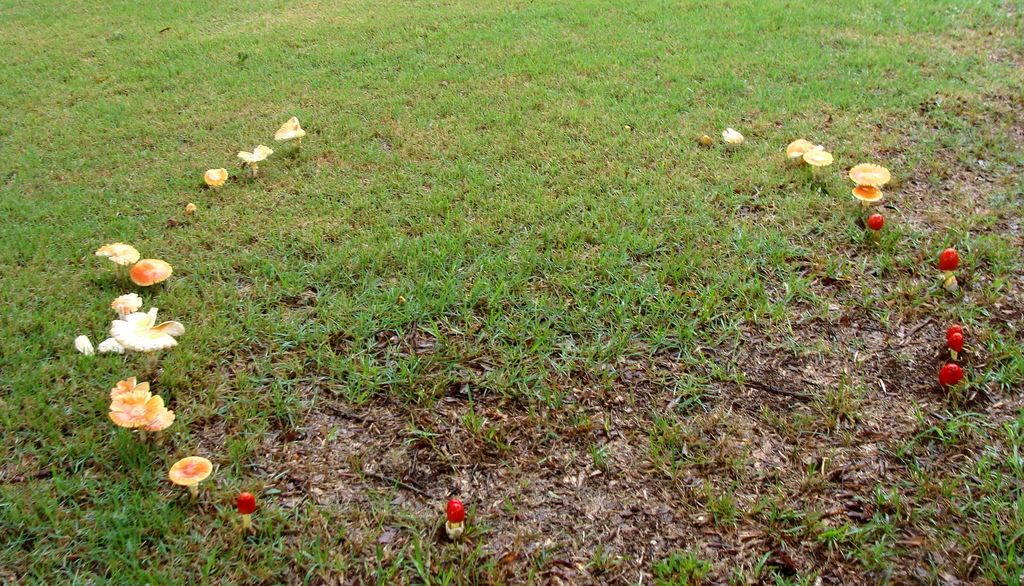
There is a lovely small grass pasture adjacent to the Peak to Peak Highway between Nederland and Ward, Colorado.  Each summer I have noted multiple rings in the pasture, with the ring being a much darker, more robust-looking green.


I did a bit of research and found quite a bit of information about "Fairy Rings"of which there are three general types - green ones as shown above, brown rings and ones consisting of rings of mushrooms.  Each are basically an every-expanding ring of fungi that expand from a few inches to several feet per year.  The elevation of the pasture is around 9000 feet [2745 meters]. A detailed description of fairy rings can be found here and a research article can be found here.  Fairy rings seem to be a turf problem, especially for golf courses.  Below are a couple of pictures of the mushroom type of fairy rings.


Image result for fairy rings

Related image

Not related to the rings, but along the Peak to Peak I have seen a variety of wildlife, including an especially beautiful black fox, coyotes, deer, bears, and moose. 


Sunday, April 22, 2018

THE ENT CENTER AT CU-COLORADO SPRINGS

A whole lot has changed at the CU-Colorado Springs campus since I arrived in 1982, but perhaps the most dramatic addition is the new Ent Center for the Arts.  There was a nice write-up about the Center in today's Denver Post, and it is pasted below.  I am looking forward to having a tour of the place and perhaps attending an event.

The Ent Center was a collaborative project between New York’s H3 Hardy Collaborative Architecture and Denve’s Semple Brown Design. (Ray Mark Rinaldi, Special to The Denver Post)
The new Ent Center for the Arts in Colorado Springs arrives with all the optimism that forward-thinking architecture can deliver.

The building — monumental at 92,000 square feet and pricey at $70 million — is an investment in things real and symbolic. It will give the University of Colorado practical, state-of-the art classrooms for students endeavoring to be tomorrow’s creative class, and it will boost the Springs location to the top of the facilities hill in the state university system. No other outpost has a venue quite like it, not even the prestigious Boulder campus.

The building will also serve as a cultural hub for the region at large. The four theaters and art gallery will act as a connector between the college and the community, a place for the public to see plays, concerts and exhibits, and a resource for local cultural groups who will rent out its spaces to present their own events.
The UCCS Presents series hosts international-class performers, like violinist Sarah Chang, jazz star Branford Marsalis and the Alvin Ailey II dance company. (Provided by Semple Brown Design)
TheatreWorks — the respected, resident professional stage company — is already doing shows there, and the university has kicked off its UCCS Presents series, hosting international-class performers like violinist Sarah Chang, jazz star Branford Marsalis and the Alvin Ailey II dance company.

But, thanks to its design, the Ent Center is also a beacon signaling the importance of culture. Metallic and curvy, it sits on top of rising terrain northwest of the campus close to Highway 25. The building shimmers and waves, bringing attention to itself and the programming inside, as if to say “Art is important” and, perhaps more crucially, “Art is fun, too.”

The design is a collaboration between firms near and far. H3 Hardy Collaborative Architecture took the lead. The New York-based firm has done work on cultural projects across the country and also advised the city of Denver on the possible redo of the Denver Performing Arts Complex downtown.
The local partner, and a crucial player in the way the building turned out, is Semple Brown Design, whose efforts were led by Bryan Schmidt and Dru Schwyhart. The firm is one of Denver’s best, responsible for such landmarks as the Ellie Caulkins Opera House, RedLine arts center and the Colorado Ballet studios.

The Ent’s defining feature comes from a series of undulating bands of steel that layer together to form its facade. They pulse unpredictably and keep the static building in motion, giving it, in a sense, a perpetual, in-and-out breath.

The steel bands are showy but they’re not all show. The irregular curves are employed functionally, serving as floors for small, open-air balconies above them and overhangs for protected sitting areas beneath. One cantilevers far out over the building’s main entrance to create a canopy welcoming visitors.

They also work as sun shade protection and are part of a long lineup of gestures that earned the structure LEED Gold certification from the U.S. Green Building Council.
The building’s lobby doubles as a study lounge for students. (Provided by Semple Brown Design)
The Ent’s other notable highlight is its lobby, which serves multiple purposes. Tall, glassy and art-friendly, it is a sunny student lounge by day, and an elegant gathering place for audiences attending events in the evening.

Cleverly, the lobby narrows and morphs into a corridor leading to all of the center’s major venues. It links visitors to the main theaters and, eventually, to the art gallery — but the transition is subtle, it never feels like a boring passageway.

Part of that effect comes from the fact that the art gallery itself spills into the main area. The corridor is rigged to hold art that is hung on walls and suspended from the ceiling. Plenty of performing arts centers use their lobbies as galleries, but they are most often an after-thought. Here, it is difficult to tell where the theaters stop and the gallery begins.

This works to pull together a diverse lineup of rooms: a 750-seat, general purpose theater with an orchestra pit and generous fly space; an intimate 225-seat recital hall; a 250-seat, flexible space for plays; and, finally, the art gallery.

All of the facilities provide a lift for the university’s students and its public offerings. The gallery in particular — at 2,500 square feet and with precision climate control and a “suspension strong point grid,” which allows curators to take advantage of the floors, walls and ceilings — will permit the sort of ambitious exhibition program the area has not seen.

Colorado Springs has a long tradition of support for both the visual and performing arts, but it’s never quite built the reputation of other cities and towns along the Front Range. No doubt, that has more to do with a shortage of suitable facilities than with a lack of artists or the people who back them.

The Ent Center — named for the Ent Credit Union, the local institution that provided financial support — creates the kind of infrastructure that allows for big things to happen. It’s a bold move, with seismic implications for the region’s cultural geography. Colorado Springs may not currently be a major cultural destination in the state, but the center gives it a bright future.

That is the kind of change determined universities can spark for their home cities, and that art can make inevitable if artists seize the opportunities and challenge themselves and the community.
But it is also the revolution that architects can start when they understand their job is to create opportunities, and lead clients to create audacious buildings that act out, sing loud and show off.
The new $70 million Ent Center shifts the region’s cultural scene toward Colorado Springs. (Provided by Semple Brown Design)

Thursday, April 05, 2018

GEORGIA O'KEEFFE AND WARD, COLORADO


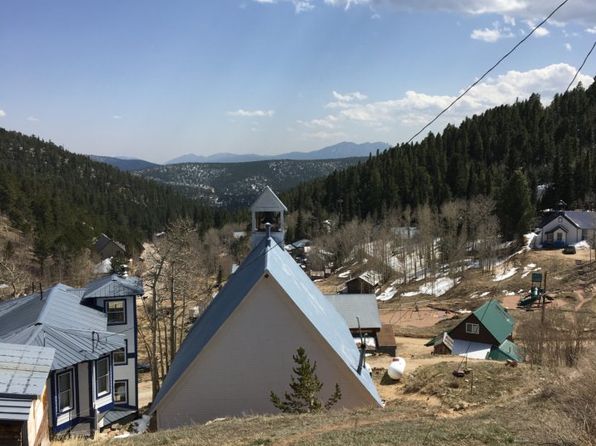
I never knew that there was a nexus between these two.  But I discovered the connection while looking at some photos of a home for sale in Ward.  Here is the view from the living room:


Image result for 58 nelson street ward co

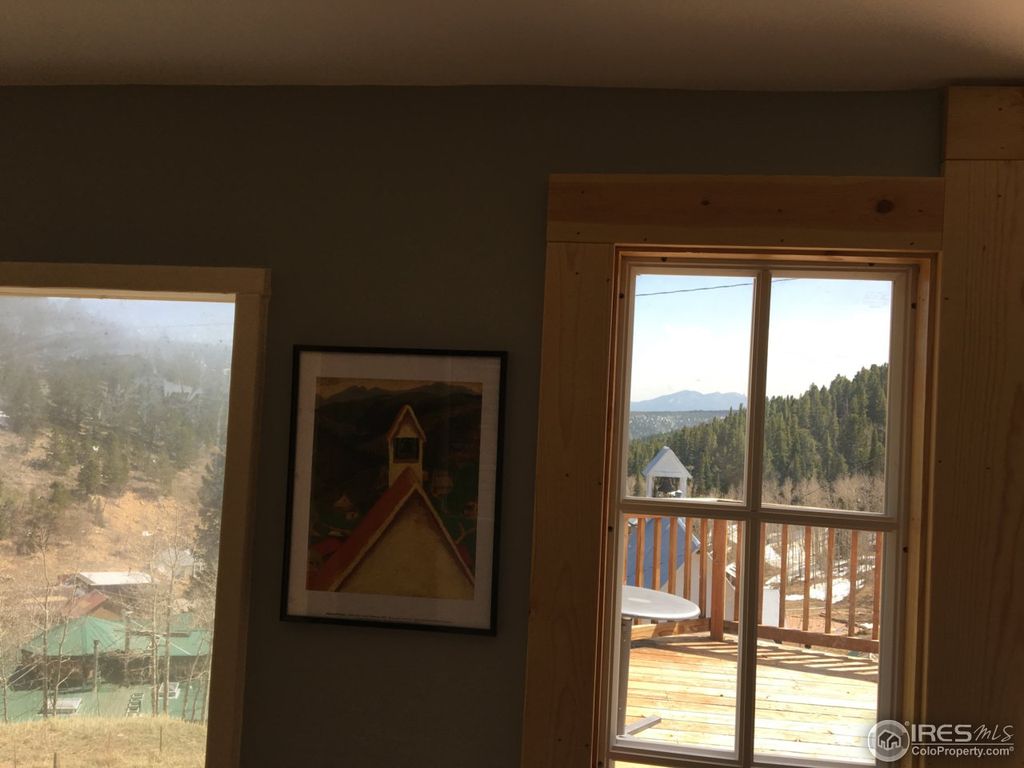
Here is another photo taken from the living room:


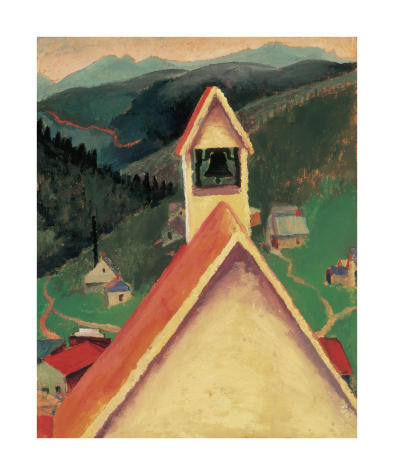
Note the poster on the wall.  Here is the original:


The title is simply Church Bell, Ward, Colorado, 1917.  And, in checking things out a bit more, I found this article in the Boulder Daily Camera explaining a bit about the marketing of the home for sale.   The linked Camera article also has a nice description of how O'Keeffe happened to pass through Ward.  The original painting is a 14-by-17-inch oil-on-board and is at the Georgia O'Keeffe Museum in Santa Fe, N.M., but is not currently on display.

Friday, December 22, 2017

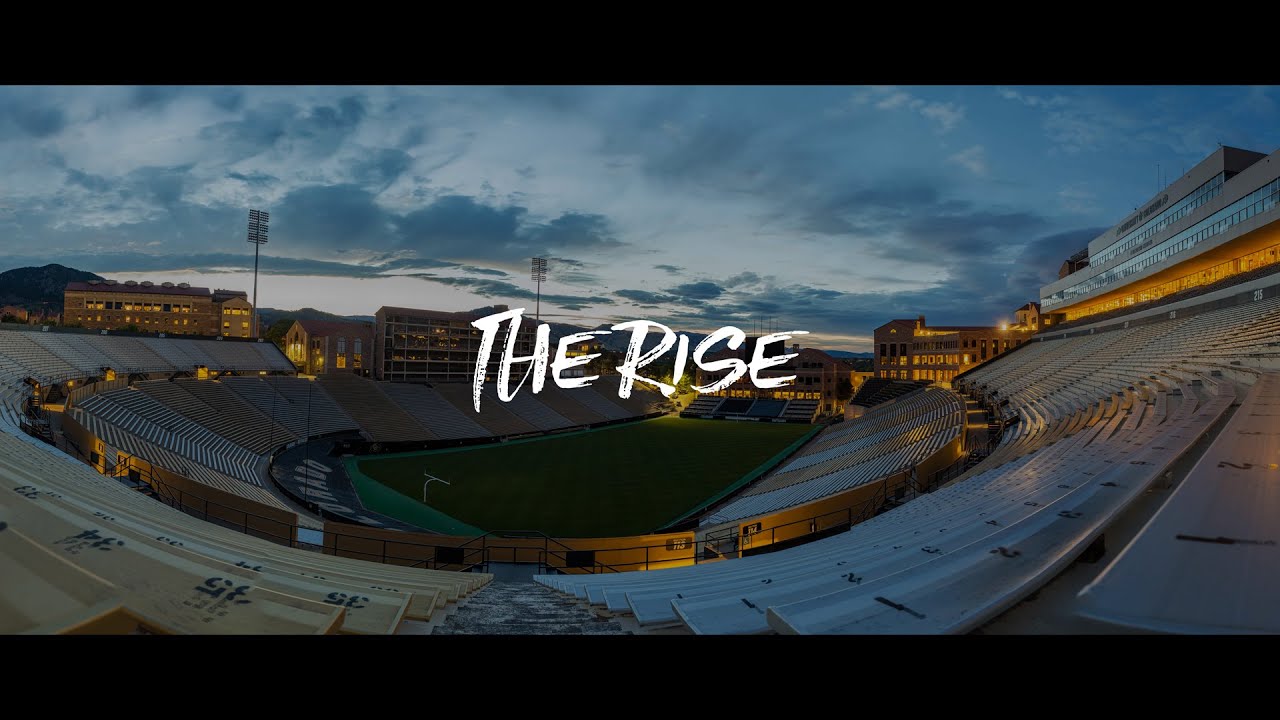
CU - THE RISE, THE FALL

https://i.ytimg.com/vi/0XIeM3ede34/maxresdefault.jpg

After numerous dismal seasons, CU Football had a modestly successful run in the fall of 2016.  The were 10-4 overall, and 8-1 in the weak South Division of the PAC-12.  They got whupped by Washington in the PAC-12 Championship, 41-10.  They were invited to the Alamo Bowl and again got whupped, this time by Oklahoma State 38-8.  The Athletic Department as so head-over-heals with themselves that they put out a self-congratulatory commemorative tome called The Rise.  You too can have a copy for $39.95.

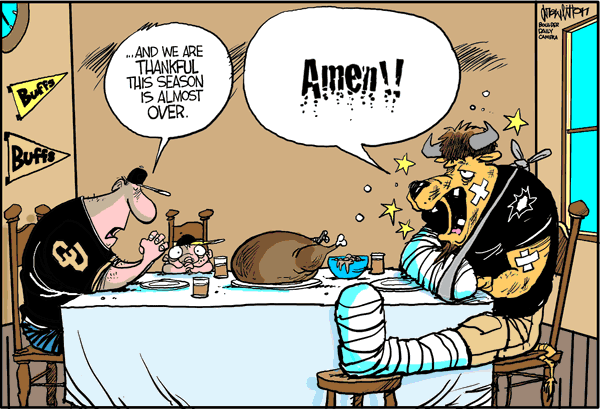
Most of us on the academic side of CU saw The Rise as The Ruse, intended to get the big donors and alumni all fired up to give more money to the Athletic Department.  Some of us [including yours truly] even opined that the 2016 season would be a flash in the pan.  A fellow named Jake Shapiro put it well in this article "Don't Expect the Rise to Continue at CU in 2017".  Well Jake, I and many other doubters were proven correct.  This season's Buffs were pretty much an embarrassment, winning 5 and losing 7, and winning only 2 PAC 12 games.  Needless to say, there was no bowling for this mediocre, at best, team.  Some of us are awaiting the Athletic Department's commemorative book for this year entitled "The Fall".


http://www.drewlitton.com/wp-content/uploads/2012/12/buffsthanksgivingcolor.gif

And now we'll move on the CU Men's Basketball season, which looks to be another over-hyped, underachieving gaggle of Boyle recruits.

Friday, March 24, 2017

THE JOKER VS THE KING

The Denver Nuggets are returning to being watchable, with big help from Nikola Jokić aka The Joker.  The Nuggets recently trounced the Cleveland Cavaliers, and The Joker handled The King, aka LeBron James.


Friday, October 28, 2016

45 YEAR OLD GRUDGE

At one of our recent Tuesday evening gatherings for playing basketball in Nederland, the talk of the town was "Did you hear about the bomb?"  We did not know if it was a hoax or for real, but it turned out to be very much the latter.  Fortunately the bomber was incapable of setting it off.  Here is the detailed Denver Post report of the whole story which dates back to a grudge that began in 1971:

A Nederland marshal murdered a man’s friend in 1971. Two weeks ago, the man allegedly planted a bomb to avenge the death. 


An old STP sticker, the memory of a cap-gun-toting hippie, a rogue marshal and a 45-year-old grudge all came together earlier this month in a bizarre event that shook the small mountain town of Nederland.

Forty-five years after former Nederland Marshal Renner Forbes killed Guy “Deputy Dawg” Gaughnor, who he considered a nuisance, and then dumped his body near a gold mine shaft, the victim’s friend is accused of seeking vengeance by trying to blow up the Nederland police station, sources familiar with the investigation say.

They say that on Oct. 11, David Ansberry, 64, left a backpack containing an improvised explosive device in a village shopping center where the small police station sits beneath a massage and acupuncture parlor.

They say he allegedly tried — using a prepaid cellphone — but failed 11 times to set off the bomb in an event that would have killed bystanders who likely knew nothing about the 1971 execution of his 19-year-old buddy, Gaughnor.

By then, Forbes had been in his grave for 15 years.

Ansberry, of San Rafael, Calif., now faces a federal charge of attempted malicious destruction of a business following his arrest in Chicago days after the bombing attempt. A source said that state and federal investigators are “100 percent” certain that Ansberry planted the bomb to avenge Deputy Dawg’s death. The official spoke in confidence because they were not authorized to release the information.

 Nederland resident Richard "Rick" Bertschinger, right, talks about members of the STP family from the 1970's as he smokes a cigarette outside of Pioneer Inn in Nederland on October 20, 2016 in Nederland, Colorado. The Nederland Marshal's office is helping the FBI to continue its investigation of the recent bomb that was discovered outside of their offices . David Michael Ansberry, 64, the California man suspected of leaving the homemade explosive outside the police station, was associated with the STP family. One of the law enforcement officials said the device was designed to be remotely detonated using a cellphone but failed.
Photo - Helen H. Richardson, The Denver Post
 
Nederland resident Richard “Rick” Bertschinger, right, talks about members of the STP family from the 1970’s as he smokes a cigarette outside of Pioneer Inn in Nederland on October 20, 2016 in Nederland, Colorado. The Nederland Marshal’s office is helping the FBI to continue its investigation of the recent bomb that was discovered outside of their offices . David Michael Ansberry, 64, the California man suspected of leaving the homemade explosive outside the police station, was associated with the STP family. One of the law enforcement officials said the device was designed to be remotely detonated using a cellphone but failed.
An STP oil sticker with a note scrawled on it and stuck to the front window of The Laundry Room, a laundromat about 20 feet to the right of the police station, was a telling clue, the source said.

When asked last week about the sticker and its significance, Boulder County Undersheriff Kirk Long shook his head in disgust.


Unwelcome newcomers


The STP sticker was the adopted symbol of an edgy, hygienically challenged group of hippies called the STP Family, who migrated in Volkswagen vans painted with flowers from New York City and San Francisco. The newcomers, reviled by miners living at the time in the Rockies, invaded the mountain town 16 miles west of Boulder in the late 1960s and early 1970s during an era of anti-Vietnam War demonstrations, “free love” lasciviousness and unfettered use of hallucinogenic drugs.

“They were openly defiant, argumentative and intentionally antagonistic,” Long said. “They would panhandle aggressively and steal. They were constantly in trouble. They had lice. When we arrested them, jail deputies would hose them down.”

Some say the STP Family name originated from a potent hallucinogenic drug they preferred called STP. Others say it was related to the zodiac signs of the group’s three founders: Sagittarius, Taurus and Pisces. Not so, said Long, who arrested Gaughnor and scores of STP members in Boulder County in the early 1970s. Members told Long the acronym really stood for Serenity, Tranquility and Peace.

“This bombing really brought back memories,” said a bearded, long-haired Richard “Rick” Bertschinger, 67, a retired construction worker who lives in a motor home with friends.

Thursday morning, Bertschinger was sitting on a stool at the Pioneer Inn, a bar that once featured rock-and-roll upstarts like future legend Dan Fogelberg, who was staying at the nearby Caribou Ranch. Bertschinger drank coffee as he reminisced.

“I arrived during the Summer of Love in 1967. There was a lot of peace and free love. It was a great time,” the self-described hippie said. But he didn’t particularly like the STPs. “They were a cult. They gave us hippies a bad name. I thought about throwing a few of them down a mine shaft myself.”
Bertschinger said he would come across their makeshift encampments with tepees constructed with tarps, blankets and sticks in the mountains near Ruby Gulch. He once saw Ansberry, who stands 3-feet-6 and was known by fellow STPs as “Midget Jesse,” panhandling in town. He wore torn clothing and was filthy.

“I didn’t give him any spare change and he was angry and belligerent,” he said.

John Callahan, 70, who now operates the “Carousel of Happiness” in the same shopping center as the police station, said people in Nederland were afraid of the STPs in the early 1970s.
“They called themselves the STP Family. That was very close to the Manson Family,” Callahan said, referring to a communal hippie group led by Charles Manson, who was found guilty of killing seven people including actress Sharon Tate in the summer of 1969. “Many of the STP Family members carried machetes on their belts. The machetes looked heavier than they were. They were emaciated.”
Vigilantes made threats and then carried them out, raiding an STP camp and ripping their tents apart, Denver Post reporters wrote in the early 1970s.

In early 1971, the Nederland City Council hired Forbes, an Air Force pilot who flew an F-86 during the Korean War, as the town marshal. He had a face and temperament like a bulldog, Long said. After a military career in which airmen were well-groomed and disciplined, the disorder caused by drunken miners and lawless hippies tested Forbes’ patience, Long said.

“He was the kind of guy who could clean up the town,” said George Epp, former Boulder County sheriff from 1991 to 2003, who was a deputy and shared a Nederland apartment with Long in the early 1970s.


Multiple arrests


Epp said there was one STP member who was particularly troublesome — Guy Gaughnor. He was a 19-year-old who wore a kid’s gun belt holstered with a cap gun. Epp said he took his nickname from a 1960s cartoon character, “Deputy Dawg.”

Long said he arrested Gaughnor several times for stealing and disruptive behavior. But whenever Forbes, who was the only one in the marshal’s office, had to deal with Gaughnor, he’d have to take him down to Boulder to process him, Epps said. It was a chaotic time and Forbes was run ragged.
On the night of July 17, 1971, Gaughnor was causing a ruckus at the Pioneer Inn.

“He was abusive, antagonistic and hostile. Police work is done at the bad-breath and body-odor distance from criminals,” Undersheriff Long said of Gaughnor’s attitude. “Forbes had a military mind-set. He was direct and sometimes confrontational. One man can only take so much.”

Forbes put Gaughnor in his gold 1969 Plymouth and drove away. It was the last time anyone in Nederland ever saw Gaughnor alive.

About a month later, hunters discovered Gaughnor’s skull near abandoned gold mines just off Oh My God Road, which is 25 miles from Nederland in northeastern Clear Creek County. Long was assigned to investigate the case. The head had only pieces of skin and long strands of hairs. Animals had likely scavenged the body and carried pieces deep in the woods, Long said.

“Even though we only had his head, I had no problem identifying him,” Long said. “He had a distinctive look. He had a missing tooth and one tooth overlapped another one.”

When Long interviewed Forbes twice in the following weeks, Forbes admitted that he had driven Gaughnor to his tepee, but that was the last he saw him. Despite abundant circumstantial evidence, there were no eyewitnesses to the murder and no physical evidence.
Nederland resident Richard "Rick" Bertschinger
Photo - Helen H. Richardson, The Denver Post
 
Nederland resident Richard “Rick” Bertschinger talks about members of the STP family from the 1970s at the Pioneer Inn on Oct. 20, 2016 in Nederland. The Nederland Marshal’s office is helping the FBI to continue its investigation of the recent bomb that was discovered outside of their offices. David Michael Ansberry, 64, of California, who has ties with the STP family, is suspected of leaving the homemade explosive outside the police station in the parking lot. A law enforcement official said the device was designed to be remotely detonated using a cellphone but failed. Authorities provided few other details about the bomb or what kind of destruction it might have caused in the town of Nederland. Sitting at the bar with Bertschinger is his friend Donald O’Connell, right.
Colorado Bureau of Investigation forensic experts couldn’t match a bullet taken from Gaughnor’s skull to a .22-caliber pistol he found in Forbes’ house because the slug was too damaged, Long said. It was a thorough, lengthy investigation aimed at Forbes.

“It really didn’t matter that he was Deputy Dawg, the local miscreant,” Long said. “A murder is a murder and you work them all the same.”

Epp said Long was afraid that Forbes might shoot them because of the investigation.
On the last page of his report, Long wrote: “This crime will be solved when Renner Forbes confesses.”


Forbes confesses


Epp recalls the day in 1997 that former Capt. Bill McCaa walked into his office and said, “Hey, George, does the name Renner Forbes ring a bell?”

McCaa had just seen Forbes’ name on the door of a nursing home he was checking out for a relative. Forbes had been living in Kansas and Florida, but had moved back to Colorado. Epp ordered a new investigation.

At first, Forbes, who had severe medical issues including major coronary disease, denied killing Gaughnor during an interview in the nursing home. Sheriff’s investigators drove him to Ruby Gulch, where Forbes claimed he had left Gaughnor 26 years earlier. When Forbes got out of the car, he immediately vomited, Long said.

Forbes soon confessed to shooting Gaughnor and was charged with second-degree murder. Forbes spent a week in jail, which officials resisted because of Forbes’ extremely poor health, Epp said.
“He escaped justice for 26 years, and I thought he should see the inside of a jail despite the complaints of the jailers,” he said.

The charge was reduced to manslaughter and he was sentenced to probation, Epp said. Forbes died three years later.

Another 20 years go by. At 6:17 p.m. on Oct. 3, a little person walked into Dan Harrow’s laundromat just as he was closing the store for the day. Harrow answered the man’s questions patiently about laundry hours and cost of machines even though he was eager to get home and see Monday Night Football.

Harrow said his daughter is also a little person and it’s rare to see little people in Nederland. He noticed that the man was staring at his surveillance cameras.

“He didn’t give me any red flags,” Harrow said. “In hindsight, it’s easy to see what was going on.”

Eight days later, Harrow arrived for work around 8 a.m. and saw an STP oil sticker on his shiny front window. Harrow washes the window every day and his store is immaculate. He immediately peeled it off. On the back of the sticker was a note.

The sticker appeared to be decades old, Harrow said. On the back of the note was writing that blamed a marshal for a murder in the early 1970s. The note also said: “Rest In Peace Deputy Dawg July 17, 1971,” a source said.

That same morning, a Nederland police officer picked up a backpack from the parking lot in front of the station and carried it inside. When he opened the bag, he saw the IED and took the backpack outside. The shopping center was evacuated. Local, county, state and federal law enforcement swarmed the shopping center and began a nationwide manhunt.

After the incident, Harrow recalled the odd sticker he had found that morning and gave it to investigators. The sticker had been left in a corner of the window, out of the range of his surveillance camera.

FBI agents traced the cellphone used as the trigger mechanism to a Black Hawk cellular phone company and then to a King Soopers store. They reviewed video tapes of the King Soopers and identified a small person as the buyer of the cellphone, court records say.
The Nederland Marshal's office
Photo - Helen H. Richardson, The Denver Post
 
The Nederland Marshal’s office is helping the FBI to continue its investigation of the recent bomb that was discovered outside of their offices on Oct. 20, 2016 in Nederland. David Michael Ansberry, 64, of California, is suspected of leaving the homemade explosive outside the police station in the parking lot.
When federal agents arrested Ansberry in Chicago, he had the same STP stickers in his possession that were found on Harrow’s window, a source says. Ansberry also admitted that Deputy Dawg had been a close friend in the early 1970s, the source said.

In the early-morning hours of Oct. 17, FBI agents gave Harrow another visit. They showed him a picture of a man and asked him if he recognized the person. When Harrow realized it was a small person, he looked closer and recognized the man who had visited him within the past 10 days.

By 2:30 a.m., he was reviewing his surveillance tapes with the FBI agents and found the video of Ansberry as he stared directly at the camera and spoke with Harrow. FBI agents measured how high the sticker was on the window. It was 44 inches off the ground.
“Low enough for a little person to reach,” Harrow said.


Wednesday, October 05, 2016

YES ON COLORADO PROPOSITION 106

https://www.dwdv.org.au/sb_cache/aboutus/id/78/f/Tanberg%20cartoon.jpg

I am fully supportive a person's right to choose when and how to die when faced with a terminal illness or severely debilitating condition. Thus, I urge any of you Colorado folks to read the proposition and give it your support.

Shall there be a change to the Colorado revised statutes to permit any mentally capable adult Colorado resident who has a medical prognosis of death by terminal illness within six months to receive a prescription from a willing licensed physician for medication that can be self-administered to bring about death; and in connection therewith, requiring two licensed physicians to confirm the medical prognosis, that the terminally-ill patient has received information about other care and treatment options, and that the patient is making a voluntary and informed decision in requesting the medication; requiring evaluation by a licensed mental health professional if either physician believes the patient may not be mentally capable; granting immunity from civil and criminal liability and professional discipline to any person who in good faith assists in providing access to or is present when a patient self-administers the medication; and establishing criminal penalties for persons who knowingly violate statutes relating to the request for the medication?
Read more here.

Friday, February 19, 2016

THE RANGELY TANK


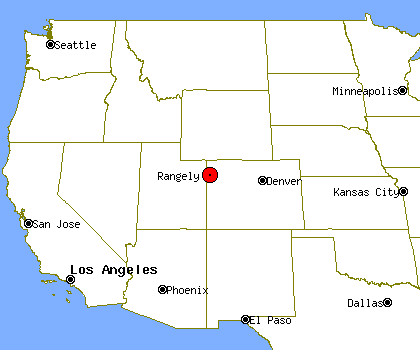
Just a bit of background.  Here is where you would find Rangely, Colorado

http://www.idcide.com/i/mc2/co/rangely.gif


And an introduction to the Tank from the Tank's webpage

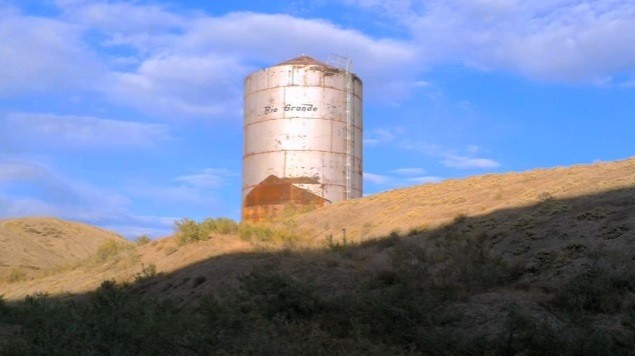
The Tank is an acoustical marvel, a senses-altering experience found nowhere else on earth. A 60′ tall, 30′ across rusted steel water tank – never used – was discovered in Colorado by sound artist and sonic thinker ​Bruce Odland in 1976. A small group of musicians has been recording there ever since. ​The Tank is a sonic wonder of the world, with a shifting, swirling reverberation longer and richer than the Taj Majal or the Great Pyramid. Sitting unnoticed in the dirt hills outside Rangely, Colorado – surrounded by oil pumps and dirt bike trails – the profound acoustic beauty within is balanced by the austerity of its remote location and its simple industrial architecture.

Looking into the Tank


http://images1.westword.com/imager/u/745xauto/7329727/bb1.2.jpg


Tuesday, February 09, 2016

HUMBLE PIE


humble pie

noun - a figurative serving of humiliation

http://cdn-jpg.si.com/sites/default/files/styles/si_article_main/public/%5Bcurrent-date%3Acustom%3AY%5D/%5Bcurrent-date%3Acustom%3Am%5D/%5Bcurrent-date%3Acustom%3Ad%5D/carolina-panthers-cam-newton-versace-pants.jpg?itok=T0ckAhRb

 https://s-media-cache-ak0.pinimg.com/236x/4e/86/d5/4e86d5a2e91edba30f18134d21203009.jpg

 http://www.totalprosports.com/wp-content/uploads/2016/02/Cam-Newton-SB-50-warmup-2-595x396.jpg

 https://usatftw.files.wordpress.com/2016/02/ap_super_bowl_football_79491870.jpg?w=1000&h=682

 https://usatbroncoswire.files.wordpress.com/2016/01/usatsi_6739070.jpg?w=1000&h=600&crop=1

 http://cdn.abclocal.go.com/content/kabc/images/cms/1191470_1280x720.jpg

Doctor Recommends One Pie Per Day for Cam

Monday, February 08, 2016

STEIN ERIKSEN 1927-2015

http://www.steinlodge.com/d/steinlodge/images/contentBlock_201.jpg?1372340370

http://ywsa.org/wp-content/uploads/2014/04/321-2106_IMG.jpg

A few of you out there might know who Stein Eriksen was, and for those of you who do not, you can read about his legacy in these links:
  Legacy, 
Obituary

Stein was a legendary alpine skier and considered the founder of modern day downhill skiing.  I write now because his passing reminded me of the first pair of skis that I bought in Colorado, probably around 1970.  We were coming back from a day of skiing and at the rental shop place, there were a pair of Stein Eriksen skis on sale.  They were marked down considerably and I thought, hmmm, pretty good deal.  I was a bit naive because the skis were 220 cm long [87 inches] - which by today's standards is way too long!  My last pair of skis were 165 cm [65 inches].  But, I bought some bindings and boots to go along with the Eriksens and used them for several years.  The skis were yellow and my boots were blue, so I was perhaps ahead of the times with the bright colors.  Here is the best picture I could find of the Stein Eriksen L-21 skis:

 http://www.summitdaily.com/csp/mediapool/sites/dt.common.streams.StreamServer.cls?STREAMOID=QwxbHtihSmMrbzsZDmxXO8$daE2N3K4ZzOUsqbU5sYvokXQzp30Yfi_wb63XUNRyWCsjLu883Ygn4B49Lvm9bPe2QeMKQdVeZmXF$9l$4uCZ8QDXhaHEp3rvzXRJFdy0KqPHLoMevcTLo3h8xh70Y6N_U_CryOsw6FTOdKL_jpQ-&CONTENTTYPE=image/jpeg


Wednesday, April 22, 2015

52 GAME LOSERS - AND LOSERS ALL AROUND

 http://mlb.imageg.net/graphics/product_images/p12329055dt.jpgor http://www.chicagonow.com/your-doubting-thomas/files/2014/11/chicken-nuggets.jpg

Not sure where to begin, but the Nuggets are easy targets.  Some of you will remember my rants when the Nuggies fired George Karl, allowed Josh K to run the show, hired a clueless Brian Shaw as the coach, and then fired him, and ended up with a record of 30 and 52.  Let's see now, the last year of coach Karl, they were 57 and 25 and were 38 and 3 at home!!!   Kroenke is still an idiot.  They avoided the cellar in the NBA West because that's where the hapless Timberwolves reside.


http://ageofwonders.com/wp-content/uploads/2014/01/Colorado-Avalanche.jpg


Now, I really like the Avs, and I enjoyed watching them throughout their 39-31 season - which I cannot say the same for the Nuggets.  Yes they ended up dead last in their division, but they were in the playoff hunt fairly late into the season.  As opposed to the Nuggets, they actually looked like they knew what they were doing and were working hard to get it done.

http://www.sports-logos-screensavers.com/user/Denver_Broncos2.jpg

One and done - no need to say anything more.

http://www.wrcolo.com/assets/Colorado-Rockies-Team-Logo-Wallpaper.jpg 

Not sure where to start here - the Rox are a lot like the Nuggets - you just know that they are not going to be good.  They got off to an unusually good start, winning some games on the road, bull pen pitching well, etc., but anyone with a modicum of sense knew that it would not last.  And it didn't.  They are quickly moving toward the bottom of the NL West, parked at the midway point.  The way that they have been blowing games recently, it won't be long until they are once again cellar dwellers.

Now, should we talk about the losers at CU-Boulder???

Friday, March 06, 2015

BOSTON, COLORADO


During the past several weeks, we have received over 5 feet of snow - you'd think we were in Boston!  But, I suppose that since we are in Colorado, we should expect this sort of thing.  It will be good for the water supply, and it has not been too hard on the back - it's been mainly powder, but it's still heavy when there are a couple of feet!  Supposed to be much warmer the next few days, so we will next be dealing with ice as the melting snow freezes during the night time.

Friday, February 20, 2015

CU ATHLETICS ARMS RACE

Yesterday, the University of Colorado Regents met in Boulder, and one of the sessions was on Intercollegiate Athletics.  The CU-Boulder AD gave a typical shock-and-awe, look how great I am doing presentation, which was followed by the significantly more modest presentation by the CU-Colorado Springs AD. 

Perhaps the most insightful, and troubling, observation was made by Chancellor Pam Shockley from the CU-Colorado Springs campus.  In her comments to the Regents, she said that she fears an "arms race" in Division II athletics that is similar in nature but on a smaller scale than the "arms race" in Division I athletics.  AD Rick George's presentation could be labeled Exhibit A for the demonstration of the misguided and generally uselessness of "pursuing championships" by throwing money at athletic facilities and the elusive "student-athlete."  [Just to clarify, there really are some athletes who  are also accomplished students, but they tend to be the exception rather than the norm among the participants in Division I football and basketball]. 

After presenting the data demonstrating how well the student athletes are doing academically, and how well they are attended to regarding their studies, he launched into his breathless presentation of the $143,000,000 expansion and renovation of athletic facilities, shown in this sketch:

http://www.coloradanmagazine.org/wp-content/uploads/2014/07/athletics_complex_expansion_2014.jpg 

Not surprisingly, the bulk of the project is for the benefit of football, while the other sports will enjoy some of the trickle-down from the new indoor practice facility, shown on the left, and the new training and sports medicine facilities. More details can be found here.  Interestingly, I got to tour the 'old' football facilities a couple of years ago and considered them palatial when compared to some of the other facilities on campus - see below.

So - what's the point?  It's the same old canard that CU cannot compete effectively in the PAC 12 because the limited and outdated facilities cause highly talented athletes to go elsewhere.  Tell that to cross country coach Mark Wetmore.  Wetmore's office is in a backwater space in the dingy and dark Balch Fieldhouse.  It's not the facilities that attract some of the top runners in the country to CU, it's the outstanding coaching and the tradition of excellence that brings them in.  Wetmore's teams have won multiple national and PAC-12 championships, and hundreds of other team and individual honors.  Admittedly, cross country is not a facilities-intensive sport, but the point is that facilities don't build champions - effective recruitment, training and coaching build champions.


http://extras.mnginteractive.com/live/media/site36/2013/0810/20130810__20130811_C1_SP11CUPROJECTPART1~p4.jpg

Balch Fieldhouse - Home of National Champion Runners & Coaches - Built in 1937

But - who is it that really cares about championships?  Regents, Presidents, Athletic Directors and all of the attendant athletics staff, and Chancellors and fund-raisers who woo athletics-crazed donors.  Who doesn't care?  Most professors and many students. 

Why?  At the beginning of all of my classes, I make it clear that it is possible, although not probable, that every student in the class can earn an A.  Exceptional performance is rewarded accordingly.  (I generally don't point out to them that they could all possibly earn F's :-).  In academics, it is not student versus student, with an equal number of winners and losers - it is individual students mastering the subject matter.  Intercollegiate athletics are nearly diametric to this fundamental mission of the university.  Regents, Presidents, etc., seem not to understand that athletic competition is a zero sum game - for every PAC 12 team that wins, another PAC 12 team loses.  For every 15-2 team, there is likely to be a 2-15 team.  And there is only one champion among the 12, and there will be only one football champion among the 120 Division I FBS teams, and 1 basketball champion among the 351 Division I basketball teams.

Another thing that is totally out of wack in Division I football and basketball is that it is now considered career advancement by moving from the ranks of professional sports to university sports. Of course the driving factor now is the money.  I have previously written about Rick [aka Dick IMHO] George's sweet deal [Money for Nothin'] to move from the Texas Rangers to CU, and most recently, CU hired an San Fancisco 49ers coach as an assistant football coach for $500,000 per year - highest in the history of CU.

I think that it would be great if the CU Regents, administrators and other powers-that-be torched football and [sadly as a Hoosier] basketball.  Can you imagine how great the remaining teams would be if the resources were re-directed their way??!!  The University of Alabama-Birmingham is the latest addition to the long list of schools that have eliminated Division I football.  Universities need to get out of the business of being minor-league development tools for professional teams.  Of course I know that there is not a snowballs chance that this will come to pass, but one can dream......

Tuesday, January 13, 2015

SHOULD PEYTON RETIRE?

Now that the Broncos have dispatched of Coach Fox, a fundamental question becomes obvious - is it time for Peyton Manning to retire?  As we Broncos fans watched that latter part of the season, it was quite obvious that Peyton was hurting and not up to his usual level of performance.  So - answer the poll at the top of the page, and leave a comment about your thoughts if you want.  The poll should also give results [if it's working properly!]

http://extras.mnginteractive.com/live/media/site36/2013/1111/20131111__BroncosManning111113~p1.jpg

Wednesday, December 31, 2014

MALONES' BIG DONATION - NOT REALLY

http://source.colostate.edu/wp-content/uploads/2014/12/04052.jpg?a8d43a

A couple of clips from today's Boulder Daily Camera - entire on line article is here.

John and Leslie Malone's $42.5 million gift, announced Monday, will create the CSU Institute for Biologic Translational Therapies in the College of Veterinary Medicine and Biomedical Sciences, a 100,000-square-foot facility to develop stem-cell research into commercially viable treatments for animals and humans. 

The Malones, who raise and train dressage and jumping horses on a ranch near Kiowa, last year donated $6 million to the school to establish the Leslie A. Malone Presidential Chair in Equine Sports Medicine.

John Malone, who made his millions at the helm of Tele-Communications Inc. and now chairs the giant Liberty Media Corp., and his wife, Leslie, could not be reached for comment on Monday.

Extremely interesting is what was left out of the online version of the article that was in the paper version of the Camera - Malone's net worth of approximately $7.4 billion and he is the largest landholder in the USA.

Admittedly, $42.5 million is a lot of cash, and the Malone's are certainly under no obligation to share any of their wealth.  But, I am always interested in the math regarding large donations by exceedingly wealthy people.  Let's take off three zeros, which leaves us with an equivalent donation of $42,500 for a net worth of $7.4 million.  Now, taking the net worth down to a more reasonable million dollars, the equivalent donation is about $6,000.  However, the median net worth of a typical US household is slightly less than $100,000 which would then mean the gift-equivalent is $600.  Not too impressive.  Another way to look at this is that the Malone's gift represents 0.0057 of their net worth.  I consider that a proportionally puny gift.  

To me, what adds to this glorification of the wealthy is the following tidbit:

Shifting the address of his Liberty Global Inc. from Colorado to London last year didn’t just put billionaire John C. Malone in a position to reduce his company’s tax bill.

He also took precautions to avoid the capital-gains hit that the so-called inversion would trigger for him and other investors. The day before the deal was announced, Malone -- the company’s chairman and controlling shareholder -- transferred $600 million of his shares into a tax-exempt charitable trust. He avoided paying taxes on his remaining stake, worth about $260 million, by exploiting IRS regulations meant to block a different loophole. 

All told, Malone escaped about $200 million in personal taxes, and Liberty Global’s U.S. shareholders together likely saved more than a billion dollars, according to data compiled by Bloomberg. 

“He’s congenitally averse to paying taxes,” said Robert Willens, an independent tax accounting analyst.  Curmudgeon note - I bet that he is a conservative Republican.

Read the rest of the article here - it's disgusting.  I offer the following for the rich folks consideration:

Mark 12:41-44

The Widow’s Offering

41 Jesus sat down opposite the place where the offerings were put and watched the crowd putting their money into the temple treasury. Many rich people threw in large amounts. 42 But a poor widow came and put in two very small copper coins, worth only a few cents.
43 Calling his disciples to him, Jesus said, “Truly I tell you, this poor widow has put more into the treasury than all the others. 44 They all gave out of their wealth; but she, out of her poverty, put in everything—all she had to live on.”

I would also speculate that the widow was considering human needs, not equine joints.